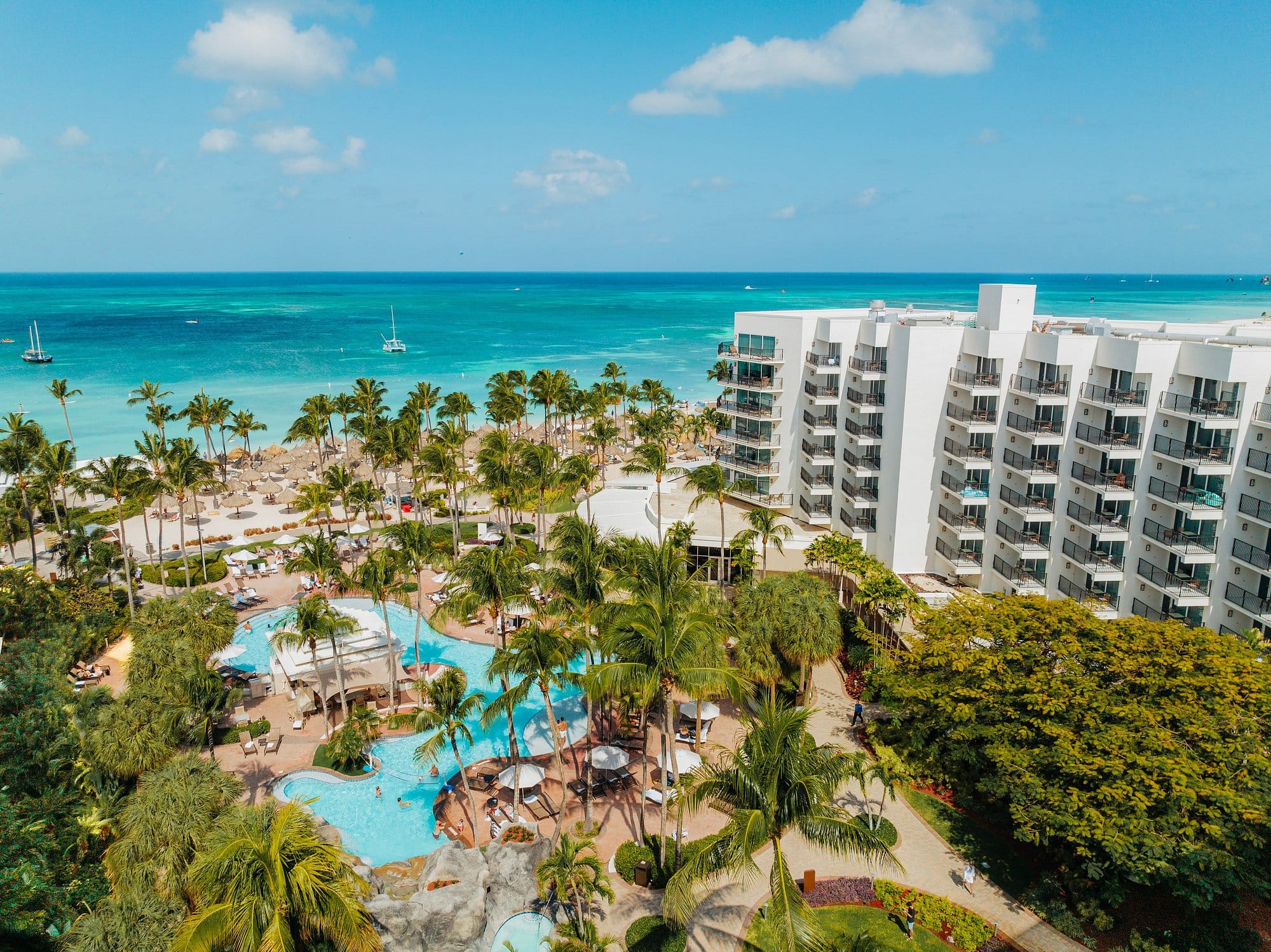
Aruba Marriott Resort & Stellaris Casino
A high-rise resort with a 24-hour casino, several pools, and direct access to the busiest stretch of Palm Beach. Works for families and groups who want restaurants and activities on site.
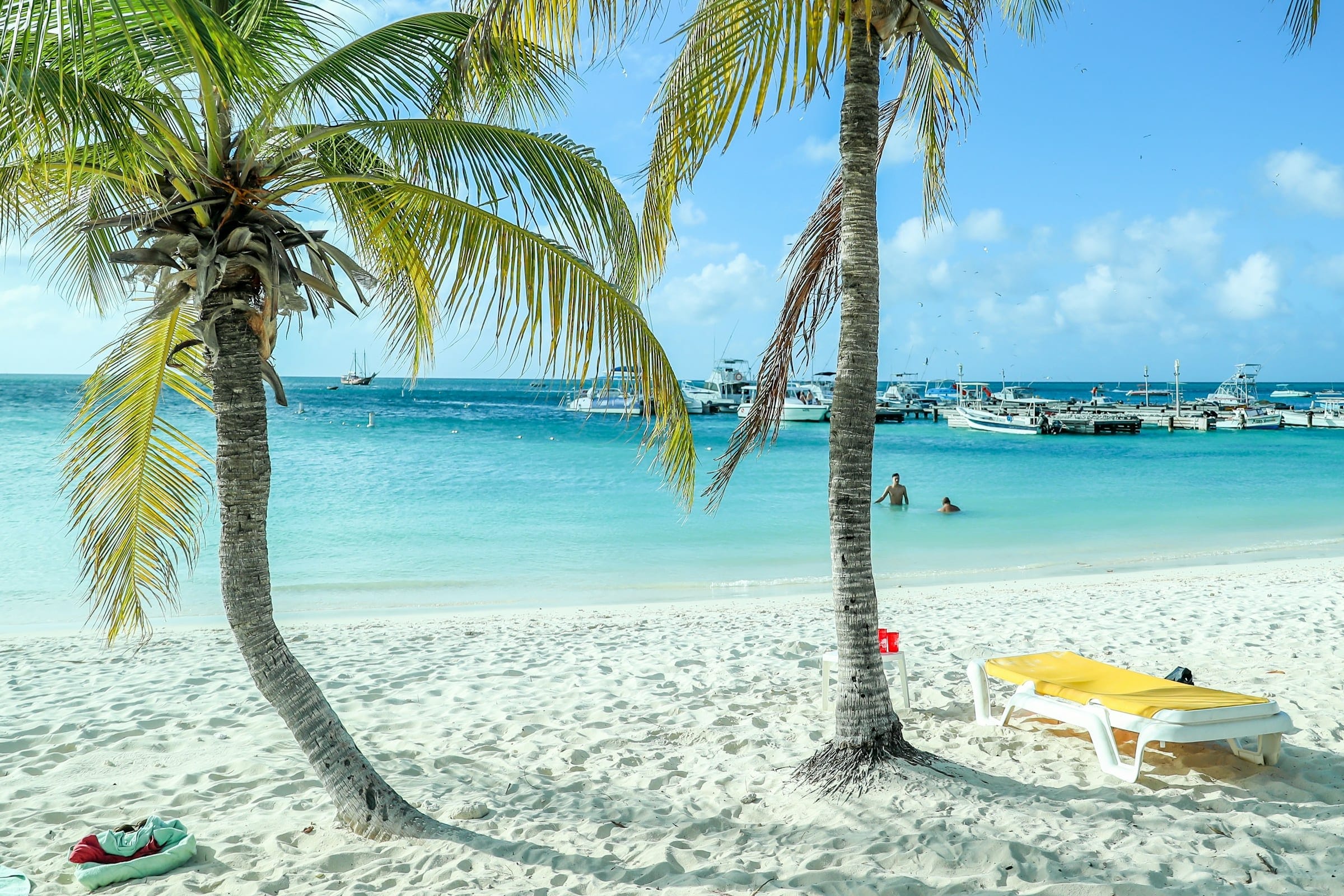
A desert island with a calm coast on one side and a wrecked one on the other, 18 miles (29 km) off Venezuela and run from the Netherlands. The wind blows the whole time you are here, and that turns out to be the point.
What the days here are made of, and why the side of the island you pick matters more than the hotel.
Aruba is 20 miles (32 km) long and 6 miles (10 km) across at the widest, and it is a desert. Cactus, loose rock, goats, and trees bent permanently to the southwest by a wind that comes out of the northeast and does not let up. The whole island is arranged around that wind. The leeward side, facing Venezuela, is where the sand is and where every hotel was built. The windward side takes the swell full on the chin.
The leeward coast runs from the lighthouse at the north end down through Palm Beach and Eagle Beach to the port at Oranjestad. It is flat, shallow, and so sheltered that on most days there is no surf at all, just water lapping. This is the Aruba on the postcards and it is genuinely that good. It is also where the high-rise hotels, the casinos and the cruise passengers are, and by the middle of the morning the strip in front of Palm Beach is a solid line of loungers.
Drive 20 minutes east and the island turns into something else entirely. Arikok National Park takes up most of the eastern fifth, and inside it the tracks are dirt, the coast is black ironshore, and the sea arrives with enough force that swimming is out of the question almost everywhere along it. People come out here for the caves, the ruins of a 19th century gold mill, and a still pool called Conchi that sits inside a rock rim while the swell breaks over the top of it.
Give it 6 nights. One goes to Arikok, one to the south end and Baby Beach, one on a boat, and the rest to working out which of the leeward beaches you like best.
This is the flattest forecast you will plan a trip around. The highs sit between 86 and 92°F (30 and 33°C) every month of the year, the island collects about 18in (450mm) of rain in total, and more than half of that falls in the last 3 months. What changes across the year is the wind and the price of a room.
March and April are the driest months on the record at 0.3 to 0.4in (9 to 10mm), which is close to nothing. The trade wind is at its hardest from April into July, steady enough that the surf schools stop checking the forecast and just go. It hides the sun from you as well, so this is the stretch people come home burned from.
November is the wettest month at 3.3in (85mm), and October and December are close behind. It is still not much water, and it tends to arrive as a hard shower that runs itself out in 20 minutes rather than a day lost indoors. December is also when the rooms start climbing, so you pay peak rates in the month with the second highest rainfall.
Best time to go. December and April, the 2 ends of the busy season. Everything between them, January through March, is the same weather at the top of the price list, with the cruise ships stacked up in Oranjestad most mornings. May through September is hotter and windier and costs a good deal less, and October and November are the only months where rain is worth planning around.
Boarding pass
EZ 004 · 21A
From
YOU
To
AUA
Wherever you areOranjestad, Aruba
Flight
EZ 004
Seat
21A
Gate
Inbox
Boards
Monthly
Send this to whoever is planning the week
Aruba is small enough that nothing here is really a day trip, it is just a drive. One road runs down the leeward side and another cuts east into the desert, and between them you can reach any of this before lunch. Here they are in the order people actually book them, which is not the order of a map.
6 nights gets you the park, the south end and a morning on a boat. The rest is deciding which beach is yours.
There is one airport and almost everybody flies straight into it. That makes the arrival the simplest in this part of the world, with 1 form to fill in before you go.
Step one
Queen Beatrix International sits 1.6 miles (2.5 km) from the center of Oranjestad, which keeps it close to town. It takes direct flights from a long list of North American cities and a run from Amsterdam, so for most people this is 1 flight and no connection. Book the morning arrival if you have the choice. The afternoon banks land 6 or 7 aircraft inside an hour and the immigration hall is sized for fewer.
Step two
Everything on this island is close. Oranjestad is 1.6 miles (2.5 km) from the terminal. So step 2 is not really a transfer question, it is the rental car question, and you are better off answering it before you land than at the counter.
Option A · The taxi rank
A rank right outside, no app and no meter. Fares are set by the government per zone, and every taxi carries a QR code to the official list, so the price is the price.
Option B · Your own car
Desks in the terminal and lots a shuttle ride away. The only way to reach Arikok, the south end and the places worth driving to.
Staying 4 nights on the beach? Take the taxi and skip the car. Between the hotel, the restaurants within walking distance and 1 boat trip, you will spend less than the rental and the parking is somebody else's problem.Staying a week, or travelling with anyone under 12? Rent the car at the airport. Arikok, Baby Beach, the south coast and every good cheap kitchen on the island are out of taxi range, and the car pays for itself on about day 3.
Pick the coast first, because on an island this size that is the whole decision. Everything on the leeward side is 20 minutes from everything else, so you are not choosing a location so much as choosing how much noise you want outside the door.
Areas (1/5)
The high-rise strip
This is where most first-time visitors end up, and for a reason: casinos, big all-inclusives, beach bars and water sports are all within a short walk of each other. The trade-off is crowds and noise near the hotel row after dark, and the highest room rates on the island.
7 miles (11 km), about 15 min from AUA
Leeward west coast, so the water stays clear and smooth almost all year. It's shallow for a long wade before the bottom drops off, with soft white sand and little to no seaweed. Good for swimming and floating, not for reef snorkeling, since the reef itself sits farther out toward Malmok.
First trip, stay on and rent a car for 3 of the days. Second trip, go south to Savaneta and eat where the island eats.
Places (1/2)
A high-rise resort with a 24-hour casino, several pools, and direct access to the busiest stretch of Palm Beach. Works for families and groups who want restaurants and activities on site.
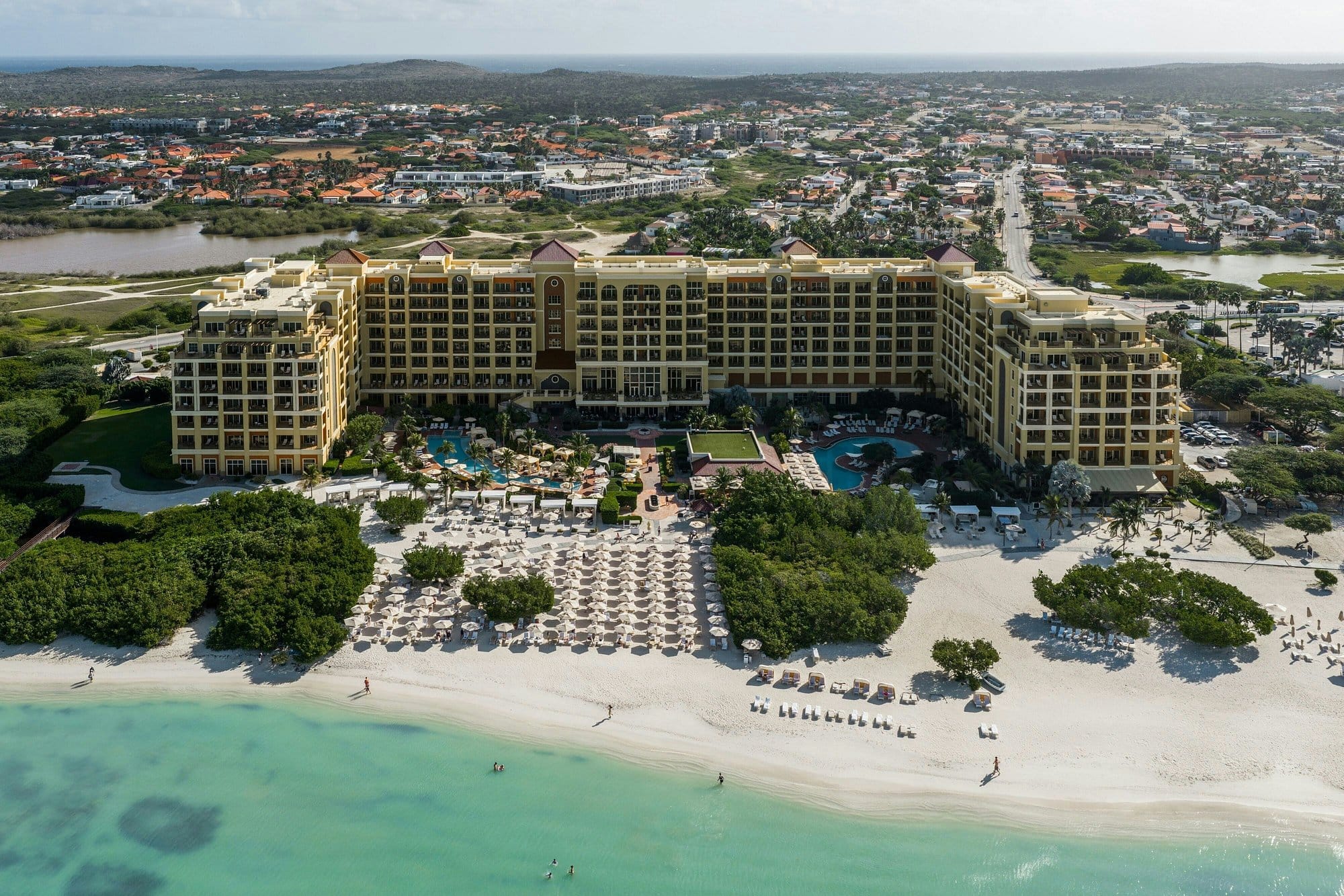
A quieter, upscale property at the north end of the Palm Beach strip, with its own pool terrace and a longer stretch of beach out front. Suits travelers who want polish and don't mind paying for it.
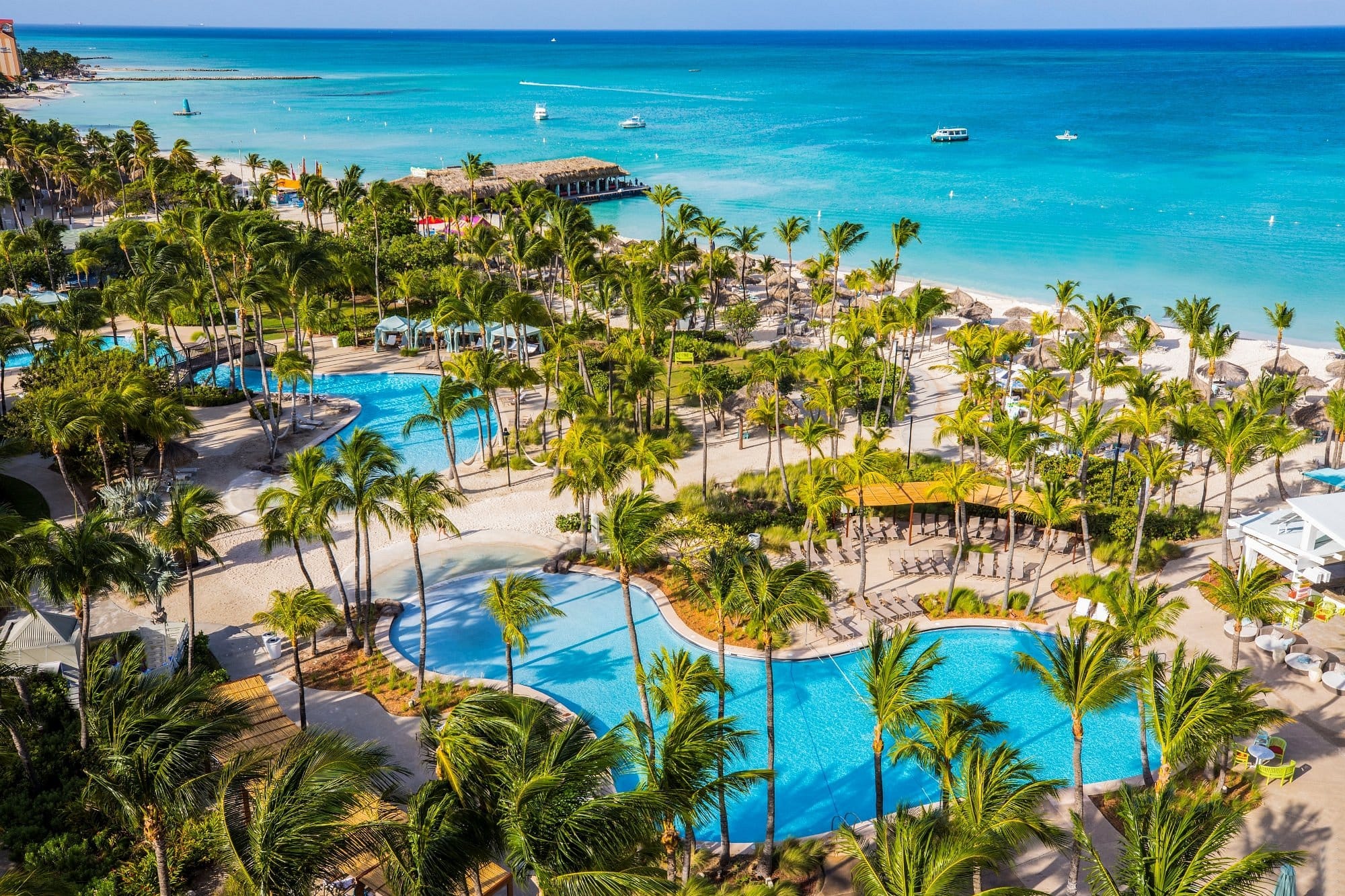
One of the original Palm Beach resorts, lower-key than its newer neighbors, with a casino and a long beachfront lawn. Good for repeat visitors who know the property and want a specific room type each trip.
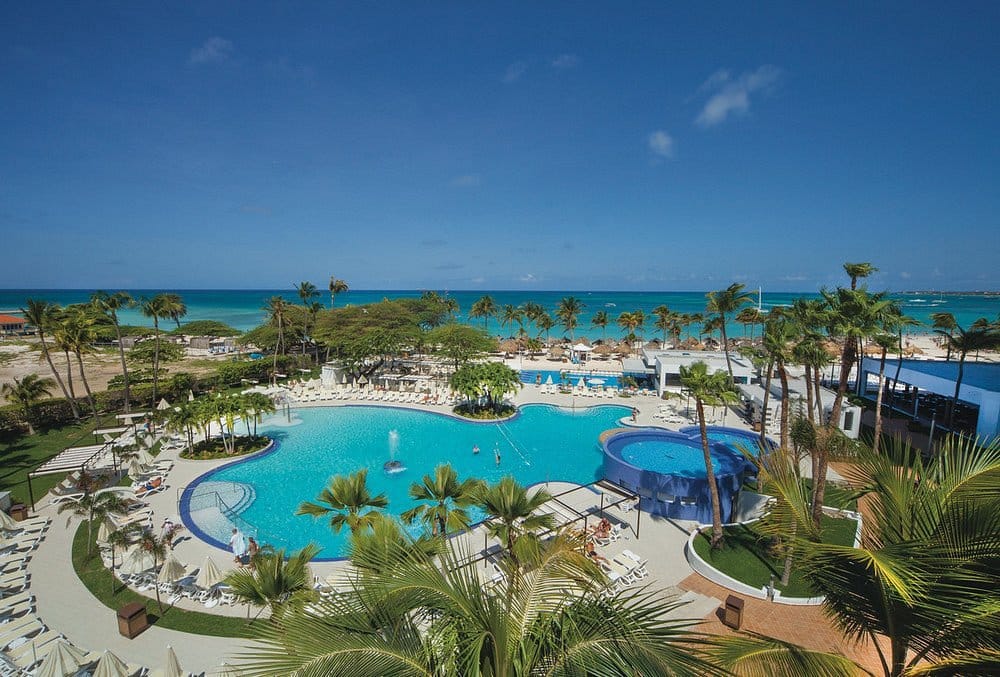
Adults-only and all-inclusive, built for people who don't want to think about a bill again until checkout. Sits mid-strip on Palm Beach, so restaurants and the boardwalk are a short walk in either direction.
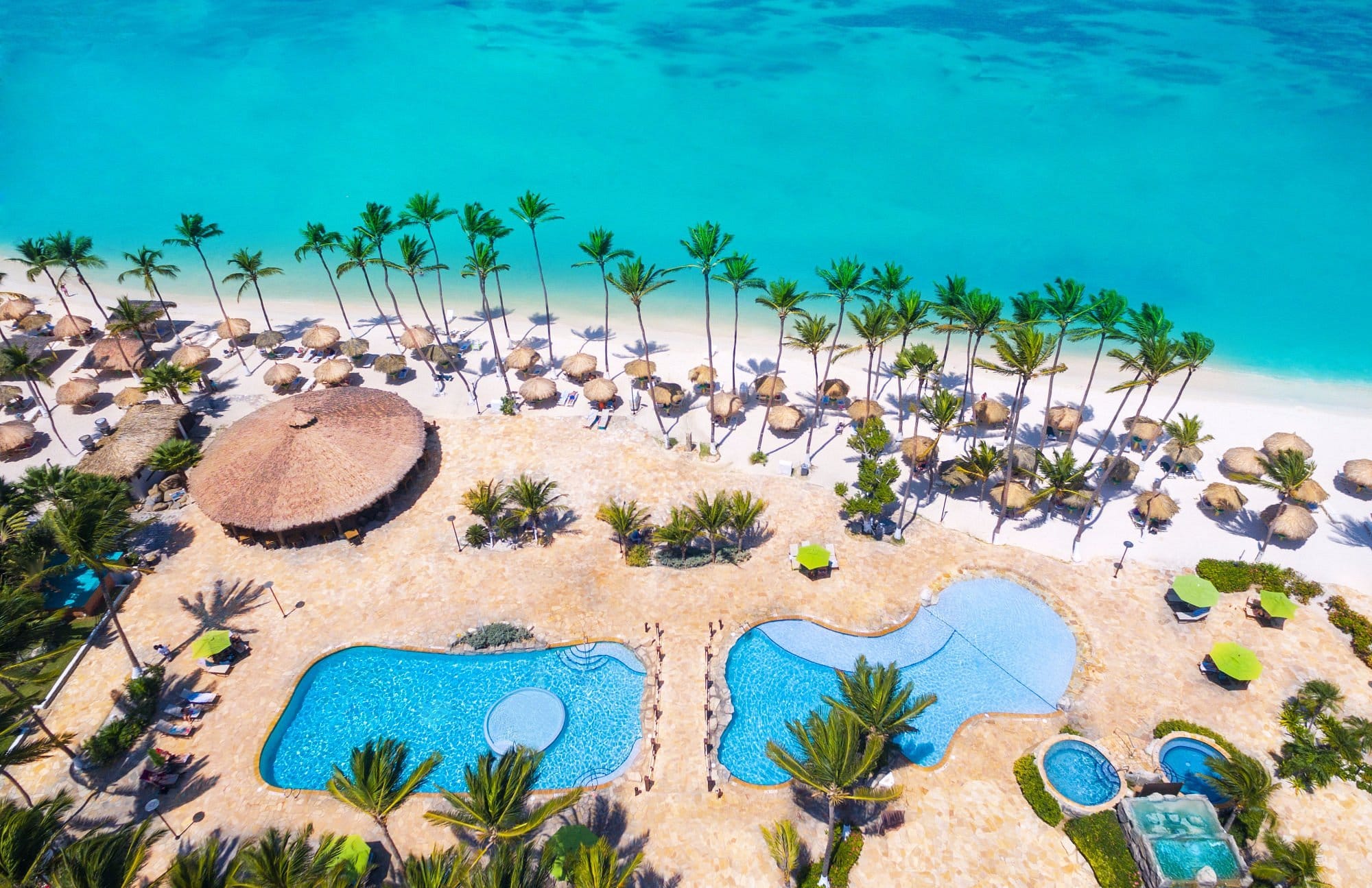
A mid-size all-inclusive with its own casino, priced under the bigger names on the same strip. Suits families who want Palm Beach without the top-tier rate.
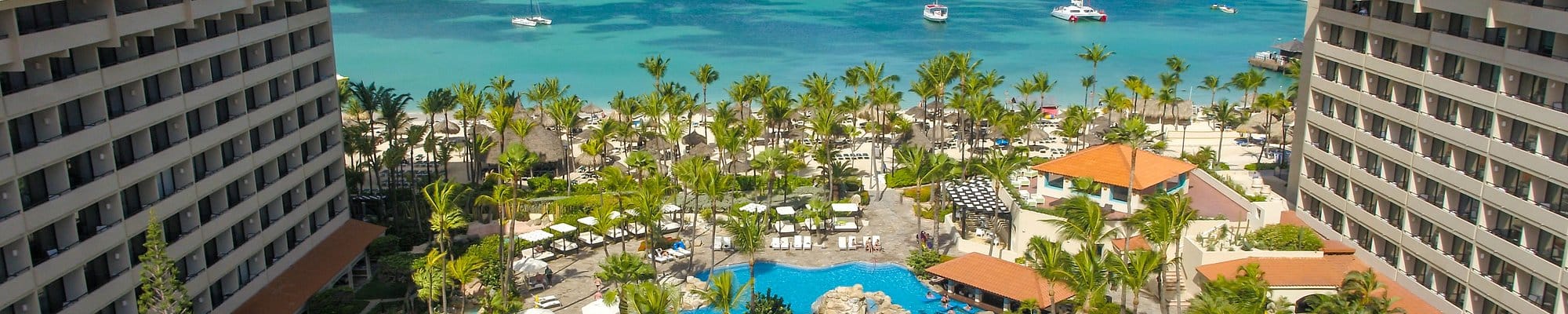
A large all-inclusive at the south end of Palm Beach, popular with families for the kids' club and multiple pools. The beach here is a short walk rather than direct access.
Half of this island is a beach and the other half is a desert with a national park on it. The mistake is spending all 7 days on the first half.
Nothing here takes a whole day unless you want it to. The island is small enough that most of these get you back for an afternoon swim.
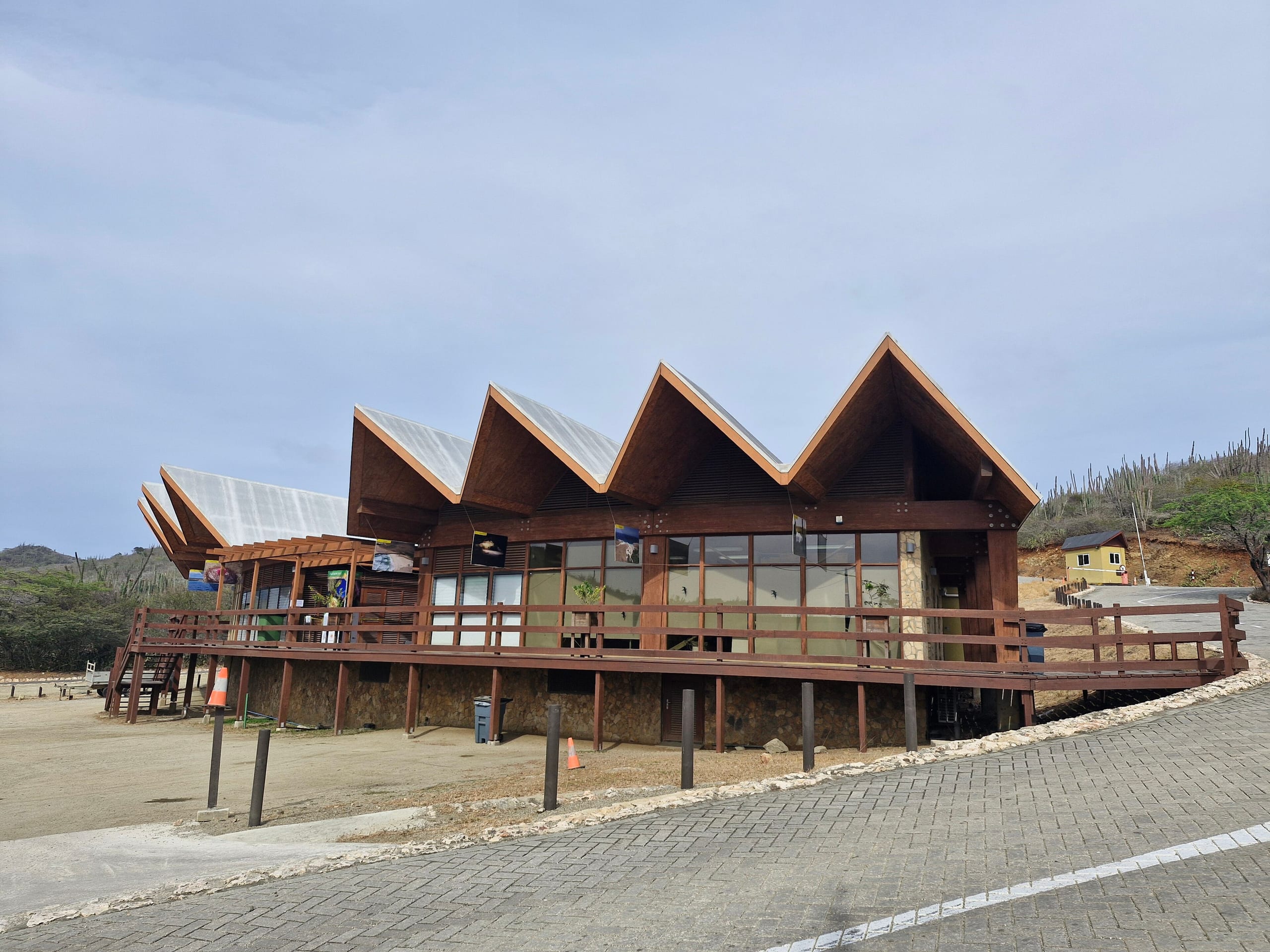
A half-day loop into Arikok National Park to swim in a rock-walled pool cut by the sea.
Check-in and the switch from UTV to jeep.
Every UTV tour ends here since the ban on UTVs inside the park. Guides swap groups into open-air jeeps, and this is usually where the park fee gets settled if it wasn't included upfront. It's a short stop, mostly paperwork and a safety briefing, but it's the last paved ground you'll see for a while.
8 AM· pickup from your hotel1 PM· drop-off at your hotel
You have seen what the days look like. Now pick the coast you want to wake up on, because on this island that decides almost everything else.
The island cooks in Dutch, Caribbean and Venezuelan at the same time, and none of that is a fusion menu, it is just who ended up here. The good news is that the best food on Aruba is also the cheapest: a fried fish plate at a dock, a turnover from a truck at 8 in the morning.
Start where the island starts, with keshi yena, meat baked inside a shell of Edam or Gouda. It is a leftover from when the cheese rind was the part the workers got.
Then eat a pastechi for breakfast, from a truck, before 9. That is when they are hot.
After that go looking for pan bati and whatever stew it arrives beside.
Go early.
Dishes (1/12)
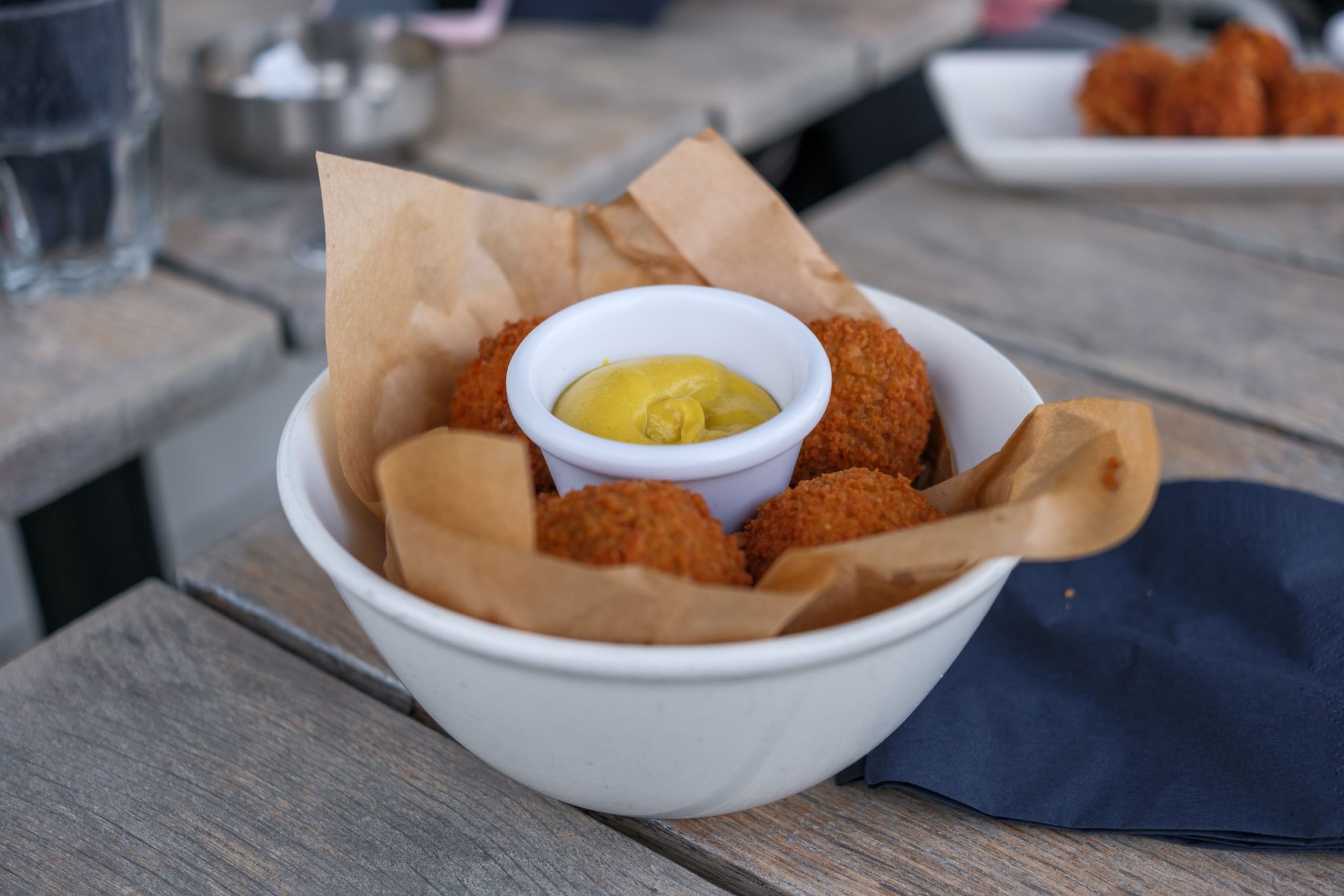
The Dutch half of the island's menu.
Small fried croquettes packed with a thick meat ragout, breaded and deep-fried until the shell cracks to a molten center. They're a straight import from Dutch bar food culture, and they show up on nearly every menu that also serves Aruban dishes, evidence of the island's colonial history. Order them with mustard on the side, the standard pairing.
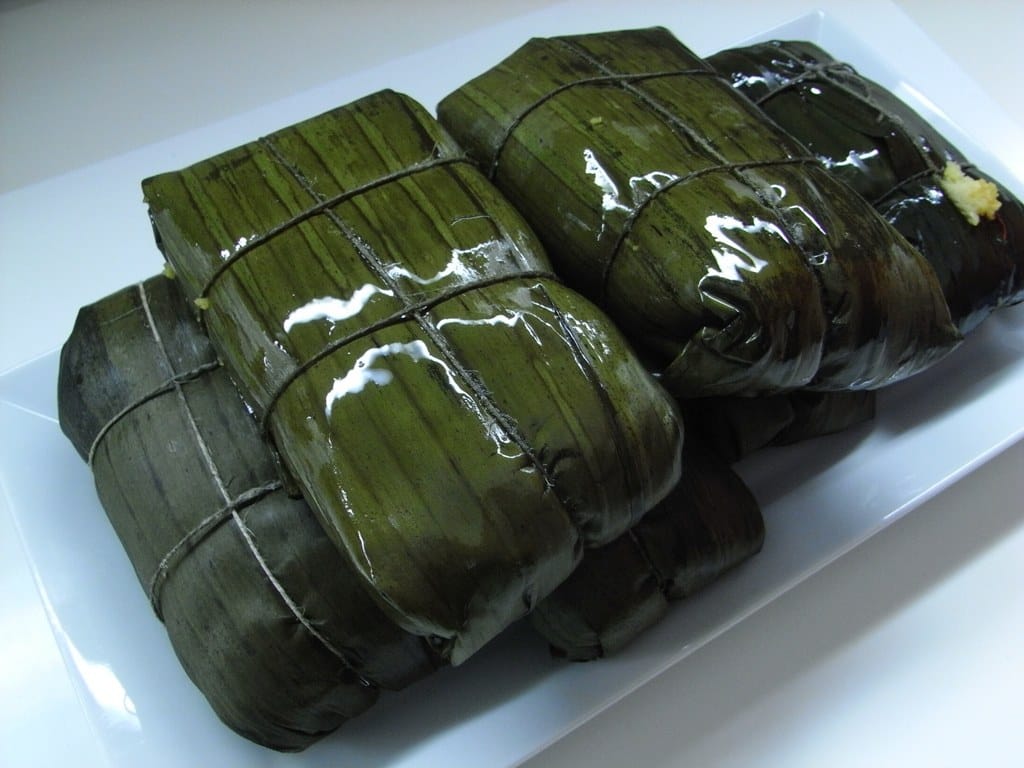
Christmas on a plate, wrapped in a leaf.
A cornmeal dough similar to funchi is spread with chicken, olives, raisins, cashews, and prunes, then wrapped in a banana leaf and boiled. Aruban families make it mostly in December, each with a slightly different filling passed down through the household. It has roots in the Venezuelan hallaca, carried over and adapted across generations.
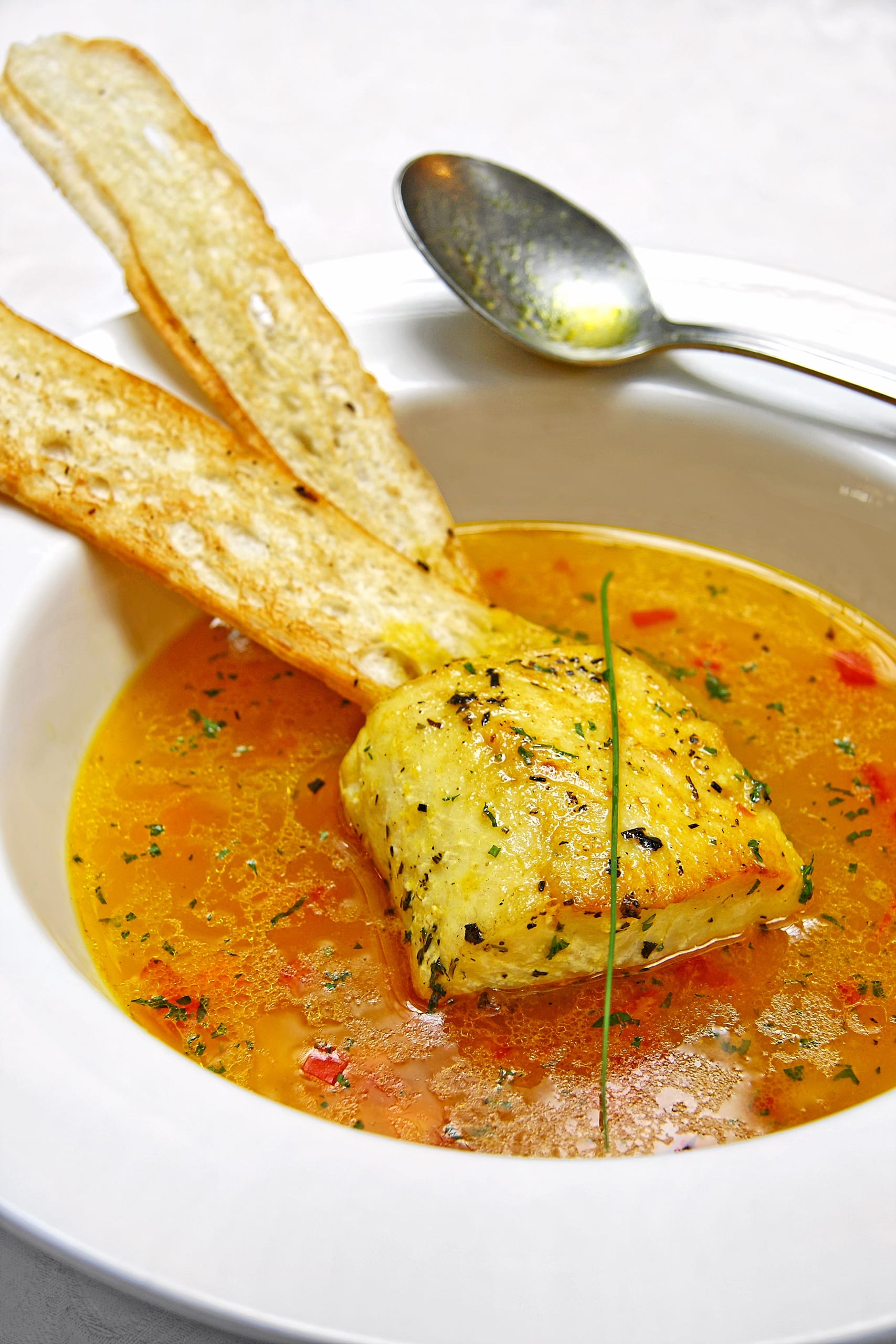
Fish soup with actual fish in it.
A tomato-based fish soup thickened with vegetables and local spice, built around whatever catch came in that day rather than a fixed recipe. Some versions run closer to a stew than a soup, thick enough to eat with a fork. Driftwood in Oranjestad calls its version a three-star fish soup, and that's a fair description of how seriously the dish is taken here.
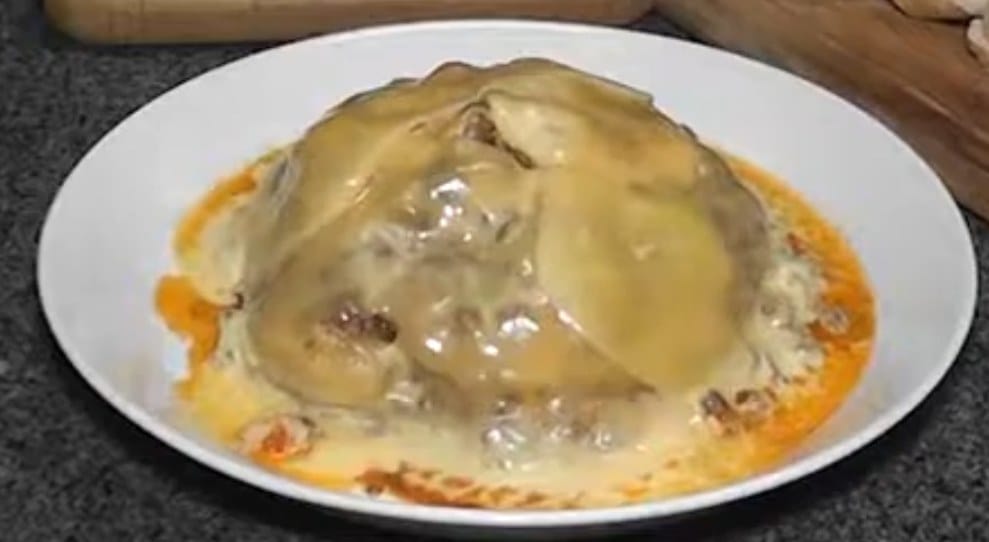
The one to eat first.
A whole wheel of Gouda or Edam is hollowed out, stuffed with a stew of chicken or beef mixed with raisins, olives, and capers, then baked until the cheese turns into its own crust. It started as a way for enslaved plantation cooks to use the wax rind after the Dutch owners kept the interior cheese for themselves. Nearly every Aruban restaurant serving local food has a version on the menu.
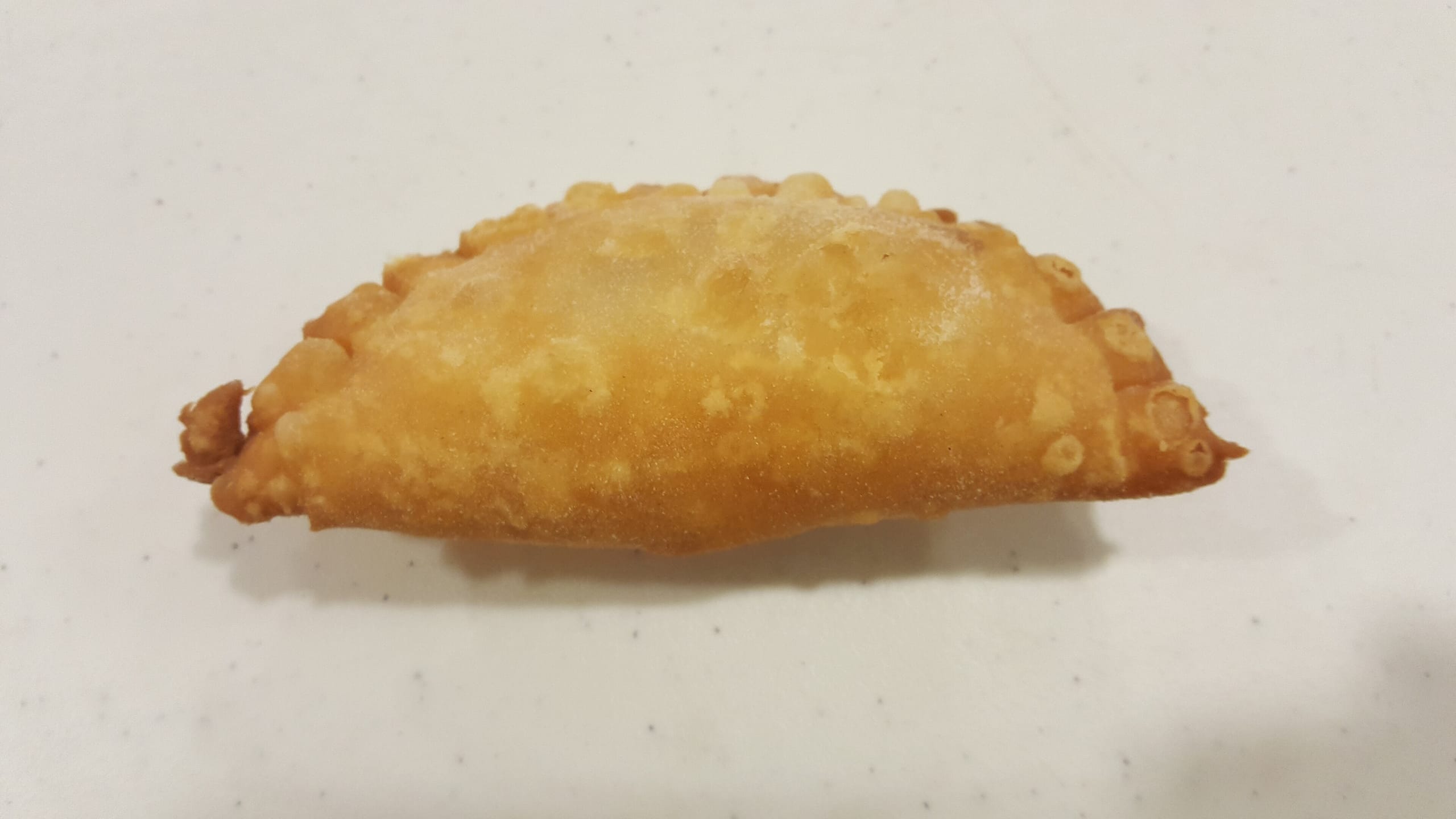
The island's answer to a quick breakfast.
A half-moon of fried dough, similar to an empanada, usually filled with cheese, ground beef, or saltfish and folded shut before it hits hot oil. Bakeries and gas stations sell them by the dozen in the morning, and they're eaten standing up, on the way to work. The crust should shatter a little when you bite into it.
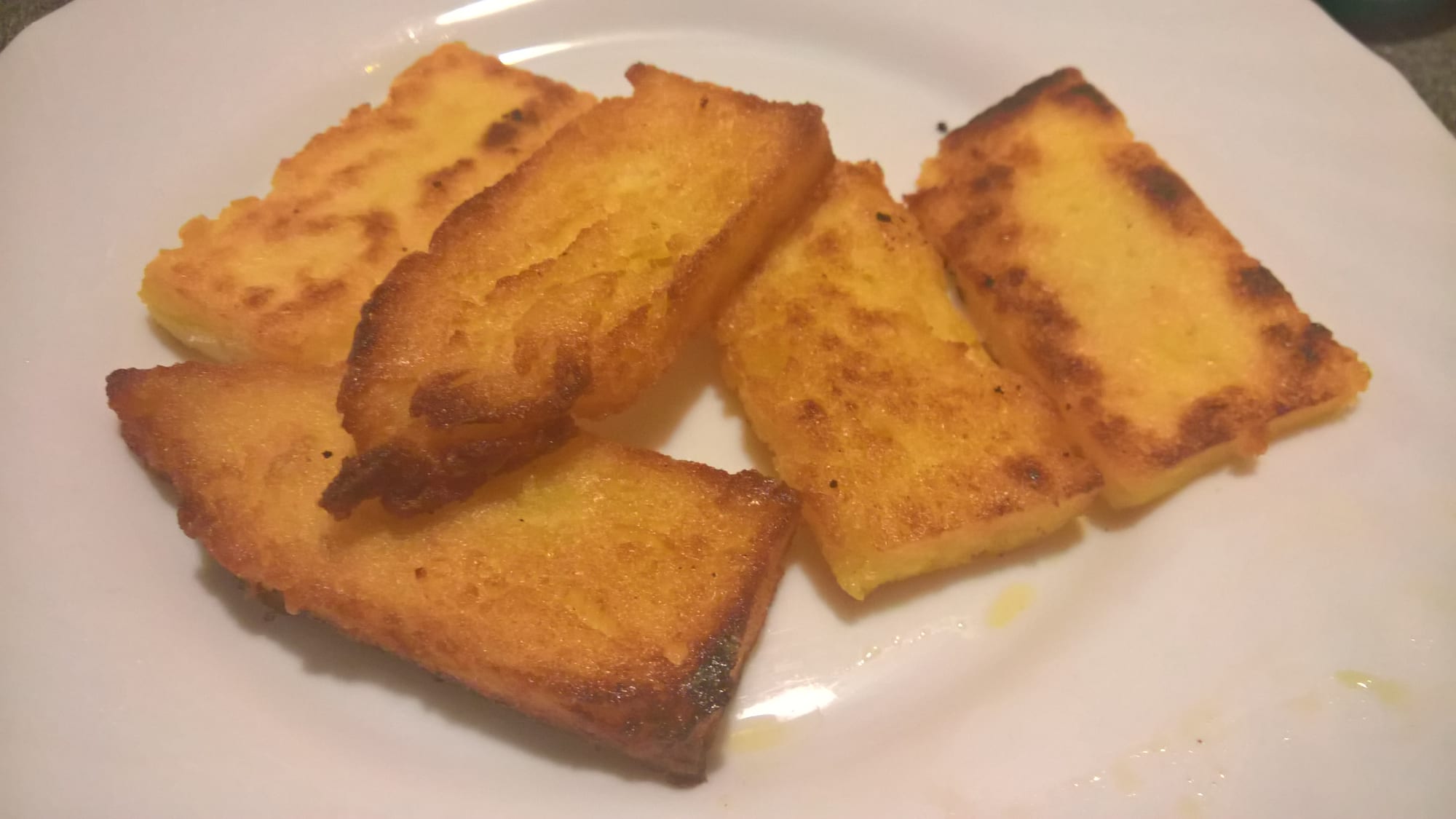
Cornmeal, done the Aruban way.
A thick cornmeal porridge close to polenta, boiled until stiff enough to slice, then served plain alongside stews or fried into golden sticks. It's the standard starch on an Aruban plate, the way rice is elsewhere, and it soaks up whatever sauce sits next to it. Leftover funchi gets pan-fried the next morning with eggs.
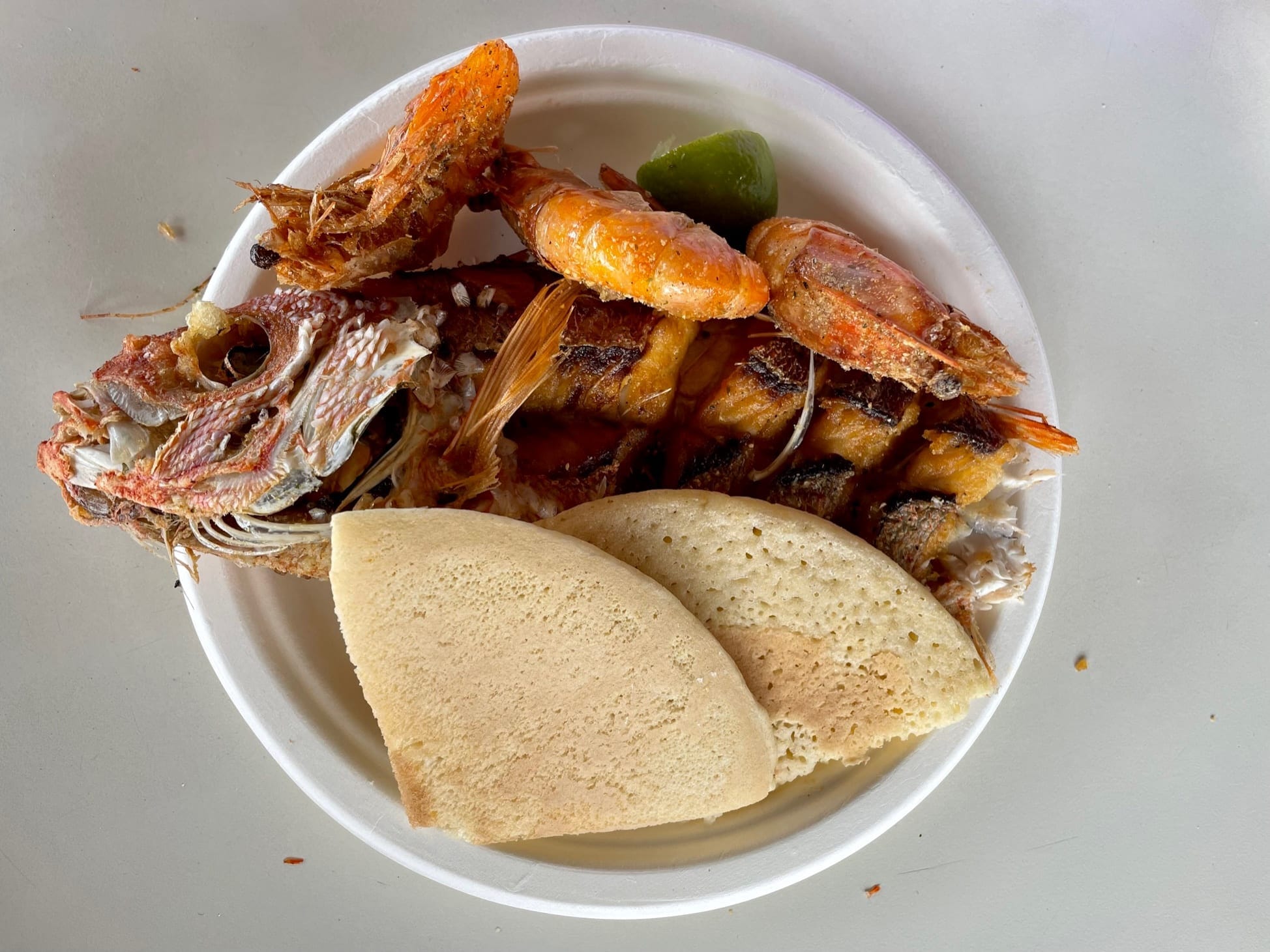
The cornbread that comes with everything.
A flat, slightly sweet cornmeal pancake, cooked on a griddle until the edges crisp and the center stays soft, served warm alongside fish or stew. The name translates roughly to beaten bread, for the batter mixed by hand before cooking. It shows up on almost every plate of fresh catch on the island.
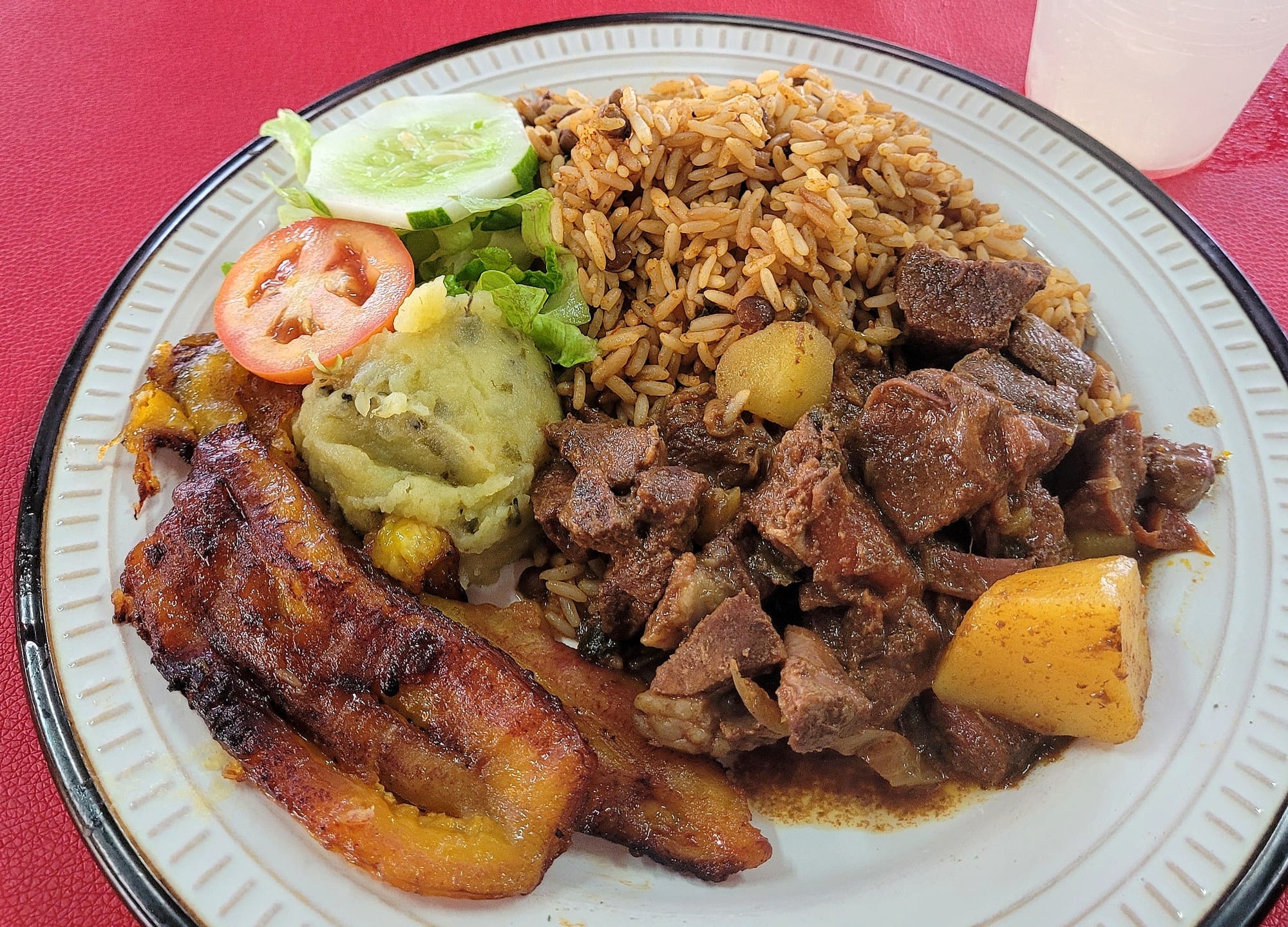
Sunday dinner, most nights of the week.
A slow-braised stew, usually goat or beef, simmered for hours with tomatoes, peppers, and local spice until the meat falls apart on its own. Every family keeps its own version, and restaurants serving Aruban food almost always have one on the menu, often the goat. It's built to be eaten with funchi or rice, never on its own.
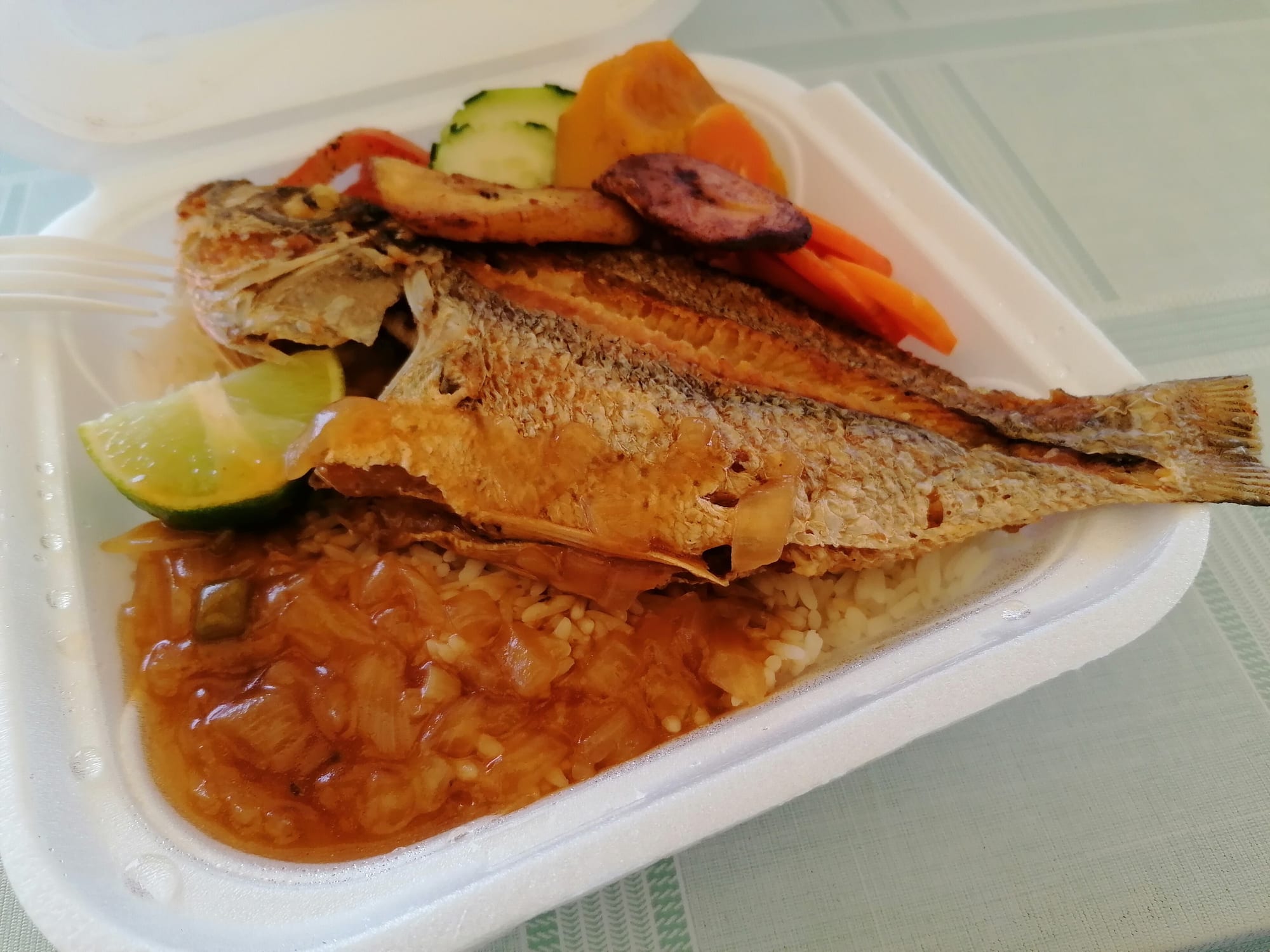
Whatever came off the boat, sauced simply.
Grilled or pan-seared local fish, wahoo, mahi, snapper, whatever's running, finished with a tomato-based Creole sauce built from onion, pepper, and garlic. It's less a single recipe than a format every seafood restaurant on the island runs its own version of. The fish changes with the season, but the sauce stays roughly the same.
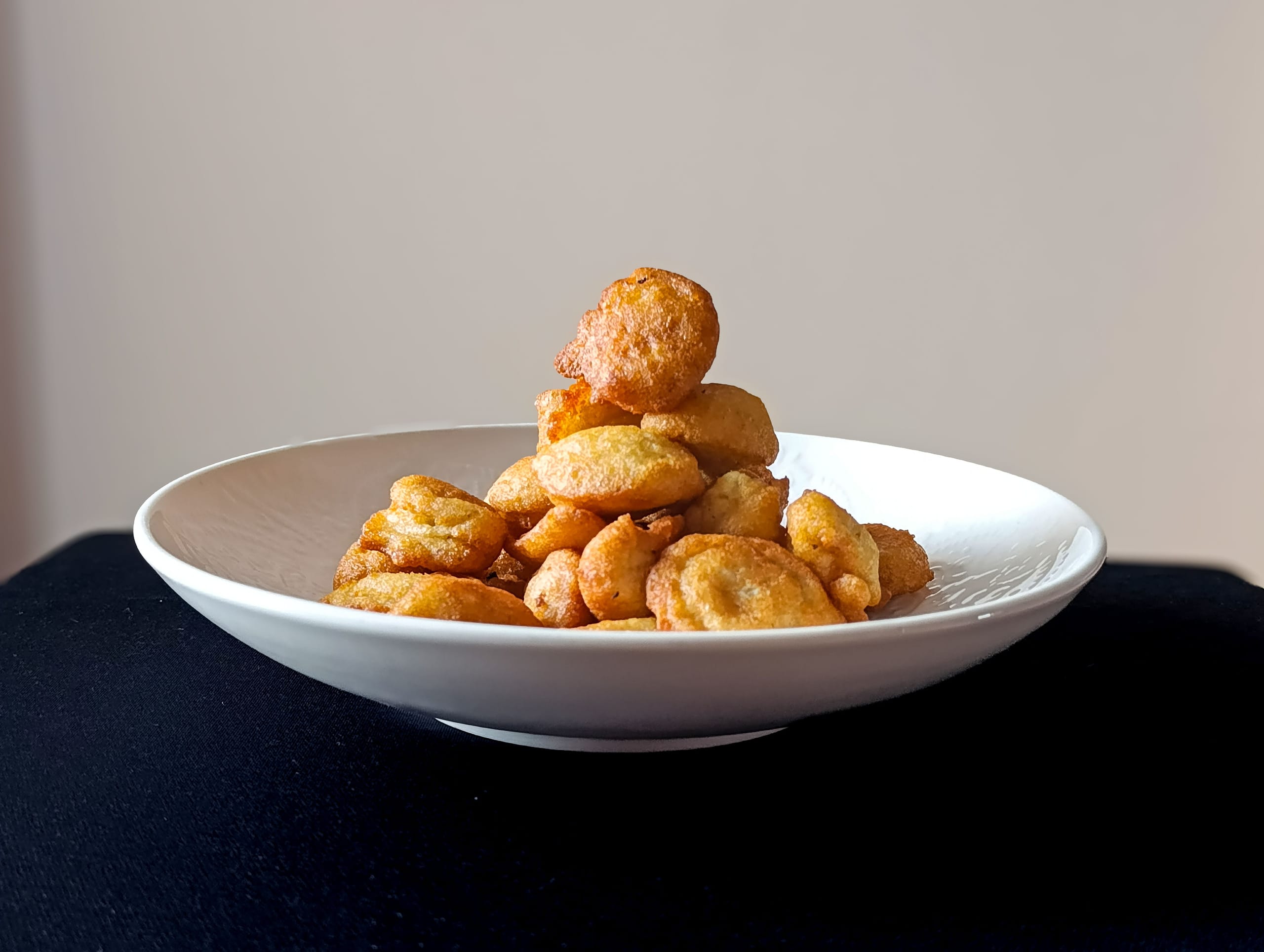
A West African fritter that never left.
Black-eyed peas are mashed with onion and hot pepper, usually Madame Jeanette, formed into balls, and deep-fried until the outside turns dark and crisp. The dish traces back to the Yoruba akara through the transatlantic slave trade, carried into Aruban Creole cooking under a new name. It's eaten as a snack or a side, not a meal on its own.
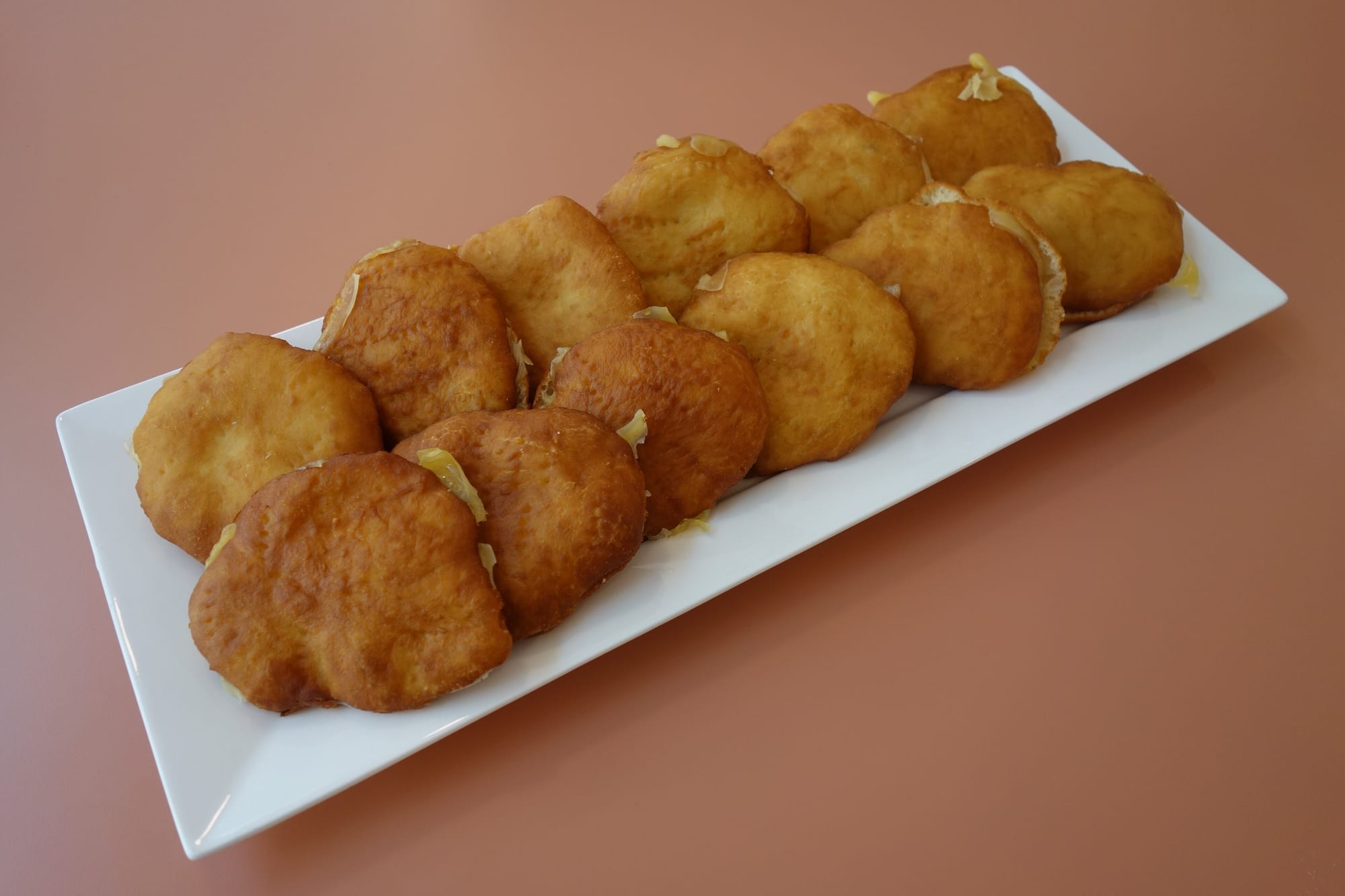
Breakfast bread, split and filled.
A dense, fried round of flour and cornmeal, crisp outside and soft within, split open and filled with cheese or saltfish. It's closer to a biscuit than a true cake, and the name likely comes from journey cake, bread meant to travel well. It shows up at breakfast most often, though it's eaten as a snack throughout the day too.
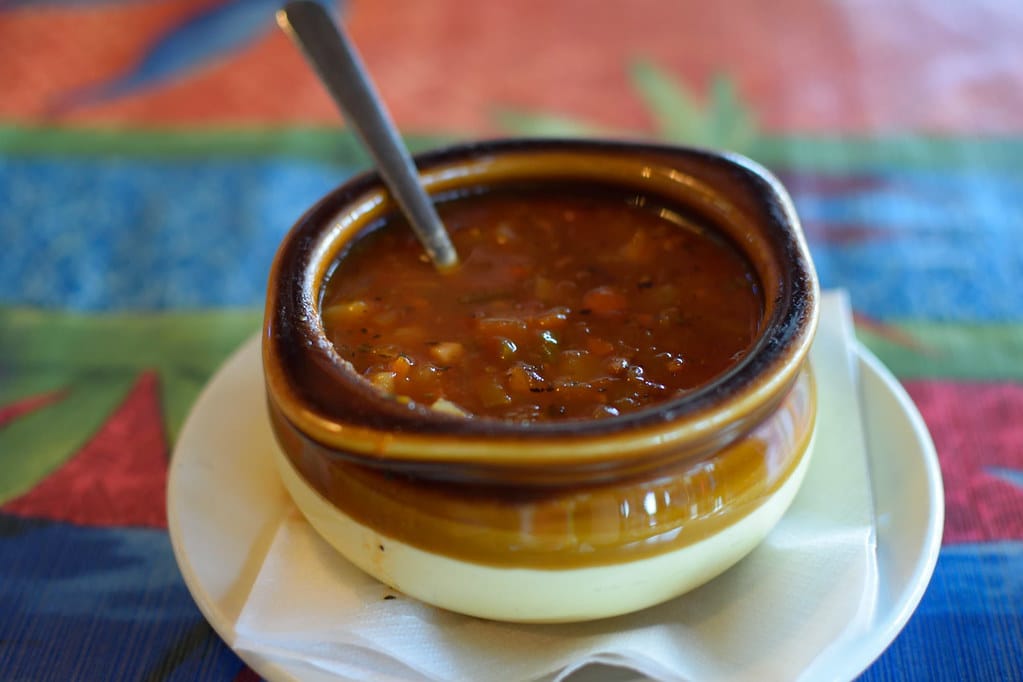
Conch, stewed slow.
Tender conch meat is simmered for hours in a tomato or vinegar-based broth with onion and pepper until it turns soft enough to eat with a spoon. It's served over rice or alongside funchi and pan bati, standard sides for any Aruban stew. Conch takes longer to tenderize than most shellfish, which is why this dish rewards a slow kitchen over a fast one.
Pick where you are, then swipe through what is open there.
Areas (1/5)
The high-rise strip
This is where the megaresorts line up along the sand, and the restaurants around them range from an Argentine-style steakhouse to a 150-year-old country house turned dining room. You eat here between excursions, usually within a 10-minute walk of the hotel, and the menus lean international with an Aruban dish or two folded in.
A pastechi from a truck before 9, fried catch off a paper plate at the dock in Savaneta for lunch, and keshi yena in a cunucu house in Noord for dinner. That is the island in one day and it costs less than one meal on the strip.
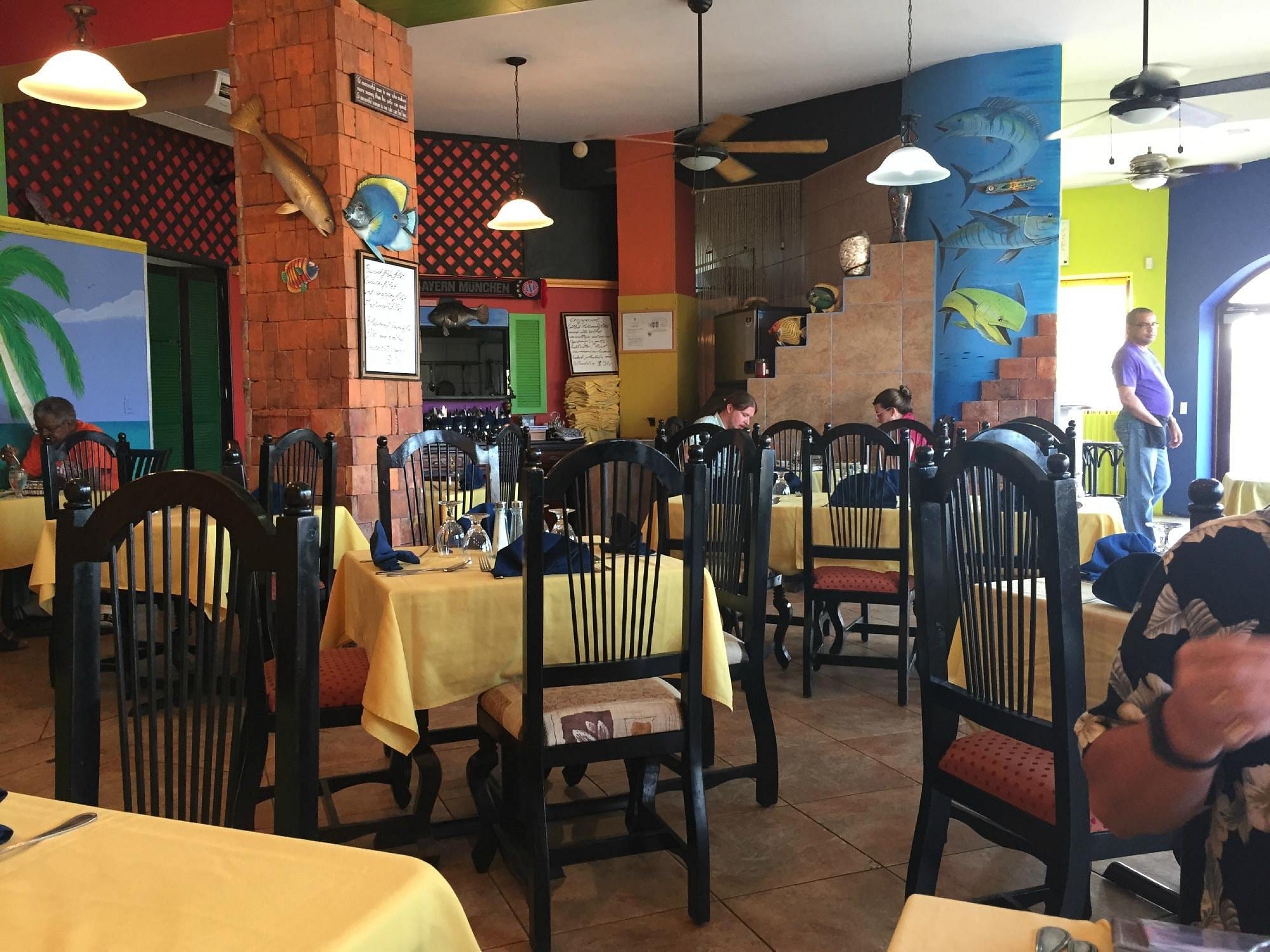
The kitchen splits its attention between whatever wahoo or mahi came off the boat that day and thick cuts of Argentine beef, so a table can order a whole fish and a ribeye and both land well. Seating is close together under a tin roof a few streets back from the high-rise strip, and the room fills fast since reservations aren't taken. Go early or expect to wait at the bar.
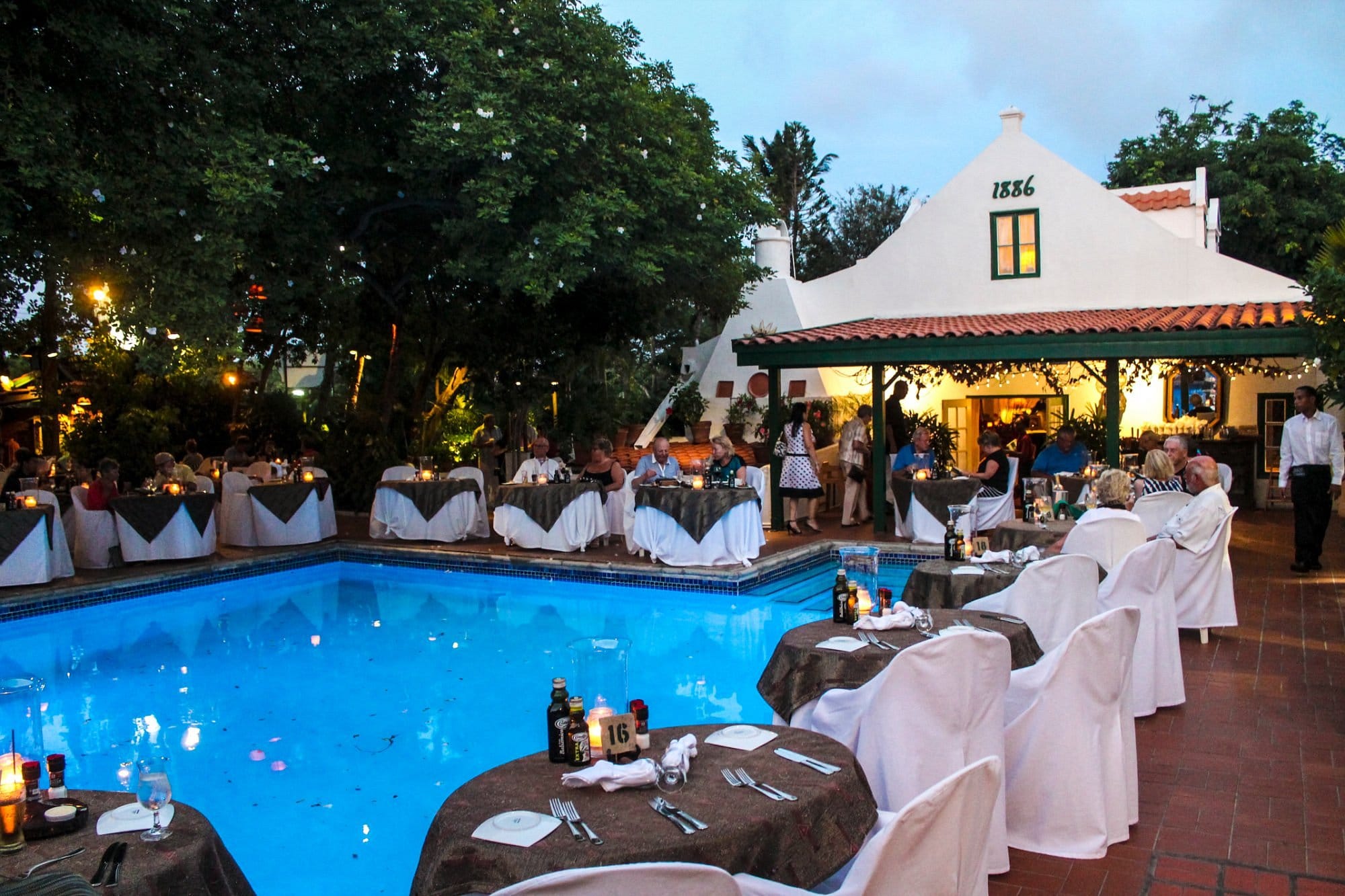
The Ellis family runs this one inside their own 1886 manor house, with a pool in the tropical garden. Seafood and meats come with a touch of Aruba, and guests can tour the wine collection and antique furnishings before or after the meal. It's the kind of place people book for anniversaries, not a quick bite before the beach.
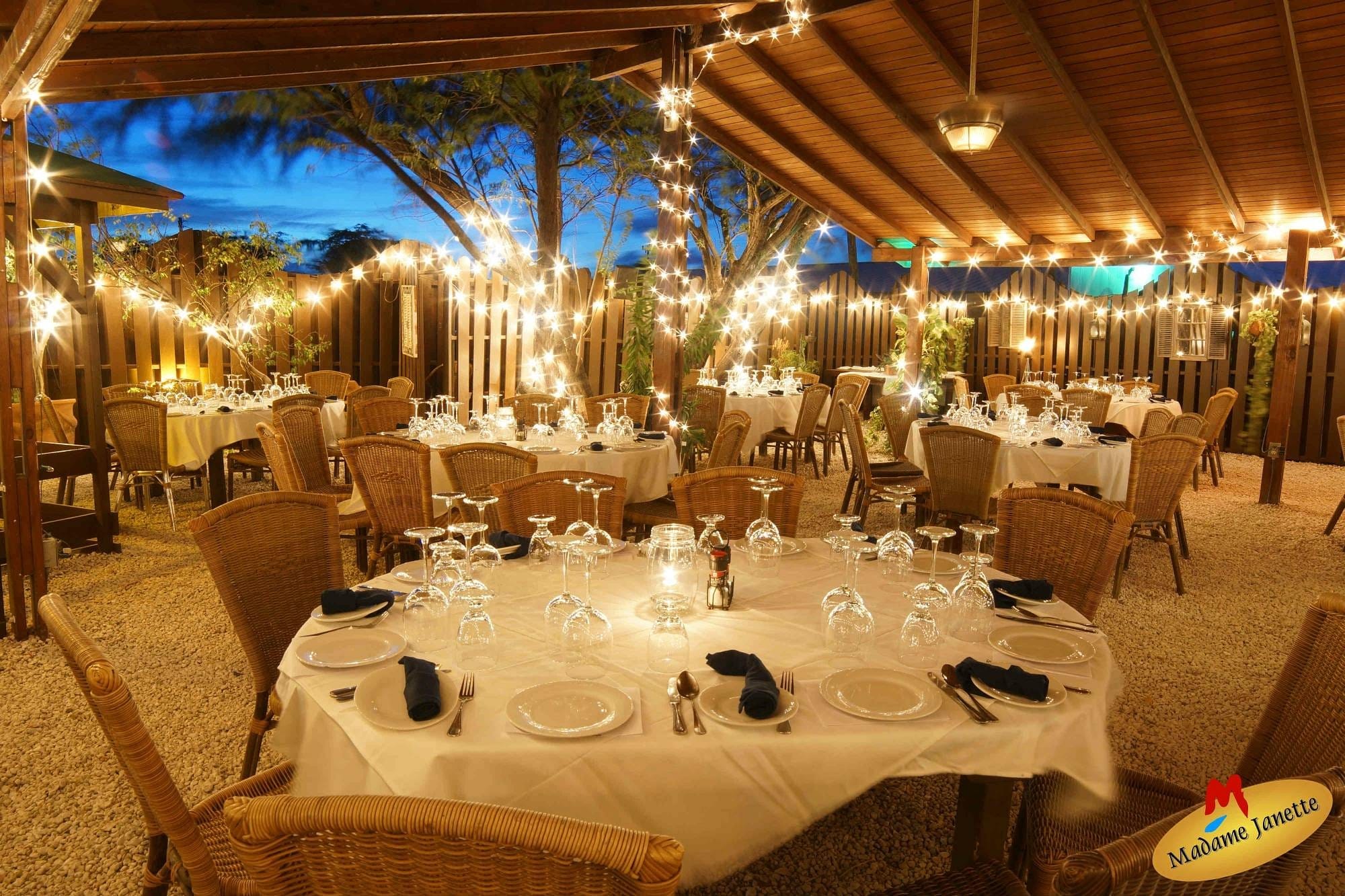
Outdoor tables sit in tropical gardens, with live music some nights. The menu runs to almond-crusted grouper, lobster ravioli and Vienna-style pork schnitzel, plated with more polish than the casual setting suggests. It's closed Sundays, and reservations are recommended.
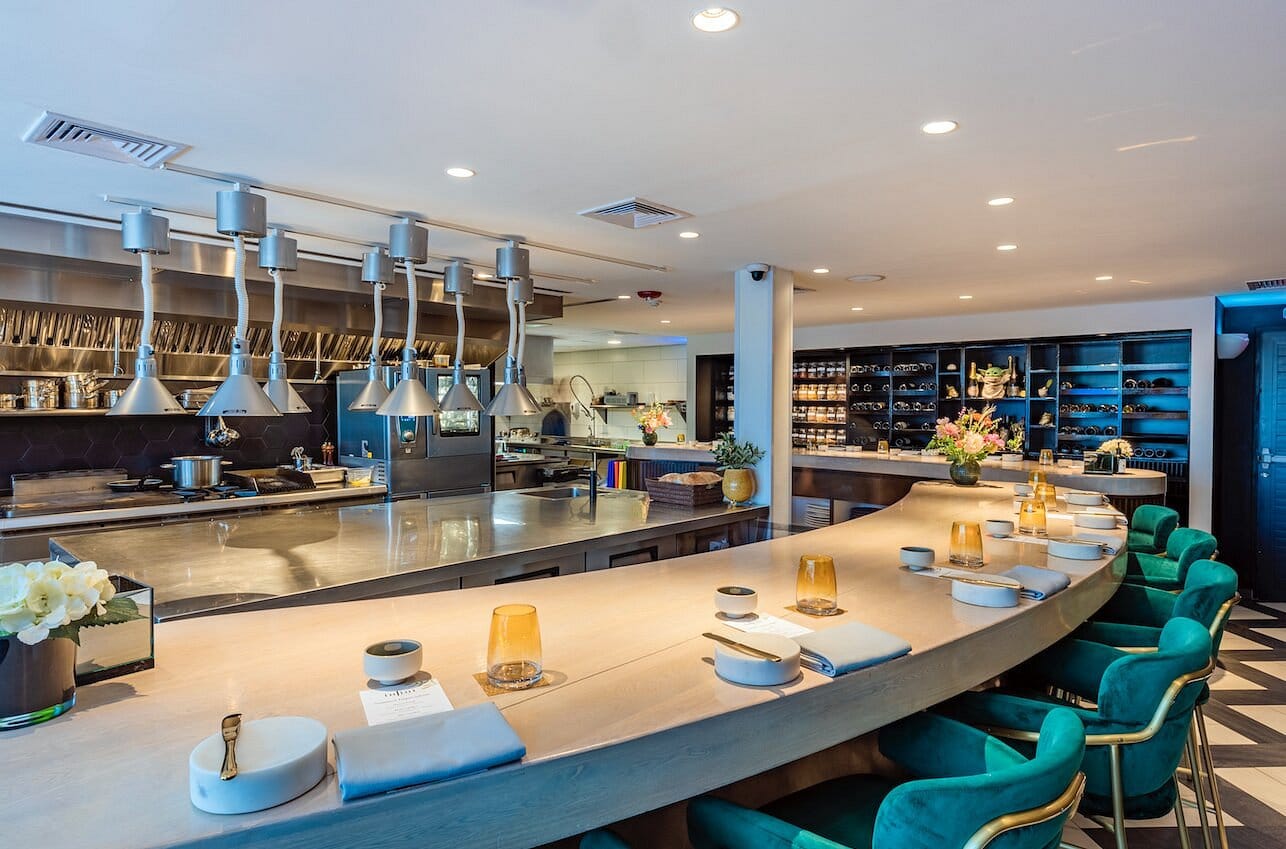
Chef Urvin Croes runs a chef's table format limited to 18 diners a seating, an 8-course tasting menu built around familiar ingredients pushed into unexpected roles. The room sits along the Palm Beach strip, but the pace and the dress code, business casual, set it apart from the resorts around it. It's dinner only, the kind of meal you plan an evening around rather than fit between activities.
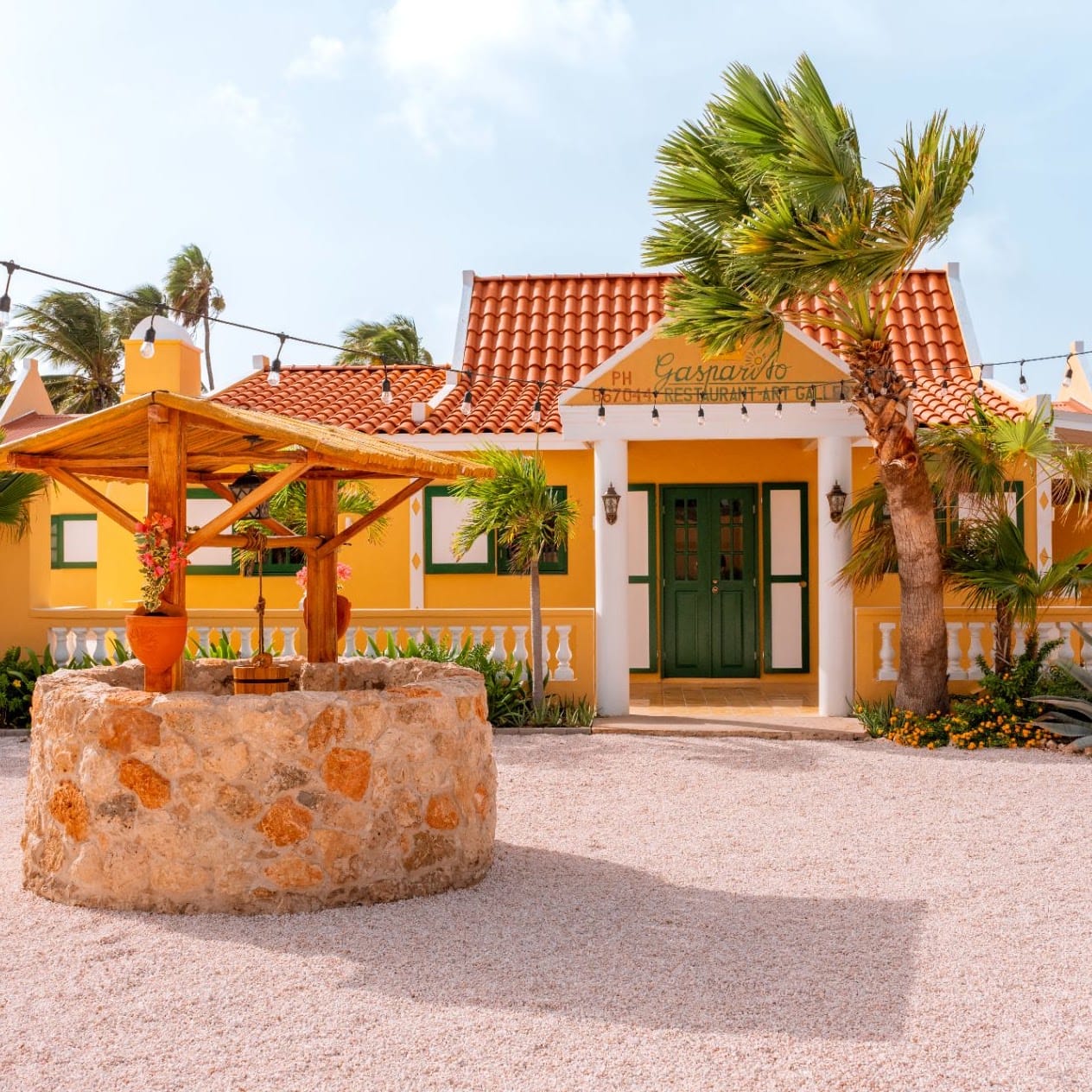
The dining room sits inside a building of historic architecture, with local art on display, much of it for sale. The menu holds to island staples like goat stew, pan bati and funchi, food built for a long dinner rather than a quick one.
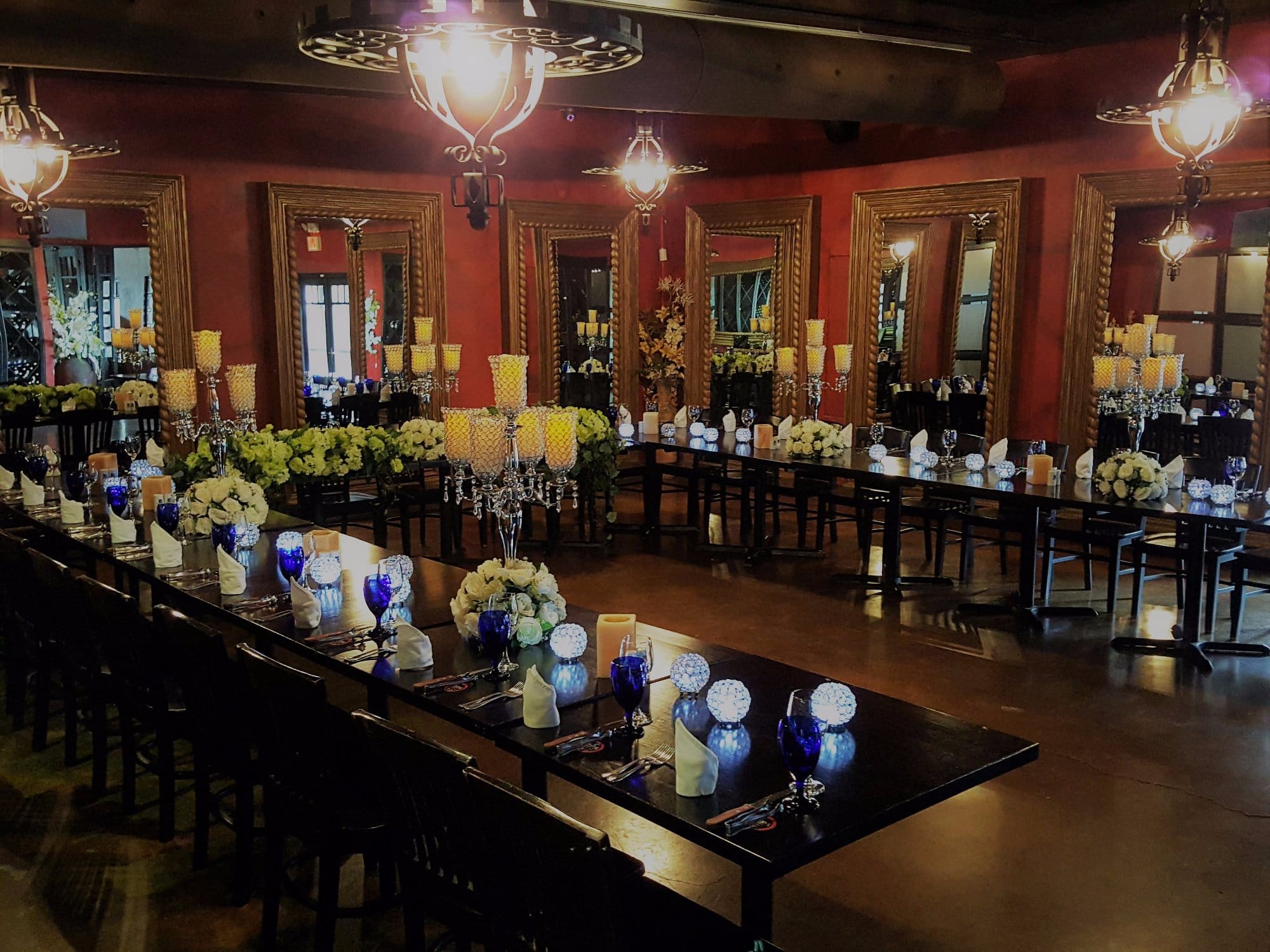
This is a churrascaria in the full sense, a 45-item salad area of roasted vegetables and imported cheeses, then servers working the room table to table with skewers of grilled beef, pork, lamb, and sausage until you flip your card to stop. It sits on the second floor along the high-rise strip, elevator accessible, with private dining for groups. Go hungry. The format doesn't reward restraint.
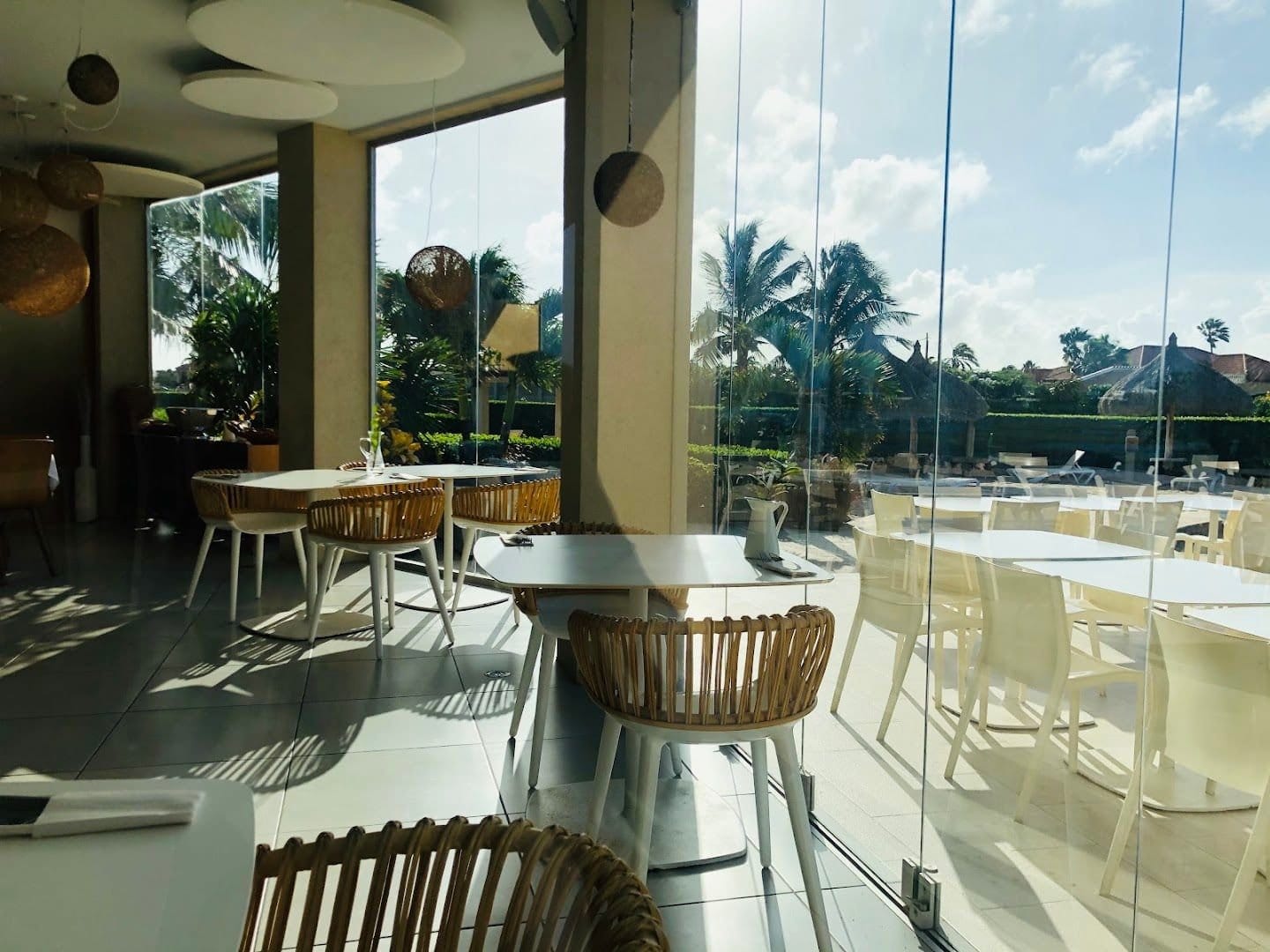
Chef Urvin Croes worked at the Michelin-starred Karel V in the Netherlands before opening this restaurant in early 2012. The food fuses European fine-dining technique with island plants and herbs. It draws a crowd looking for something more composed than a beach dinner.
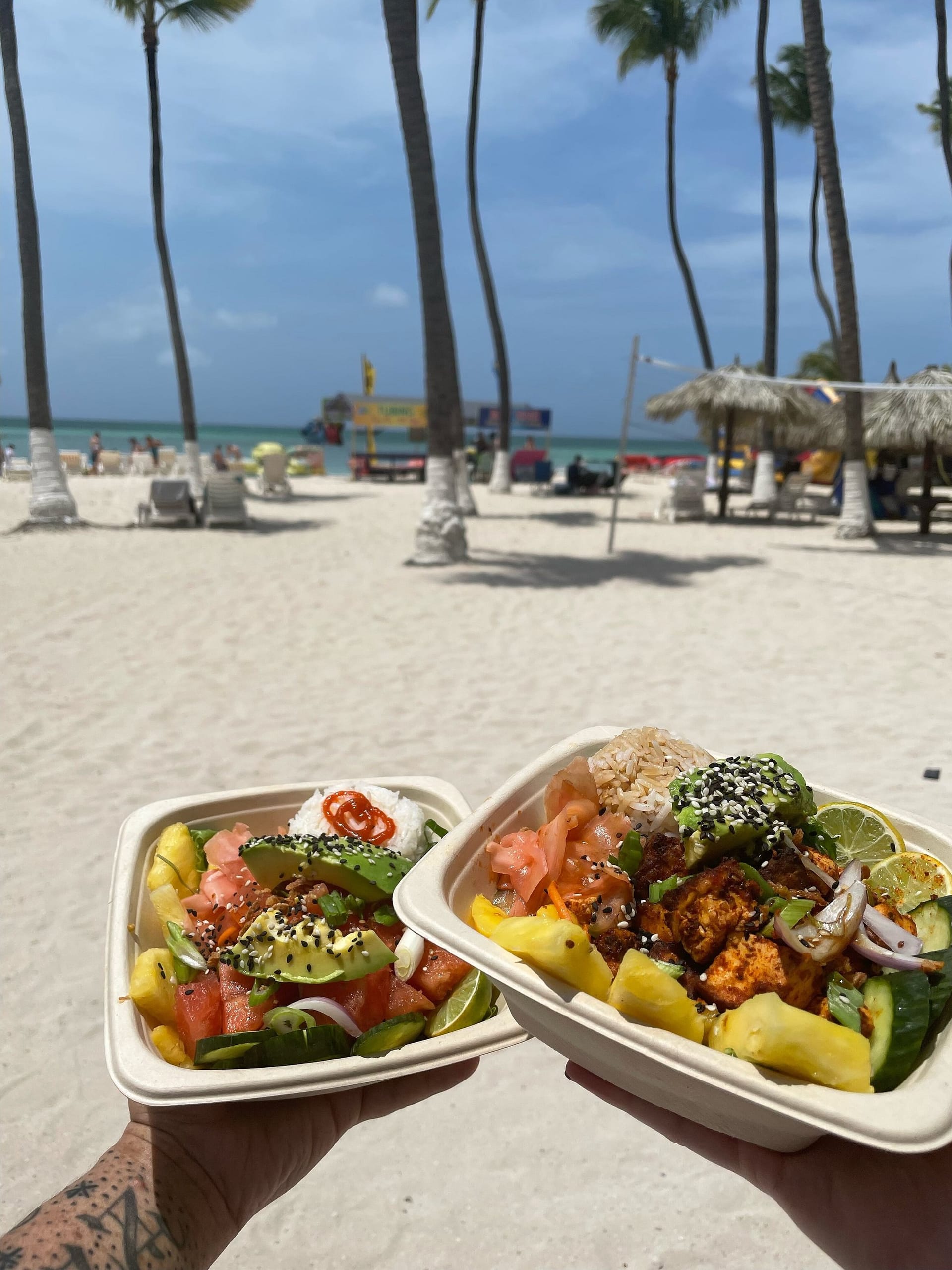
A small, brightly painted shack on the sand in front of Playa Linda, serving fresh fruit and vegetable juices, smoothies, and smoothie bowls made without additives. The acai bowls have a strong local reputation, and the setup works well as a breakfast stop before a beach day rather than a sit-down meal. A second location opened in Savaneta after a food-truck version tested well at Baby Beach.
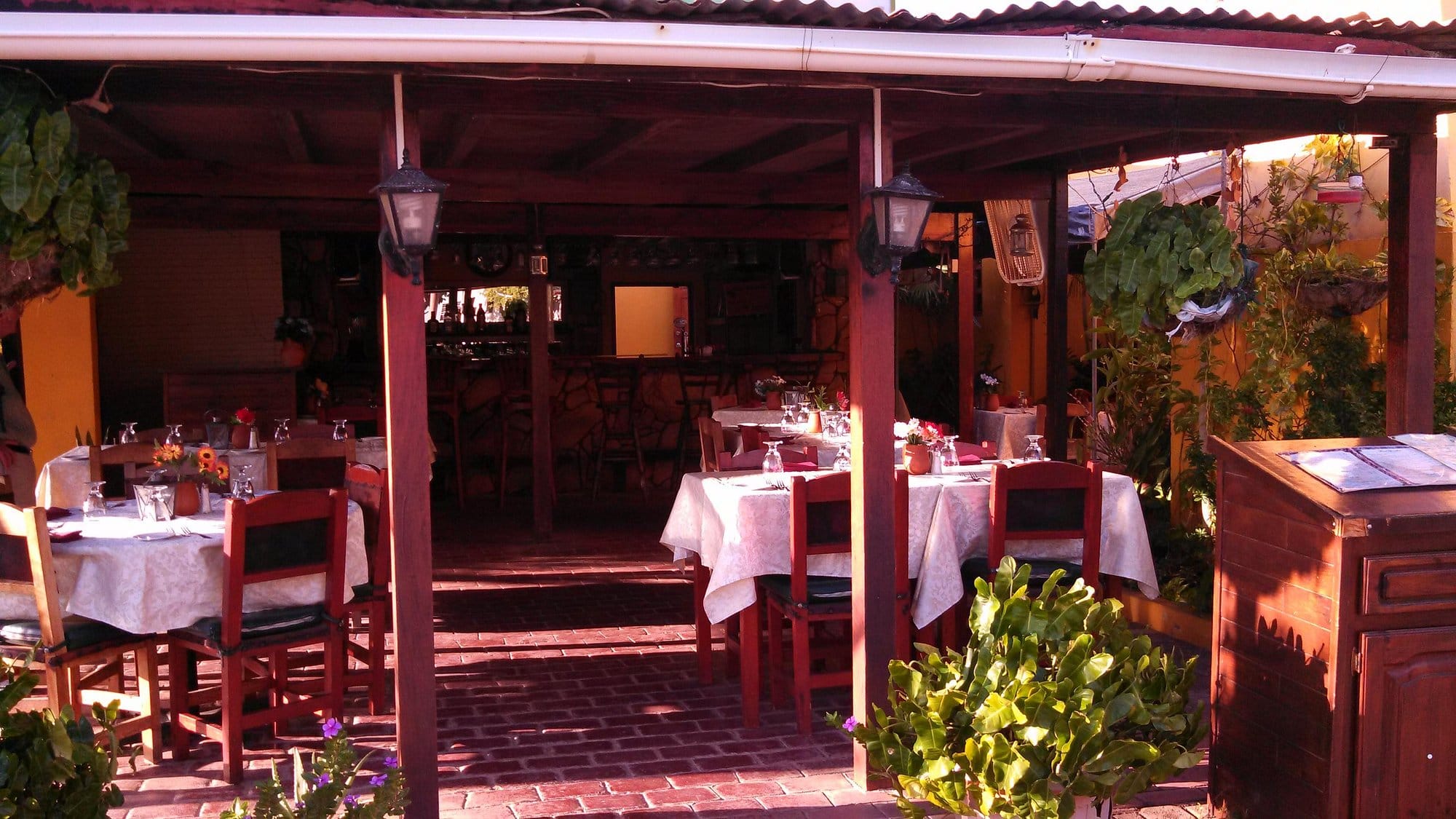
A 150-year-old country house holds the dining room, with a veranda out back and live music. The kitchen sticks to the basics done right, keshi yena, stewed goat, fresh fish, pan bati and funchi on the side, plus an international menu with pasta and veal for anyone who wants something else. It's a family spot with a kids menu, and the quesillo custard is worth saving room for.
There is no ride-hailing app on this island and there never has been. That leaves 3 options, and which one you pick depends entirely on whether you intend to leave the leeward coast. Taxis are unmetered, but the fares are set by the government and posted, so nobody is inventing a number at your expense.
A paved path links Eagle Beach to Palm Beach. Beyond that the island was not built for it.
Shared trips usually include an open bar, but confirm with the operator.
Route L10A runs the length of the hotel coast, from the Oranjestad terminal out past Eagle Beach and Palm Beach.
Keep the helmet on for even a 5 minute run. The trade wind pushes a light bike around more than you expect.
No meters anywhere. Every fare is a fixed government rate by zone, charged per car for up to 4 people rather than per head.
Almost every junction that matters is a roundabout, and the car already going round has the right of way.
| Mode | For | Speed | Good to know | Fare |
|---|---|---|---|---|
On Foot | Your hotel, the sand, and dinner | Walking | A paved path links Eagle Beach to Palm Beach. Beyond that the island was not built for it. | |
Boat | Snorkeling, sunset sails and Renaissance Island | Unhurried | Shared trips usually include an open bar, but confirm with the operator. | |
Arubus | Staying on the strip and not renting | Cheap and scheduled | Route L10A runs the length of the hotel coast, from the Oranjestad terminal out past Eagle Beach and Palm Beach. | |
Scooter | 2 people hopping between beaches | Quick on the strip | Keep the helmet on for even a 5 minute run. The trade wind pushes a light bike around more than you expect. | |
Taxi | Airport runs and nights you would rather not drive | Door to door | No meters anywhere. Every fare is a fixed government rate by zone, charged per car for up to 4 people rather than per head. | |
Rental car | Anyone leaving the hotel strip | Fastest | Almost every junction that matters is a roundabout, and the car already going round has the right of way. |
Teach a friend some Papiamento
You do not need any of this. Aruba runs on 4 languages and almost everyone you meet will switch to English before you have finished your first sentence. Learn them anyway. Papiamento is the one the island thinks in, and the reaction to a tourist using it is worth the 10 minutes.
10 things worth sorting before you go. Two of them will stop you boarding the plane, and most of the rest cost nothing.
Categories (1/5)
The form you have to file, the car you may not need, the coast you cannot swim on, and why the flight home starts 3 hours early.
Still curious? Just email us
Still curious? Just email us