If you take one thing from this page, take the eighty dollar rule. Price both airports for your dates, and if Tulum comes within about eighty dollars of Cancun, fly into Tulum and save yourself three hours of highway across the trip. Past that, land at Cancun and take the coach. It is half past two on a Tuesday and there are two aircraft on the apron of an airport with thirteen gates.
The belt starts, runs for about four minutes, and stops. Everybody's bag is already off it. There are maybe sixty of you in a hall built to move a thousand at once, and the noise your wheels make on the floor carries the whole way to the doors.
Outside, the heat arrives in one piece. A line of white vans, a man with a clipboard, and past both of them a road running into low green scrub in either direction with nothing on it at all.
TL;DR
- Tulum's own airport, Felipe Carrillo Puerto, is 12 miles (20 km) southwest of town. It opened on 1 December 2023 and it has never been busy.
- It saves you the 90 minute drive down from Cancun. It then asks for a chunk of that saving back, because the taxi rank outside has no competition.
- The ADO coach into town costs about $13 (MX$220) and takes roughly an hour. The taxi wants $60 to $90 for a shorter version of the same road.
- Routes are thinning, not growing. Check that your route still exists before you plan a trip around it.
- The rule that still holds: if the fare into Tulum lands within about eighty dollars of the fare into Cancun, take Tulum. Past that, Cancun and the coach.
Two doors to the same coast
For twenty years there was one way onto this coast, and it was Cancun. You landed at the second busiest airport in Mexico, walked a gauntlet of people offering you a transfer and a timeshare talk, and then drove 75 miles (120 km) south. Ninety minutes if you paid for a van. Two and a half hours if you took the bus, which most people did, and which is fine.
Since the end of 2023 there has been a second door. It is 12 miles (20 km) southwest of Tulum instead of 75 miles north, it is a twenty minute walk from kerb to gate, and almost nobody uses it. Both of those facts are connected, and the second one is the thing nobody mentions when they tell you to fly into Tulum.
The question is not which airport is nicer. Tulum is nicer, and it is not close. The question is whether the fare difference is small enough to be worth what you give up in choice, and that is a number you can work out in about four minutes when you are comparing fares into a region rather than a thing to have an opinion about.
"Tulum International Airport opened on December 1, 2023"
The eighty dollar rule is the practical version. Price both airports for your dates. If Tulum comes within about eighty dollars of Cancun per person, take Tulum: you save two hours of road at each end, and two hours at the end of a long flight is worth more than eighty dollars to almost everyone. If the gap is bigger than that, land at Cancun and take the coach south. Neither answer is clever. They are just the two answers.
You are not choosing an airport. You are choosing how much of your first day you are willing to spend looking at Highway 307.
The terminal is not busy, and that is most of the experience
Scene
Half past two on a Tuesday. Two aircraft on the apron and thirteen gates. The cafe has one person in it and the person is staff. The building is long and low and full of wood and green light, and it has been designed with obvious care by people who expected it to be full, which gives the whole place the atmosphere of a party where everybody said yes and then it rained. Somewhere behind a pillar a floor polisher is going. It is the loudest thing in the building.
This is not a complaint. Walking off a flight and being through the door in fifteen minutes is a genuinely good way to arrive somewhere, and it is the opposite of what the same coast does to you at Cancun. But you should know it going in, because it explains almost everything else about flying here: the fares, the routes, and the price of getting from the terminal to your bed.
The building was put up for 5.5 million passengers a year. It has never handled a quarter of that.
"1 millon 233 mil pasajeros en 2024"
5.5M
Passengers a year the terminal was built for
1.23M
Passengers it handled in 2024
29.3M
Passengers through Cancun in 2025
13
Gates, most of them unused on a given afternoon
Cancun moved roughly twenty four times as many people last year. That ratio is not a knock on Tulum, it is the whole reason the two airports feel so different to arrive at, and it is also why one of them has six airlines competing for your fare and the other does not.
Why the routes keep thinning
The direction of travel is the part most articles get wrong, because they were written in 2024 when the airport was opening routes rather than losing them. Through 2025 and into 2026 the traffic went the other way, and it went hard.
"64 mil 646 pasajeros, una caida de 27.88% respecto al mismo mes del ano anterior"
Carriers have cut frequencies, suspended routes, and in several cases left. International destinations served from the terminal have fallen from around a dozen to a handful, and the number of international departures on an average day has dropped with them. American, Delta and United are the ones still flying, out of Dallas, Miami, Atlanta and Houston, with Canadian carriers running the winter traffic from Toronto and Montreal.
"caida superior al 30 por ciento en el trafico aereo"
What that means for you is narrow and practical. Confirm the route exists before you build a trip on it. A schedule that was flying last winter may not be flying this one, and a nonstop you read about in a 2024 article has a decent chance of having been quietly retired since. The airline's own timetable is the only source worth trusting here. Everybody else, this page included, is working from reporting that ages.
- Check the airline's own schedule for your exact dates, not a route map or a news article.
- Check the return as carefully as the outbound. Routes get cut in one direction first.
- If the only flight that works is once a week, price what a missed connection costs you before you book it.
- Look at Cancun for the same dates anyway. It is fifteen minutes of work and it is frequently the answer.
The forty minutes you still have to buy
Here is the part that catches people, and it is the reason the airport has not killed off the Cancun run. You have saved yourself an hour and a half of highway. You now have to cover the gap between a terminal in the scrub and a town that is not next to it, and the gap is bigger than it looks on a map.
The terminal sits southwest of Tulum, about 20 km out. That is half an hour of road when nothing is in the way, and closer to forty minutes once you are inside the town's one street. If you are staying on the beach road it is longer again, and on a bad afternoon it is an hour.
Mode
ADO coach, timed to arrivals
Duration
About an hour
Cost
About $13 (MX$220) per person
Buy it in the ADO app rather than at the desk. It drops you at the bus station on Avenida Tulum, in the middle of town, which is where you want to be if you are staying in town and a taxi ride from where you want to be if you are on the sand.
The taxi rank is the other option and it is where the saving goes. Expect $60 to $90 to town or the beach road, depending on how far south your hotel is and what the driver thinks of your face. There is no ride hailing here, the fares are not metered, and the rank has no competition, which is a combination that produces exactly the price you would expect it to produce.
Buy the coach ticket before you land
The ADO app takes a card and holds the ticket on your phone. Doing it in the air or on the terminal wifi means you walk past the rank instead of standing at it working out the exchange rate with a driver watching you, which is a negotiating position nobody has ever won from.I did not do this. I stood at the rank for a while, established that the number was the number, and paid it, and then spent the drive doing the arithmetic on what the flight had saved me versus what the last twelve miles had cost. It came out roughly even. I had flown into a different airport to arrive at the same place at the same total price, which is a thing you can do.
The flight saves you ninety minutes. The taxi rank has read the same article and priced accordingly.
Where you sleep decides what the ride costs
Nobody tells you this before you book, and it changes the transfer number more than the airport choice does. Tulum is two places wearing one name. There is the town, a grid either side of one long avenue, three kilometers back from the water. And there is the beach road, a single strip of sand and hotels running south along the coast with no pavement and no street lighting.
From the airport, town is the short version of the drive and the sand is the long one. The beach road also has a bottleneck in the middle of it that does not care what you paid, so an afternoon arrival at a hotel down the southern end can take an hour from a terminal that is 20 km away. The colectivo and the coach both stop at the town side of that equation.
Which is the argument for staying in town on a first trip and cycling out. A bicycle is around MX$200 a day, there is a proper cycle path most of the way to the water, and it costs less for a whole day than one taxi ride to the coast. Second trip, take three nights on the sand and pay for the pool, by which point you know what you are buying.
Myth
Flying into Tulum puts you right there, so the hotel transfer is a formality.
Reality
The terminal is 20 km southwest of town and the hotels are another 5 km east of that. Door to door from the airport to the far end of the beach road is a longer job than most people picture, and it is priced accordingly.
If you are landing with a hotel on the sand and a late flight, book the transfer. If you are landing in daylight with a room in town, the coach is fine and it puts you a five minute walk from dinner.
The train that goes past the door
There is a Tren Maya station beside the airport, opened in September 2024, with a shuttle covering the few minutes between the terminal and the platform. On paper it is the answer to everything above: a rail link from the airport up the coast to Playa del Carmen and Cancun, and down to Bacalar and Campeche.
"Tulum Airport railway station opened on 20 September 2024"
In practice, treat the timetable as something to verify the week you travel rather than something to plan a year around. Schedules on this line have moved repeatedly since it opened, services get added and pulled, and the gap between what is published and what is running has been wide enough often enough that showing up on faith is a bad plan. Having working data on your phone the moment you land turns that into a two minute check instead of a morning of standing on a platform being patient, which is most of the argument for sorting a SIM out before you fly before you go.
When it runs, it is the nicest way to move along this coast by a distance. Wide windows, air conditioning, and a view of scrub jungle going past at a speed no bus on 307 will ever manage. When it does not run, you are at a station 20 km from town with a shuttle timetable and a decision to make.
Landing after dark
The coach is timed to arrivals but it is not infinite, and the last one goes earlier than the last flight. If you land late you are choosing between the rank and a transfer you booked before you flew, and the transfer is the better of the two: it is a fixed price agreed in daylight by a version of you who was not tired.
The road itself is fine. It is the drive into town that is unlit in stretches, and Highway 307 further north is the road every accident report on this coast is written about. None of that is a reason to avoid a night landing. It is a reason to have the car already arranged rather than negotiating one at eleven at night with a bag on your shoulder.
Before you fly into Tulum
- Route confirmed on the airline's own schedule, outbound and returnNot on a route map, and not on an article from 2024.
- Cancun priced for the same dates, so the eighty dollar rule has two numbers to work with
- ADO ticket bought in the app, or a transfer booked, depending on your landing time
- Pesos sorted before you need themDraw from inside a bank rather than a lobby machine.
- Hotel address saved offline, because immigration asks and the terminal wifi is not guaranteed
The season decides which routes exist
Route availability here is not a fixed list, it is a winter list and a summer list, and the two are not close. North American carriers pile capacity onto this coast from December through April and take most of it away again for the wet half of the year. The Canadian routes in particular are a winter product.
So the month you travel changes the airport question as much as the price does. In February there may be a nonstop that makes Tulum obvious. In August that same route may not be flying at all, and the answer defaults back to Cancun and the coach.
The other half of the season is what the weather is doing when you get there. The wet months run roughly June to October, which is also hurricane season on this coast, and the sargassum tends to be heaviest from about April into August. None of that makes a summer trip a bad trip. It makes it a different one: hotter, emptier, less expensive, and with a higher chance that the sea in front of you looks nothing like the photograph that sold it.
- December to April: most routes, highest fares, best water, biggest crowds.
- May: the shoulder that still works, with the heat arriving and the seaweed starting.
- June to October: fewest routes, lowest prices, rain in the afternoon rather than all day, hurricane risk.
- November: the coast cleaning itself up before the season, and frequently the best value week of the year.
If you are flying in the low half of the year and the fare into Tulum still wins, take it. There will be even fewer people in the terminal than usual, which by that point you will have stopped finding strange.
When Cancun is still the answer
Most of the time, honestly assessed on price alone, it still is. That is not an argument against the new airport, it is just what twenty four times the traffic does to a fare.
Pros of flying into Tulum instead of Cancun
- Fifteen minutes from seat to kerb, on a bad day
- No 90 minute highway run at either end of the trip
- The arrivals hall has nobody in it trying to sell you a timeshare talk
- Closer to Bacalar, Coba and the south, if that is the shape of your trip
Cons of flying into Tulum instead of Cancun
- Far fewer routes, and the list has been shrinking rather than growing
- Fares are frequently higher, because nothing is competing on them
- The taxi rank outside charges what a monopoly charges
- A cancelled flight on a thin route can mean a day, not an hour
The shape of trip that suits Tulum's airport is a short one where the two hours matter, or a southern one where you are heading for Bacalar and the lagoon rather than back up the coast. The shape that suits Cancun is everything else, especially a first trip, especially with a family, and especially if you are flying on a date where being stuck is expensive.
Tulum (TQO)
- Through the doors in 15 minutes
- Handful of routes, thinning
- $60 to $90 taxi, or an hour on the coach
Cancun (CUN)
- An hour to clear the airport on a bad day
- Everything flies there, so fares compete
- $23 coach south, 2 hr 30
Either one
- Same beach
- Same cenotes
- Same ruins at eight in the morning
Our take
Fly into Tulum when the numbers say so and not because it sounds like the smarter move. The airport is pleasant, the arrival is genuinely better, and none of that is worth two hundred dollars a head or a route that only flies on Saturdays. Price both, apply the eighty dollar rule, and take whichever one wins. There is no prize for using the new one.
Renting a car at the terminal
There are desks at the airport and a car is the right call if your week involves cenotes on the highway, Coba, or a run down to Bacalar. It is the wrong call if you are staying on the beach road and swimming, because parking on the coast is scarce and paid and you will have bought a car to leave it somewhere.
The thing to know before you book is that the price you click is not the price you pay. Mexican third-party liability cover is required by law, it is not what your credit card provides, and it gets added at the counter. That is a whole subject of its own, and it is worth reading how the number at the counter gets built before you arrive at a desk with a queue behind you and a screen showing a number you did not expect.
What catches people out
Four things, in the order they tend to happen. The first is booking a route that has since been cut, which is now the single most common way to have a bad time with this airport. The second is assuming the terminal is near the town, and discovering the gap at the taxi rank.
The third is landing late on a thin schedule and finding the last coach went an hour ago. The fourth is the one nobody expects: a flight that only runs twice a week gives you almost no room to be flexible at the other end, so a delay that would cost you an afternoon out of Cancun can cost you two days out of Tulum.
None of these are the airport's fault and all of them are avoidable by about fifteen minutes of checking. Which is the sort of sentence that would be smug if I had not personally done the second one.
What the runway is standing on
It would be a strange article about this airport that did not mention the forest. The terminal and the rail line that serves it were built through Maya jungle on a peninsula whose fresh water runs underneath it in caves, and the clearing was substantial and contested.
"408.3 hectareas para la construccion del aeropuerto de Tulum"
Four hundred hectares for the airport, and thousands more across the wider rail project. You can hold that alongside the fact that people here needed the work and the coast needed the connection, because both are true and neither cancels the other. What you cannot do is pretend the empty terminal is a neutral piece of infrastructure. It cost a forest, and at the moment it is running at under a quarter of the traffic that was used to justify it.
What the brochures leave out
Every photograph of this terminal you have seen was taken from the one angle where the wood and the light do their work and the emptiness reads as calm rather than as a problem. That is not a trick. It is a genuinely good looking building. It is just that the same frame with three hundred people in it has never existed to be photographed.
The first hour on the ground
Immigration is quick here for the obvious reason. They stamp the days into your passport rather than handing out the old paper form, and the number they write can be anything from a week to six months. Read it before you walk away from the desk. Sorting it at the desk takes a minute. Sorting it at the gate on the way home does not.
Then eat. Whatever hour you landed, the avenue has something open, and the thing to look for on a first night is a place with a short menu and a queue of people who work nearby. Cochinita pibil if it is still morning, which is pork cooked overnight in achiote and orange and served on a roll with pickled red onion, and which disappears by about eleven because it was made yesterday and there is only so much of it. Tacos al pastor after dark, off the vertical spit, with the pineapple flicked on top in a move that gets practised several thousand times a week.
This is the part of the arrival that fixes the day. You have been in an airport, then in a vehicle, then in a room with your bags in the middle of the floor. Twenty minutes on a plastic chair on the avenue with a plate and a lime resets all of it, and it costs about four dollars.
Money: draw pesos rather than paying for everything on a card, because the coach, the colectivos and most of the taco stands in town want cash. The general rules about getting money out abroad without paying for it twice apply on this coast with the volume turned up, and the one that matters most is refusing the machine's offer to charge you in dollars.
Data: get a plan working before you land, because everything in this article that involves checking a timetable assumes you can. A travel eSIM provider sells the kind of plan that covers Mexico for a week without a contract, and it is the difference between confirming the coach time in the arrivals hall and guessing at it.
Cover: a thin route is exactly the situation where trip disruption cover earns its money, because the alternative to your cancelled Saturday flight may be Wednesday. A long-stay travel insurer is the one most long trips end up on, and the thing to read is the delay and missed connection wording rather than the medical headline. Either way, know what the policy covers when a flight does not fly before you need to find out.
And then you are out of it. Whichever way you came, the scrub gives way to a town of one long avenue and a grid behind it, and about three kilometers further on there is sand. The airport stops mattering the moment you are past it, which is the highest compliment you can pay an airport.
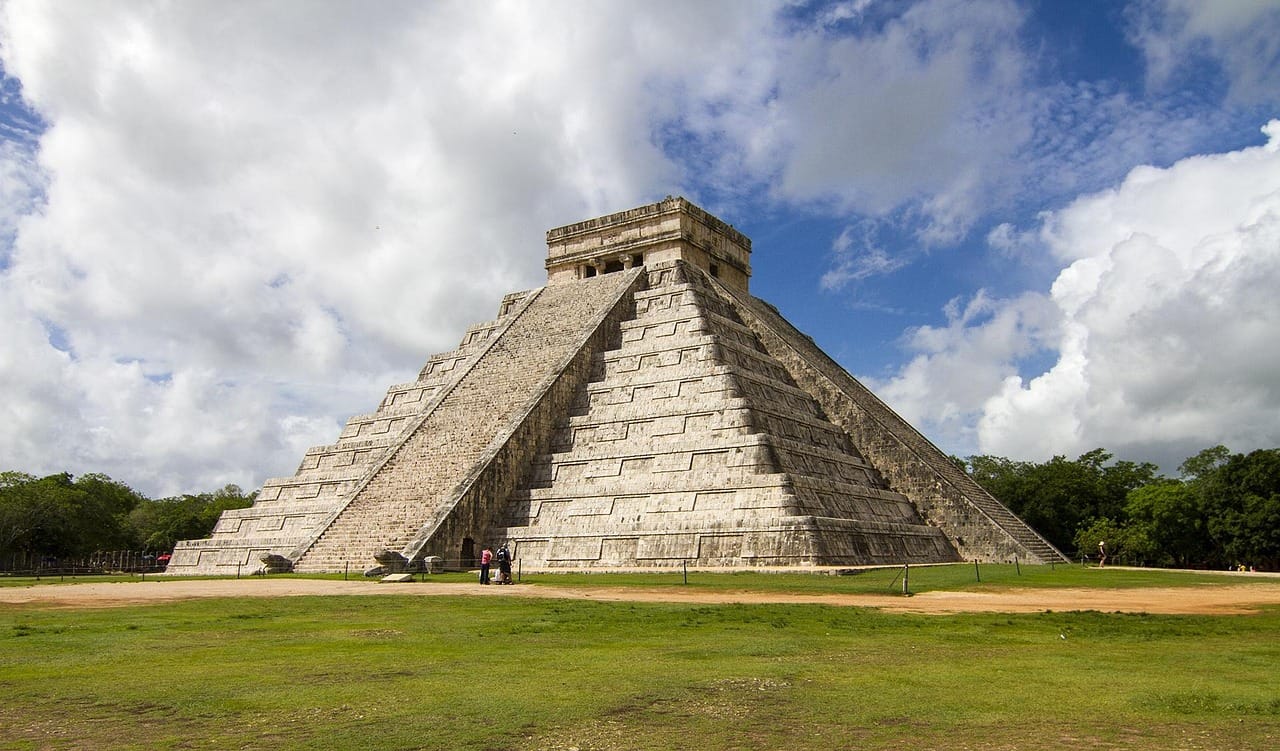
If the rest of the week involves an early start inland, that is a separate problem with a separate answer, and the bed you pick the night before Chichen Itza is the one decision that changes that day more than anything else you book.
A building waiting for a coast that has not turned up
The last thing you see on the way out is the car park, which is enormous, and mostly marked spaces with nothing in them. Somebody laid out every one of those lines expecting them to be full.
Maybe they will be. The coast is not finished growing, the train will settle down, and an airport with a runway that takes wide-bodies is not a thing anybody is going to abandon. Or maybe it stays like this, a beautiful nearly empty building forty minutes from a town that was never really asking for it, while everyone keeps landing at Cancun because the flight was a hundred and twenty dollars less and that is how people choose.
Either way you will be on the sand by the afternoon, which was the point. It is only the first two hours that were ever in question.
The best thing about the airport is how quickly you stop thinking about it.