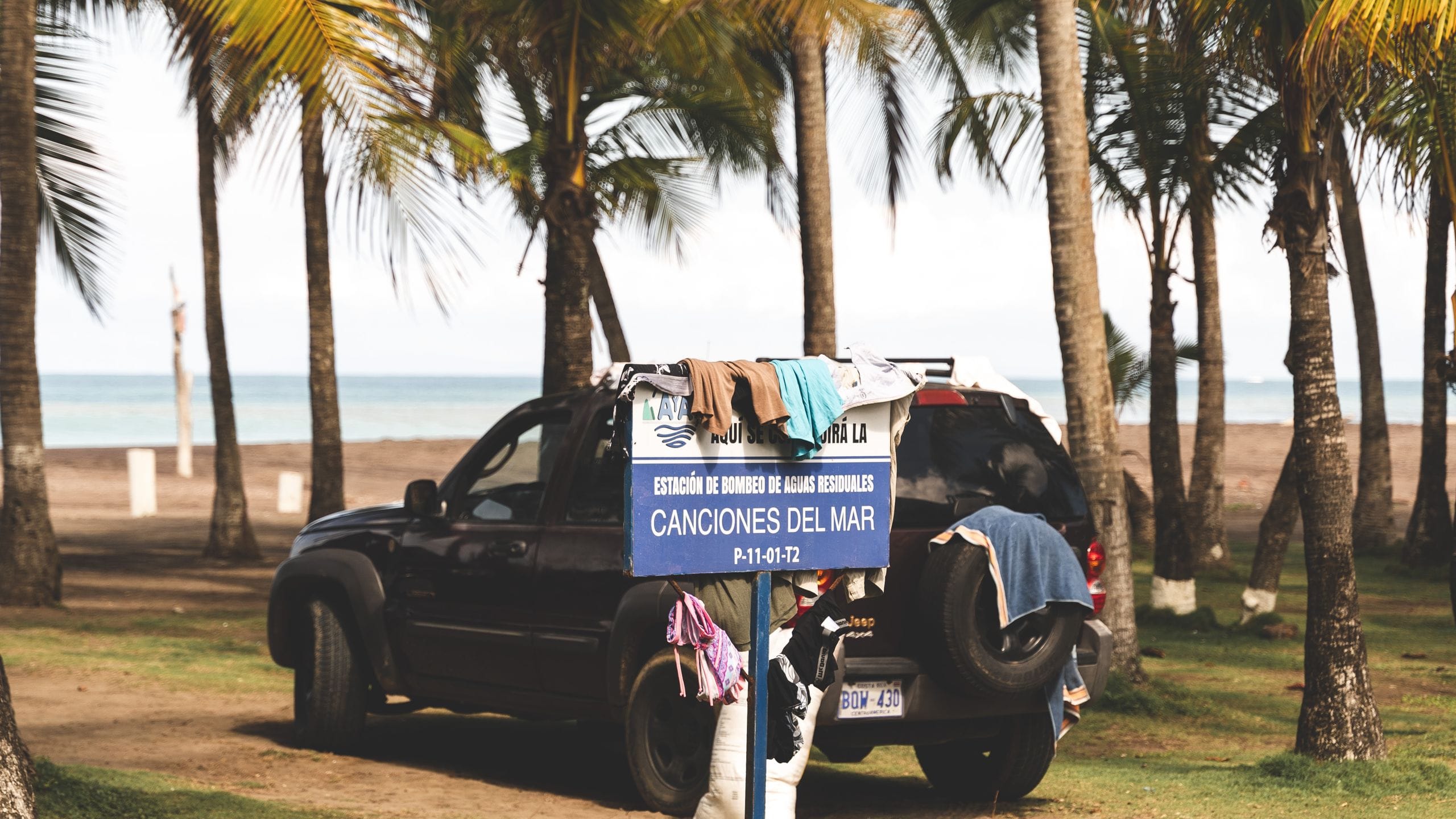
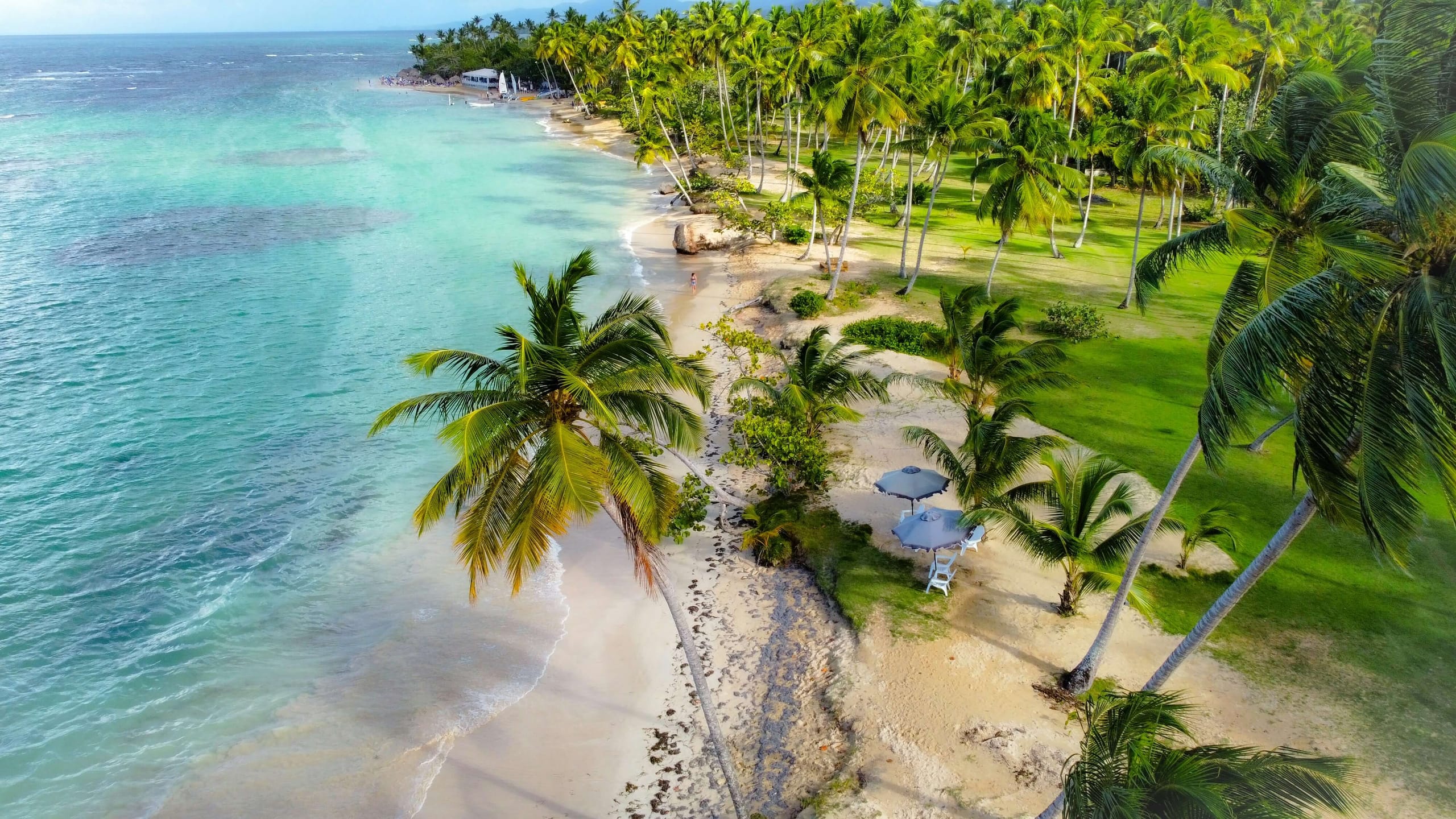
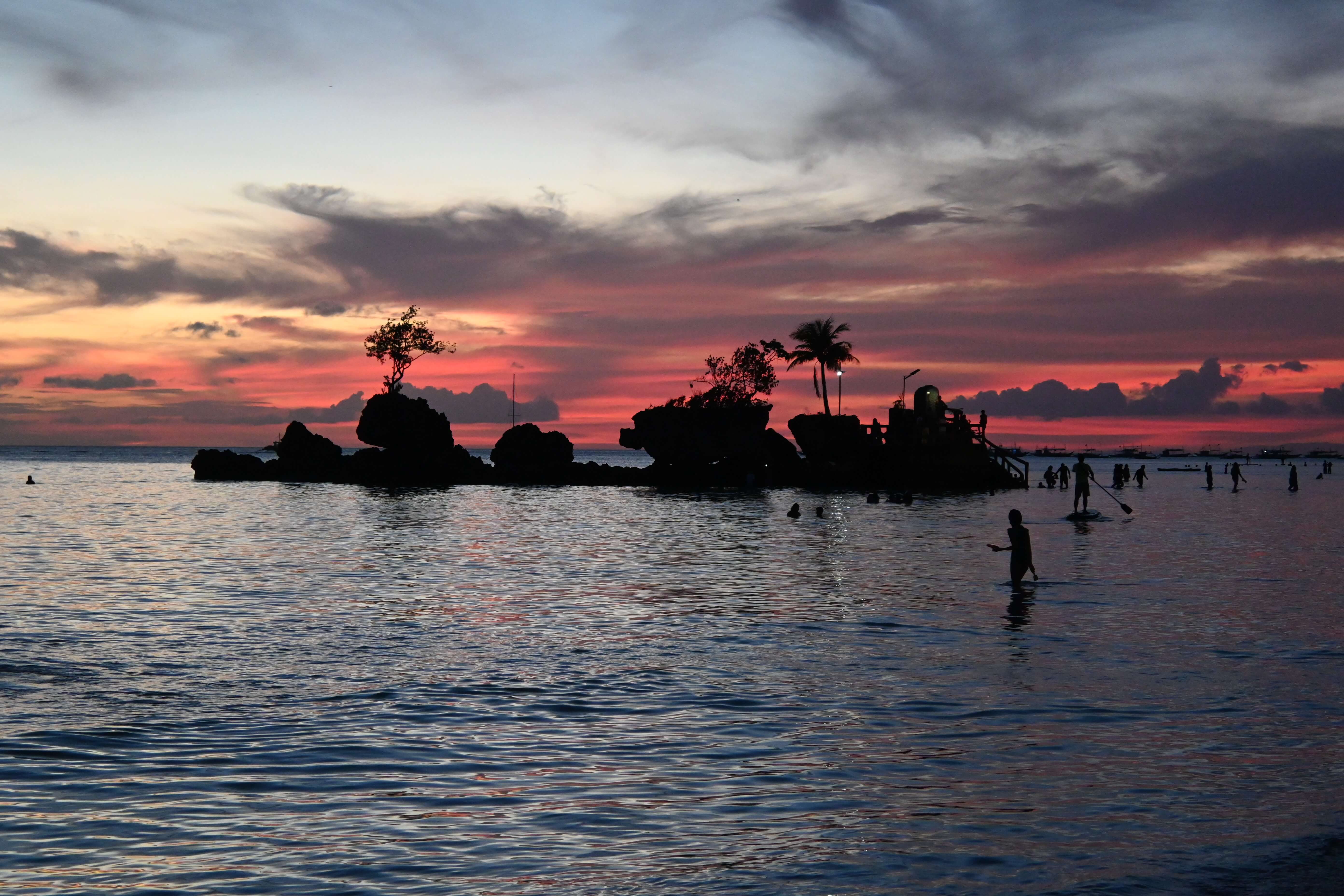
The bill arrives on a torn page from a receipt pad. Ballpoint, the total circled twice. Two plates of rice, a grilled fish somebody carried up from the boats that morning, four sweating bottles of water. You check the number because it looks like an error. Behind you a tricycle idles and does not leave.
It comes to about four dollars. You leave five, the woman running the place says salamat without looking up from the pan, and you walk back out into an afternoon that has no plans for you. This is the part of the Philippines that almost everybody gets right in advance. Food is inexpensive here. A bed is inexpensive here. You can eat well for what a sandwich costs at home, and you can do it three times a day without thinking about it.
The part almost nobody gets right in advance is the total. People arrive with a daily number in their head, multiply it by fourteen, and fly home having spent close to double. Nothing was overpriced. Nobody got scammed. The daily number was simply never built to hold the one line item that decides a two-week bill in this country.
The number everyone quotes
Look up what the Philippines costs and you get a range, and the range is consistent enough to lean on. Southeast Asia Backpacker puts a shoestring day at $20 to $30, a comfortable backpacker day at $35 to $45, and anything past $50 into flashpacker territory. Those figures are per person, per day, and they assume a dorm bed or a shared room, local food, and public transport.
Which leaves out the tier a lot of people book: the same trip with a private air-conditioned room instead of a dorm bed. The same source draws that line at $50 a day, and says past it you live in the Philippines like royalty. Every figure on this page sits below that line. It assumes the dorm or the shared room. If a private double is not negotiable for you, read the daily numbers here as the floor and put the room rate you were quoted on top of them.
"Shoestring Backpacker: $20-$30USD per day. Living It Large Backpacker: $35-$45USD per day. Flashpacker: $50+USD per day."
Nomadic Matt lands in the same window from a different direction. He puts the bare minimum at $20 a day and says $35 to $40 buys decent accommodation, three meals, and a drink in the evening. Two sources with no reason to agree, agreeing inside five dollars, which is more consensus than you get about most countries.
"You can do it on $20 USD a day, but $35-40 USD a day gets you a decent shared room, three meals a day, and a few drinks."
So the range is sound. The trouble is what it measures. A daily rate describes standing still. It answers what it costs to wake up somewhere, eat there, sleep there, and wake up in the same bed the next morning. Two weeks in the Philippines is almost never that trip, because the country is roughly 7,600 islands and the ones you came for are not next door to each other.
Key takeaway
Beds and plates in the Philippines are close to fixed and close to unbeatable. Movement is the variable, and movement is where two-week budgets come apart.
What a day costs when you stay in one place
The bed
A dorm bed runs roughly $4 to $16 a night, depending on where and when. A private room in a hostel or small guesthouse spans an enormous range, from about $6 to $60, and the spread is not about luxury so much as geography and season. The same room in the same building costs one number in September and a different number the week between Christmas and New Year.
The geography half of that is worth more than the season half, and this page has been hiding it inside one national band. Which island you sit still on moves the daily number about as much as how many times you fly. Palawan is the top of the market: a room in El Nido starts around eight dollars and runs past sixty in the same week, because the town is the destination rather than a stop on the way to one.
Less-visited islands sit at the bottom of the band and stay there. Even the scooter tells you: it runs 300 to 1,000 pesos a day depending on where you rent it. Pick the base before you price the trip, because the base is doing most of the pricing. El Nido or Coron is the two ends of that spread compared directly.
Nomadic Matt notes dorm beds in Palawan going for as little as $6 a night, which is roughly what a beer costs at a hotel bar in most of Europe. What you give up at that price is not cleanliness. It is a wall thick enough to stop a rooster, and possibly hot water, and definitely the beachfront.
Book the first two nights and leave the rest open if your dates fall outside the December to February crush. Walking in can get you a better price than a booking site, so it is worth asking, in a place like El Nido as much as anywhere.
The plate
Street food and a carinderia plate sit between about $1 and $5. A meal in a local restaurant with a table and a menu runs $4 to $20. Order the same dish at a place with imported ingredients and English-language wine descriptions and you are looking at $10 to $30. That gap is the largest thing you control day to day. Which door you walk through, nothing else.
Definition
Carinderia A small neighborhood eatery serving pre-cooked dishes from steel trays, chosen by pointing.
Usually open early, usually cheapest before noon, and the reason a $4 lunch is a full lunch rather than a snack.
The thing that catches people out is timing. Trays come out hot in the morning and get picked over by two in the afternoon, so the best eating happens early and the tired end of it happens exactly when visitors get hungry. Eat lunch at eleven, like everyone around you, and the same eight dollars buys a noticeably better week.
Bottled water is 50 cents to a dollar for a 1.5 liter bottle. A local beer is 40 cents to $2, and which end of that you pay depends almost entirely on whether the establishment has a view. Sunset seating is a product in this country and it is priced like one.
Getting around town
Inside a town or a city you are spending pocket change. A jeepney ride is 16 to 40 cents. Tricycles run anything from ten cents for a short hop to about $4 if you have negotiated badly or the driver has correctly identified you as somebody who does not know the going rate. Ask a local what a ride costs before you need one and the number stops being a negotiation.
One thing that quietly does not apply: none of it works with luggage. A full-size pack does not go on a jeepney and does not go on the Manila rail, so arrival day and departure day run on a taxi or a Grab whatever the rest of the fortnight runs on. Two of your fourteen days are not pocket-change days, and that is before the ferry charges you separately for the bag, which it does, at around a hundred pesos.
A scooter is $6 to $20 a day and it changes what a base town is worth. In a place where the good beaches are twenty minutes apart along one road, a scooter turns four separate paid trips into one rental and gives you the mornings back. Wear the helmet you are handed even when nobody else is.
$3-$13
Dorm bed per night
$1-$4
Street food or carinderia plate
16-40 cents
Jeepney ride
$5-$16
Scooter rental per day
Add it up for a day where you do not go anywhere: a bed, three meals, water, a couple of short tricycle rides, one beer. You are somewhere between $18 and $35, and you have to work at it to land above that. Fourteen of those days comes to $250 to $490, and that is the number people carry onto the plane.
The line item that decides the bill
Here is what a daily rate cannot see. The unit of cost in the Philippines is not the day. It is the stop. Every place you add to the itinerary carries a flight or a ferry, a transfer at each end, and a chunk of a day you paid for and did not use.
Domestic flights run about $30 to $90 per person, per hop, depending on the route.
Then the extras that attach to each hop. Checked baggage is a separate purchase on every domestic leg with the budget carriers, bought at booking or added later through the airline's booking manager up to two hours before departure. It is a small amount each time. It is a small amount five times.
The numbers are worth carrying because they are lopsided on purpose. On Cebu Pacific domestic legs a 20 kg checked bag bought with the ticket starts at 340 pesos, about $5. The same bag at the airport counter is 1,000, about $16. Extra weight at the airport runs 250 pesos a kilo.
So the bag you forgot costs about three times what the bag you remembered costs. Across four domestic legs that is the difference between about $22 and $64 for the same suitcase.
"Baggage add-ons are available through Manage Booking up to two hours before your flight."
The part that never shows up in anyone's budget is the day. A domestic flight at eleven in the morning takes the morning to get to the airport and the afternoon to get from the arrival airport to wherever you are sleeping. You did not lose a flight. You lost a swimming day, a tour slot, and a night you had already paid for in the town you just left.
A stop is not a place you visit. It is a flight, two transfers, and a day you buy twice.
Price a stop properly and it is tickets and transfers, plus half a day. On a fourteen-day trip you have twenty-eight halves to spend. Five stops takes ten of them before you have swum anywhere.
Three shapes of the same fourteen days
The same two weeks, the same daily habits, the same taste in food, priced three ways. Everything below assumes one person, a comfortable-budget day of about $35 on the ground, and international flights excluded because those depend entirely on where you are flying from.
Which is worth doing something about, because most people book two. Run the same numbers for a couple and the argument this page is making gets stronger rather than weaker. The room halves on the second person. The plate, the boat seat, the domestic ticket, the eco fee and the baggage do not.
So the fixed half of the budget shrinks per head and the movement half stays exactly where it was, which means every extra stop costs a pair more, not less, than it costs one person. Two people on the one-base shape land near forty dollars a day each. Two people on the five-stop shape are paying two of everything that hurts.
One base
about $115 in movement
- Two domestic flights, two van transfers, one environmental fee
- About $8 a day spread across fourteen days
- Twelve full days on the ground, two travel days
Two islands
about $150 in movement
- One domestic flight in, a ferry between islands, one flight out via Clark
- About $11 a day, and it buys a second island
- Eleven full days on the ground, three travel days
Five stops
$350 to $500 in movement
- Five or six domestic flights, plus bags, plus airport transfers at both ends
- $25 to $36 a day, which doubles a comfortable daily budget
- Eight or nine full days on the ground, five travel days
| Movement | Per day | Days on the ground | |
|---|---|---|---|
| One base | about $115 | about $8 a day | Twelve full days, two travel days |
| Two islands | about $150 | about $11 a day | Eleven full days, three travel days |
| Five stops | $350 to $500 | $25 to $36 a day | Eight or nine full days, five travel days |
One base, two weeks
Fly Manila to Puerto Princesa, take the shared van north, and stay put. The van is the piece that surprises people: a fare of about $10.50 for five and a half hours, running several times a day and air-conditioned.
"Passenger fare: PHP 650.00. Travel duration: around 5 hours 30 minutes."
Two flights, two vans at $10.50, and the one-time environmental fee. Call it $115 of movement across the whole fortnight, about $8 a day. Twelve days on the ground at $35 plus a couple of tour days, and the trip lands near $700 before your international ticket.
Two islands and a boat between them
Add a second island and take the water between them instead of the air. The fast ferry across northern Palawan is about $28 to $50 for three and a half hours, depending on the operator, running daily.
"Passenger fare: PHP 1760.00. Travel duration: 3 hours 30 minutes."
The exit is where this shape has grown teeth. Since 29 March 2026, every remaining turboprop route out of Manila's main airport moved north to Clark, which includes the flights serving both northern Palawan airports. Flying out of that end of the island now means landing at Clark and adding a bus of two to three hours, at about $6 to $8.50, to reach Manila.
Even with that, the two-island shape costs about $150 in movement, which is thirty-five dollars more than staying put for an entire second island. The way in is its own piece of arithmetic and the airport those flights now leave from rewrote it this year. The underlying rule holds either way: it is not the number of places that wrecks a budget, it is the number of flights.
Five stops
Now the shape people book on a first trip: Manila, then somewhere in the Visayas, then a surf island, then Palawan, then back. Five or six domestic flights. Four or five airport transfers at each end, bags on every leg. That is a lot of movement before a single boat ride.
That is $25 to $36 a day added to a comfortable $35 day, which is how a trip people budgeted tightly arrives home well over budget. And the money is the smaller half of the loss. Five travel days out of fourteen means you spent more than a third of your holiday in queues, and you will remember the airports better than the islands.
Pros of Fewer stops on a two-week trip
- Movement drops from roughly $400 to roughly $115
- Three or four extra full days on the ground
- Cheap accommodation gets cheap because you negotiate weekly, not nightly
- Weather delays cost you an afternoon instead of a connection
Cons of Fewer stops on a two-week trip
- You see one region properly instead of four regions partly
- Some famous places will not make the trip at all
- If the weather closes in, you have no second island to escape to
- Harder to justify to anyone at home who asked for a list
The weeks that cost forty percent more
Everything above is a mid-season number. The same fortnight, booked into the wrong window, costs a great deal more without buying you anything extra, and the wrong window is narrower than most people assume. It is not a season. It is a handful of specific weeks.
Domestic fares are consistently at their lowest in September, October, and the first three weeks of November. They are at their highest during Holy Week in late March or early April, across the whole of May when Filipino families take their summer break, and from the last two weeks of December through the first week of January. Those are domestic school and holiday patterns, not tourist ones, which is why they catch visitors off guard. Nobody is charging you extra for being foreign. They are charging you extra for wanting the same week as the rest of the country.
"September, October, and the first three weeks of November consistently produce the lowest domestic fares of the year."
The size of the swing is what makes this worth an hour of planning. Moving a departure by a few days around Holy Week has been enough to cut a fare noticeably, and rooms follow the same curve. Two people on identical trips two weeks apart can end up hundreds of dollars apart for the same beds and the same boats.
Nobody budgets for the calendar. It is the only line item you can move for free.
This is a price question and not a weather question. What the sky is doing in a given month is a separate conversation with a separate answer, and it varies enormously by which side of the country you are standing on. a budget that survives contact with an actual trip is that answer, split by coast, which is the only way it is worth giving.
Then fix the dates inside a budget that survives contact with an actual trip rather than letting a cheap fare choose them for you.
The fees that arrive one at a time
Nowhere in the Philippines will you meet one large entry charge. You will meet a dozen small ones, collected at desks, at piers, at the top of a set of stairs, and each one is small enough that you never bother doing the arithmetic. Together they are a couple of nice dinners.
El Nido charges an eco-tourism development fee of 400 pesos per visitor, about $6.45 at August 2026 rates, paid once and valid for ten days, and it applies before you go anywhere in the municipality. Island hopping tours themselves run about $19 to $29 per person for a shared boat, and the mandatory site and municipality fees on top of that are sometimes included in the quoted price and sometimes not.
Coron works the same way, and its charges are two separate things wearing one loose name. The municipality collects an environmental, tourism and development fee of 200 pesos from a general visitor at the point of entry, and Kayangan Lake charges its own 300 peso entrance on top of that. Ask what is included before you hand over money, because it varies by operator and the quoted price is not always the price.
None of these are a problem individually. The problem is that they are invisible to planning, so they land as a slow leak rather than a line item, which is the pattern behind most of the costs that only show up once you are already there.
- El Nido eco-tourism development fee, 400 pesos or about $6.45, once per ten days
- Site and municipality fees on tour days, a couple of dollars each
- Coron arrival fee, 200 pesos or about $3.25, plus a 300 peso entrance at Kayangan Lake, about $4.85
- Port and terminal fees at every pier, usually under a dollar
- Checked baggage on each domestic flight, if you have a bag worth checking
Two weeks also creates its own small category that a long weekend never does. You will pay for laundry, probably twice, at a per-kilo price with a minimum charge attached whether you hit it or not. Water gets refilled. Sunscreen gets bought at island prices, because the bottle you brought turned out to be a third of what you needed. None of it is large and all of it is why a measured daily figure comes out above a planned one.
Budget $40 to $60 across a fortnight for the whole category and you will be close. Which boat day earns its fee is a separate question, and it is settled by which of the lettered tours you take rather than by price. Budget nothing for the category at all and you will spend two weeks feeling vaguely overcharged by a country that is, by any measure, not overcharging you.
One category sits outside all of this and is bigger than any of it: if you dive, the arithmetic on this page does not describe your trip. A day of two guided dives runs roughly $60 to $100, which is the whole tour-day allowance above spent once.
An Open Water course is somewhere around $240 to $325 and takes three or four of your fourteen days. Coron, Moalboal, Malapascua and Apo are worth going to for that reason, not for the reasons the rest of this page is costing. Put the diving in as its own line before you price anything else. It will not fit in the gaps.
The tax you probably do not owe
Myth
Everyone flying out of the Philippines pays a departure travel tax of PHP 1,620, so add it to your budget.
Reality
The travel tax applies to Filipino citizens, permanent resident aliens, and foreign passport holders who have stayed longer than one year. A tourist on a short visit is exempt, and does not need to budget for it at all.
"The tax applies to Filipino citizens, permanent resident aliens, and foreign passport holders who have stayed in the Philippines for more than one year."
It gets repeated in forum threads because the amount is quoted so often, and because plenty of travelers watched a Filipino friend pay it at the counter and assumed it applied to them too. If you are a visitor on a normal tourist entry, that line comes out of your spreadsheet.
What the peso did this year
There is a piece of arithmetic working in your favor right now that has nothing to do with how you travel. The peso has weakened against the dollar by roughly 8 percent over the last twelve months, sitting just under 62 to the dollar in the third week of August 2026. Every price quoted in pesos, from a jeepney fare to a hotel rate card, is that much softer in dollar terms than it was last summer.
"USD/PHP at 61.795 on 20 August 2026, down by 8.03% over the last 12 months."
63
PHP
1
USD
0.89
EUR
0.74
GBP
Rates move, so treat that as a snapshot rather than a promise. The practical version is simpler: withdraw in larger amounts less often, refuse the machine's offer to convert for you, and know what your own bank charges you abroad before you land. That last one costs more people more money than any tour operator ever has.
Where two-week budgets break
The first failure is booking the shape before pricing it. People pick five places because five places fit neatly into fourteen boxes on a calendar, then discover the flights afterward and absorb the cost because the tickets are already bought. Price the movement first. Let the itinerary come out of the number instead of the other way round.
The second is running out of cash somewhere the cards do not reach. Island towns run on notes. Machines run dry over long weekends, they cap withdrawals low, and the fee per withdrawal does not care that you took out a small amount. The tell is the queue. When the line at the machine outside the pharmacy is longer at eight in the morning than the line for breakfast, somebody in town already knows something you do not.
Arrive with more pesos than feels sensible and you will spend the week thinking about swimming instead of about banking. Cash in El Nido puts numbers on all three: a flat 250 pesos at a bank branch machine, a worse rate at a shop kiosk, and a 10,000 peso ceiling on either kind.
The third is the last day. Everyone books the flight home for the afternoon and then finds the transfer to the airport takes five hours from where they are. That is a night in a transit town nobody budgeted for, plus a room, plus a meal, plus the low-grade misery of a day spent watching a ceiling fan.
None of these are expensive mistakes on their own. Stack all three and you have added a couple of hundred dollars to a trip that was supposed to be the affordable one.
Fourteen days is enough for one region done properly or two done well. It is not enough for the country, and treating it as though it were is the single most expensive assumption a first-time visitor makes. The islands are far apart, the connections mostly route through Manila or Cebu, and there is no overland shortcut waiting to be discovered.
Data, and the cover you hope not to use
Two things belong in the budget that people leave out because they are not fun. A local data plan is the first, and whether you want an eSIM or a physical local card comes down mostly to how many countries the trip touches. Coverage is patchy in the islands and excellent in the towns, and a working connection is the difference between rebooking a cancelled boat from a cafe and rebooking it from a counter with forty other people ahead of you.
The second is insurance, and in this country it earns its place. Boats get cancelled by the coast guard for weather, domestic carriers reshuffle turboprop schedules, and the nearest hospital worth the name can be a long way from where you are standing. Trip disruption and medical transport are the two parts of what a travel policy covers that pay for themselves here, and a policy costs a fraction of one domestic flight.
Where the numbers in this piece came from
Southeast Asia Backpacker, Philippines cost of travel
Daily budget tiers plus line-item prices for beds, food, and transport.
Nomadic Matt, the Philippines on a budget
A second independent daily budget, with accommodation and food figures.
Pamasahe route fares
Published shuttle and ferry fares and durations for Palawan routes.
Trading Economics, Philippine Peso
Live USD to PHP rate and twelve-month movement.
The number to write down
For fourteen days, one person, staying comfortable without trying to be frugal: roughly $500 on the ground, $115 to $150 in movement if you pick one or two bases, $50 in fees, and $60 to $100 in tour days. That is $725 to $800 before your international ticket, and it assumes you eat where the food is good rather than where the menu is translated.
That excluded line is worth saying out loud once, because it is probably larger than everything above it. From the US a round trip to Manila runs anywhere from about $700 on a cheap fare to well past $1,200 in a busy one, and where you start decides more of it than anything you do after you land. How to find cheap flights is the method for pulling that number down, and on this trip it is the one line where an hour of work is worth hundreds of dollars.
Choose the five-stop shape instead and the same fortnight, the same rooms, the same plates, comes to $1,050 or more. The Philippines did not get expensive. You bought seven days of transit and called it an itinerary.
Get the trip-planning notes we send before a trip, including the ones about what things cost.
Join the newsletterThe last evening of a trip like this usually ends the same way. A plastic table, a bill written by hand, a total that still looks like a mistake after fourteen days of the same total. You do the conversion in your head one more time out of habit, and it still comes out low.
What you spent the money on is the thing you will argue about later. Two weeks buys either one place you came to know or four places you can name. Both are defensible. Only one of them is what most people think they are booking.
The arithmetic is not hard. It is just usually done at the airport, with the tickets already bought, which is the one place it cannot help you.