Maldives.

Eleven hundred islands, and the only decision that matters is which one you land on. It runs from local-island guesthouses to overwater villas.

Best Months
Jan to Apr
Average Temp.
88°F (31°C)
Sea Temp.
84°F (29°C)

Fill the day, or let it go.

Notes on what an atoll is actually like once the drone shot stops. The light at six, the reef at four, and the strange arithmetic of a country with no roads.

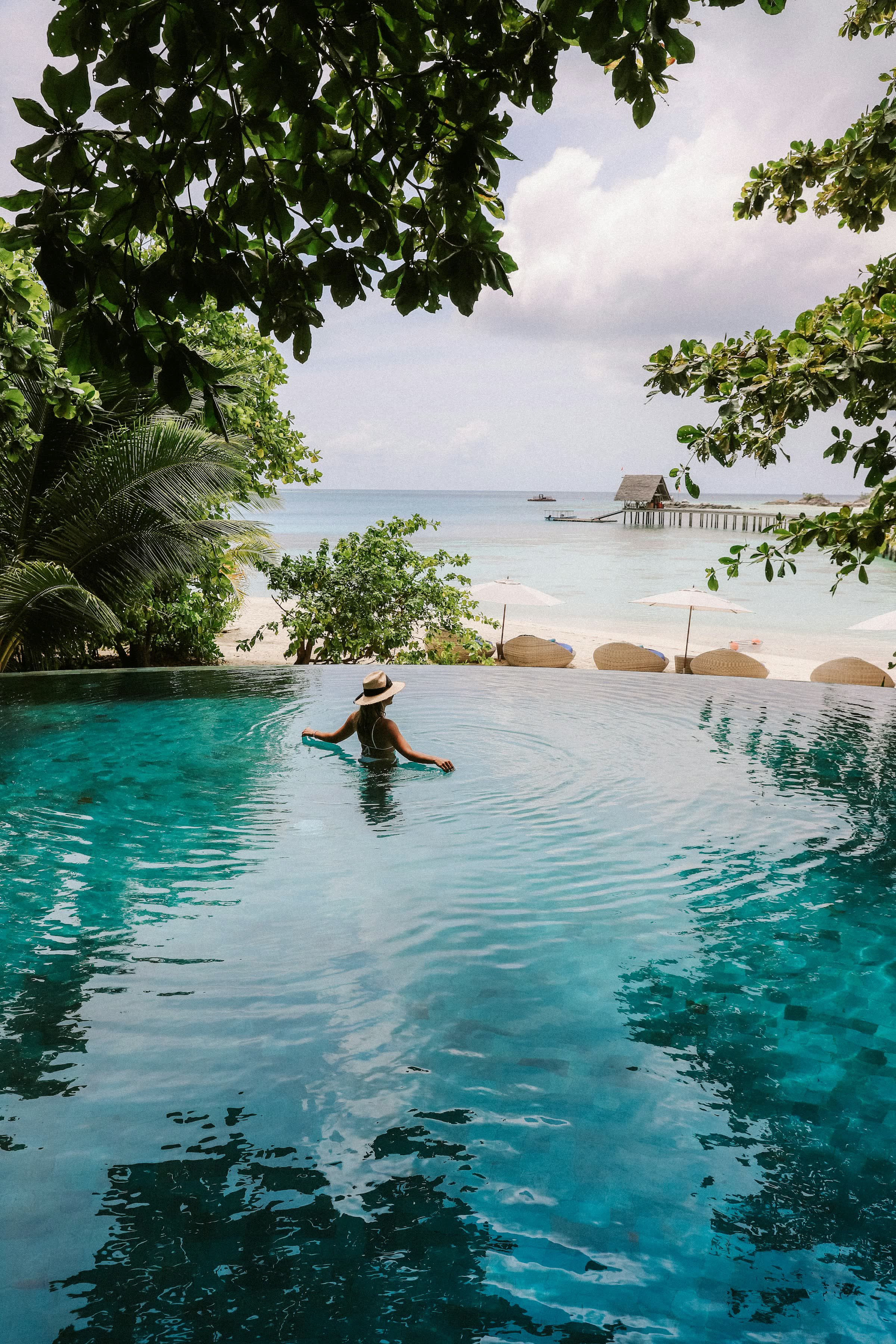
Nothing here is more than about six feet above the sea. You notice it on the walk from the jetty: the island is a thin lens of sand on top of a reef, and the reef is the only reason any of it is there at all.

The water does the work. It runs from white to green to a blue that reads as depth rather than color, all inside about forty yards, and the line moves as the tide turns. Herons pick along the shallows all day. At four the light comes in sideways, the fish start moving, and the reef that looked empty at noon is busy.

There is a country here too, and the brochures leave it out. Two hundred islands are inhabited and about a hundred and sixty are resorts, and the two barely touch. Half an hour by boat there is an island with a school, a mosque, a harbor full of dhonis and a tea shop where the tuna came in that morning. Most people skip it.

Five nights are the floor. It takes two days to stop checking your phone and one more before you notice you have been looking at the same forty yards of water for an hour. That hour is what you came for, and nothing on the schedule will produce it.

Top picks

  • The house reef, ten steps off the sand

    Ask which side drops off before you book.
  • Hanifaru Bay mantas, Baa Atoll

    June to November. Snorkel only, permit controlled.
  • A sandbank that is gone by evening

    No shade, nothing to do. That is the appeal.
  • The lagoon before eight

    Glass until the breeze arrives, then not.
  • A dhoni cruise at sunset

    Spinner dolphins most evenings. Never promised.
  • Grilled reef fish on a local island

    Scored, chili-rubbed, straight off the coals.

The weather has opinions.

Two monsoons, and the marketing is straight about neither of them. Both are usable. One of them costs a lot less.

Iruvai, the northeast monsoon
January to April

Flat water, and the light everyone came for.

Settled seas, light wind and the best underwater visibility of the year. February is the driest month on the record by a wide margin. It is also peak season, so book the room and the transfer together and book them early.

Highs
84 to 88°F (29 to 31°C)
Humidity
75 to 80%
Sea
82 to 84°F (28 to 29°C)
Rain
Short and rare
Hulhangu, the southwest monsoon
May to December

Wetter, windier, and full of animals.

Rain comes in heavy bursts rather than all day, and the wind puts a chop on the water that costs you visibility. In exchange the plankton arrives, which is why the mantas gather at Hanifaru from June onward, and rooms fall to their lowest rates of the year.

Highs
82 to 86°F (28 to 30°C)
Humidity
80%+
Mantas
Jun to Nov
Rates
Down 30 to 50%

Average rainfall at Malé, inches / mm per month

4.5"114mm
Jan
1.5"38mm
Feb
2.9"74mm
Mar
4.8"123mm
Apr
8.6"219mm
May
6.6"167mm
Jun
5.9"150mm
Jul
6.9"176mm
Aug
7.8"199mm
Sep
7.6"194mm
Oct
9.1"231mm
Nov
8.5"217mm
Dec

Best time to go. November and April, the two ends of the high season. Neither is the driest month of the year, and both cost less than the December to March middle, which is the busiest and most expensive stretch. May to October is wetter, emptier, and the cheapest the year gets.

Off season Peak season Best time to go

Boarding pass

EZ 002 · 21A

From

YOU

To

MLE

Wherever you areMalé, Maldives

Flight

EZ 002

Seat

21A

Gate

Inbox

Boards

Monthly

    For the argument about where to book

    Which Maldives.

    This country is not a spectrum, it is a fork. A resort island and a guesthouse on an inhabited island are two different holidays with different rules, different food and different beaches, and the one you pick changes the answer to nearly every other question on this page.

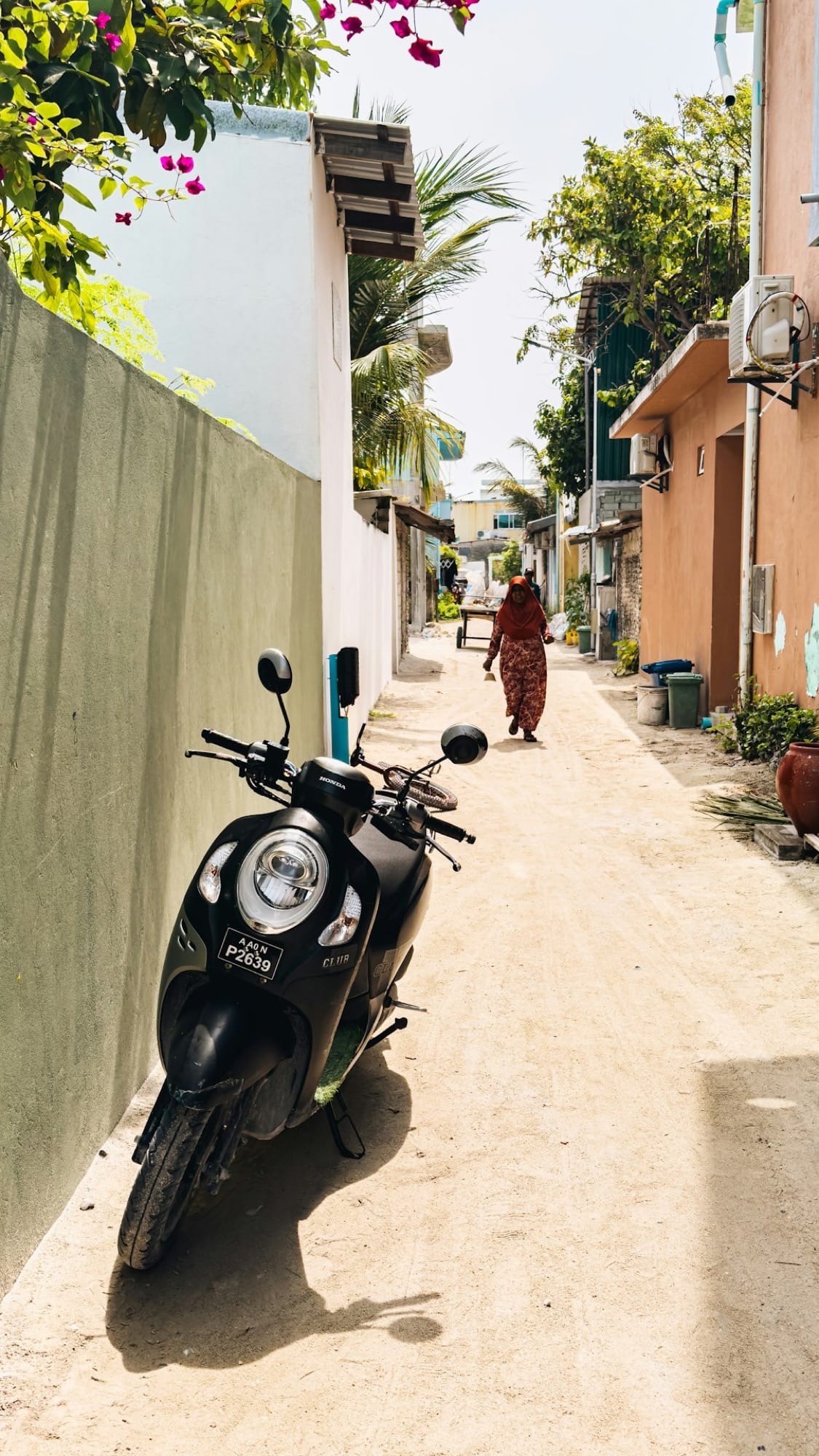
    A sand lane between painted walls on an inhabited island, a scooter parked in the shade and a woman walking away from the camera

    A guesthouse island

    An inhabited island with a school, a mosque, a harbor and a handful of small guesthouses. Legal since 2009, and the reason a week here can cost what a week in southern Europe costs.

    Alcohol
    None on the island, and bringing it in is a customs matter
    Dress
    Shoulders and knees covered away from the beach
    The beach
    A marked bikini beach, shared with everyone else
    Eating
    Tea shops and small kitchens, and the fish came in that morning
    Getting there
    Public ferry for the price of a coffee, or a shared speedboat
    Where the money goes
    Split between a guesthouse, a dive shop and a tea shop
    Honeymoons
    Cheap, and nobody makes a fuss of it. There is no private anything on an inhabited island

    What you get

    The same reef, a fraction of the outlay, and a country attached to it.

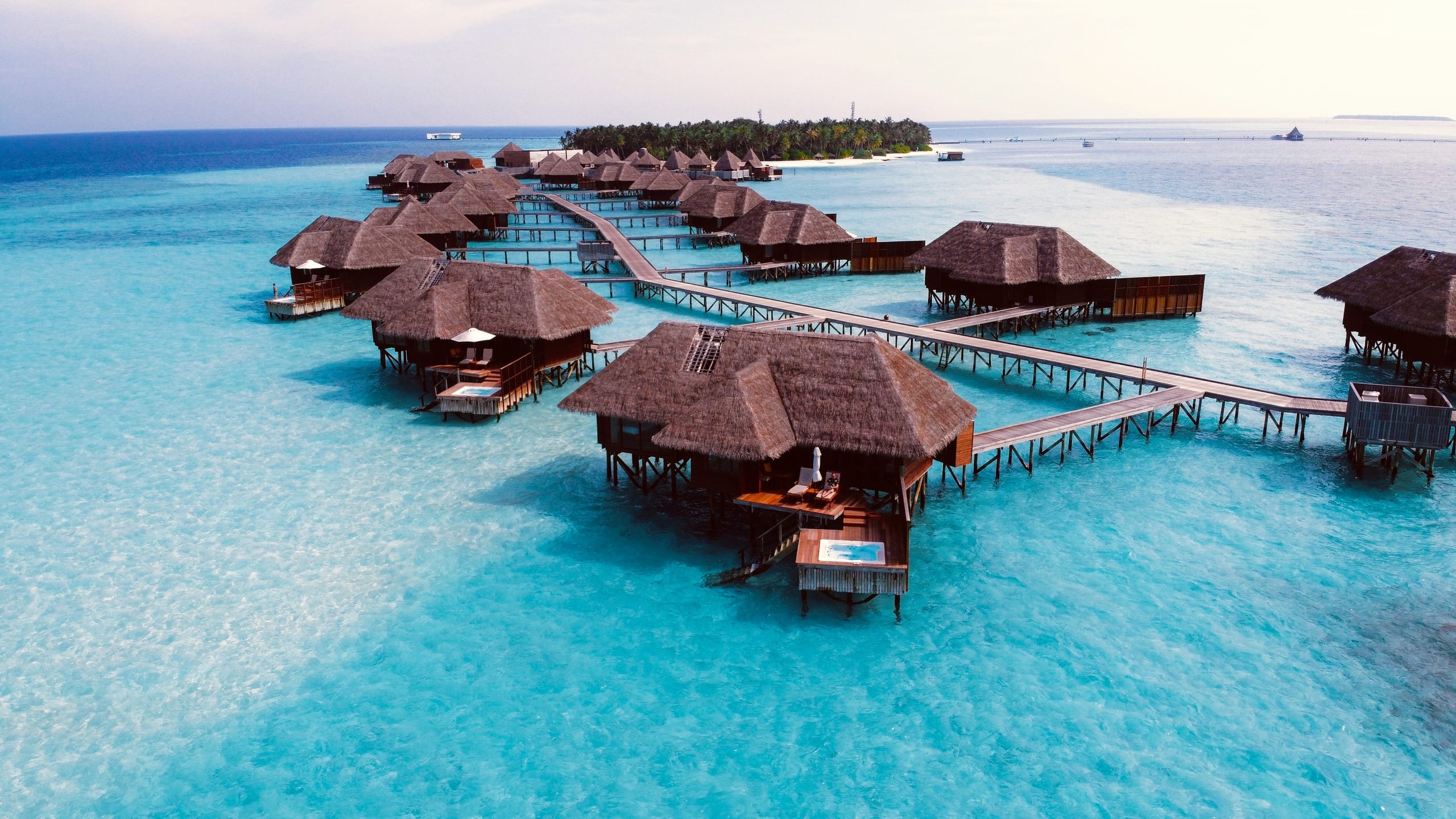
    Thatched overwater villas on stilts linked by boardwalks over pale turquoise shallows, with the palm-covered island behind them

    A resort island

    One island, one hotel, and no way off it except the boat that brought you. It is private ground, so the country's own rules stop at the waterline.

    Alcohol
    Served, at resort prices
    Dress
    Whatever you like, anywhere on the island
    The beach
    Yours, and raked before you wake up
    Eating
    Whatever the resort serves, on a meal plan or a la carte
    Getting there
    Speedboat or seaplane, arranged for you
    Where the money goes
    Nearly all of it goes to one company
    Honeymoons
    What the island is built for. A villa with a door, a lagoon off the deck, and a package if your marriage certificate is under a year old

    What you trade

    You will not meet the country. The staff are Maldivian and close to nothing else on the island is.

    Or take a few nights of one and the rest of the other. That is the ten day plan.

    How to get to the Maldives.

    One long flight to Malé, then a second leg that most people leave out of the math. The transfer to your island is the part of a trip that quietly decides what the whole thing costs.

    Step one

    Fly to Malé MLE

    Velana International sits on its own island next to the capital, so you land beside the water rather than an hour from it. Every long-haul route ends here. Nothing flies direct to a resort.

    Step two

    Malé MLEyour island ATOLL

    This is the leg that sets what you pay. Two ways out to the atolls, and the one you get depends entirely on how far your island sits from the airport.

    Option A · Near atolls

    Speedboat BOAT

    North and South Malé, and Rasdhoo on a long run. Departs whenever your flight lands.

    about20 to 90minutes on the water

    Option B · Far atolls

    Seaplane TMA

    Baa, Raa, Ari and beyond. Daylight only, so a late arrival means a night near the airport.

    about15 to 55in the air0 to 8 hrwaiting for it

    What we'd do

    Under a week? Stay in North or South Malé Atoll and take the boat. Ten days or more? Pay for the seaplane once and go out to Baa or Raa, where the reefs have fewer day boats on them and the horizon has nothing on it at all. Book the first night near the airport if you land in the evening, because the seaplane will not fly you anywhere in the dark and finding that out at the counter is a bad way to start.

    Work out the transfer.

    The airport is not the destination. Between landing at Malé and reaching your island there is a second leg, priced separately, and it is the largest single variable in a Maldives budget. Pick the atoll you are looking at and the rest of it follows.

    Where is your island?

    Public ferry or shared speedboat

    You book this one yourself

    Crossing
    30 min to 4 hr, depending on the island
    Runs
    Ferries most days, not Fridays
    Latest landing
    No limit

    The only transfer here you arrange yourself. Maafushi is half an hour out by shared speedboat, Fulhadhoo is most of a morning, and the government ferry does the same crossings for the price of a coffee if you have the time to spare.

    The ferry does not run on Friday

    Friday is the day of prayer and the ferry timetable thins out or stops. Plan an arrival or a departure on a Friday and you are paying for a speedboat, or waiting a day.

    Where to stay.

    Pick the island first, because the island decides the crossing and the crossing decides the price. The room is the easy part.

    Where you'll base

    8 areas

    Areas (1/8)

    Malé

    Kaafu · the capital

    City rooms above shops, with no beach attached and no pretence of one. Worth a night at either end of the trip, when the flight lands after dark or the ferry goes at seven in the morning.

    Airport · 10 min by taxi over the bridge

    Nothing to swim in but the artificial beach on the east side, which is a city beach and reads like one.

    Our shortcut

    Short trip, stay in Kaafu and take the boat; long trip, pay the seaplane once and go to Baa; tight budget, go straight to a .

    Stays

    4 in Malé

    Places (1/1)

    Samann Grand

    Samann Grand

    A proper lobby, a timber stair, and staff who have seen every delayed flight there is. Ten minutes from the airport over the bridge, in the middle of the city rather than the edge of it.

    Sala Boutique Hotel

    Sala Boutique Hotel

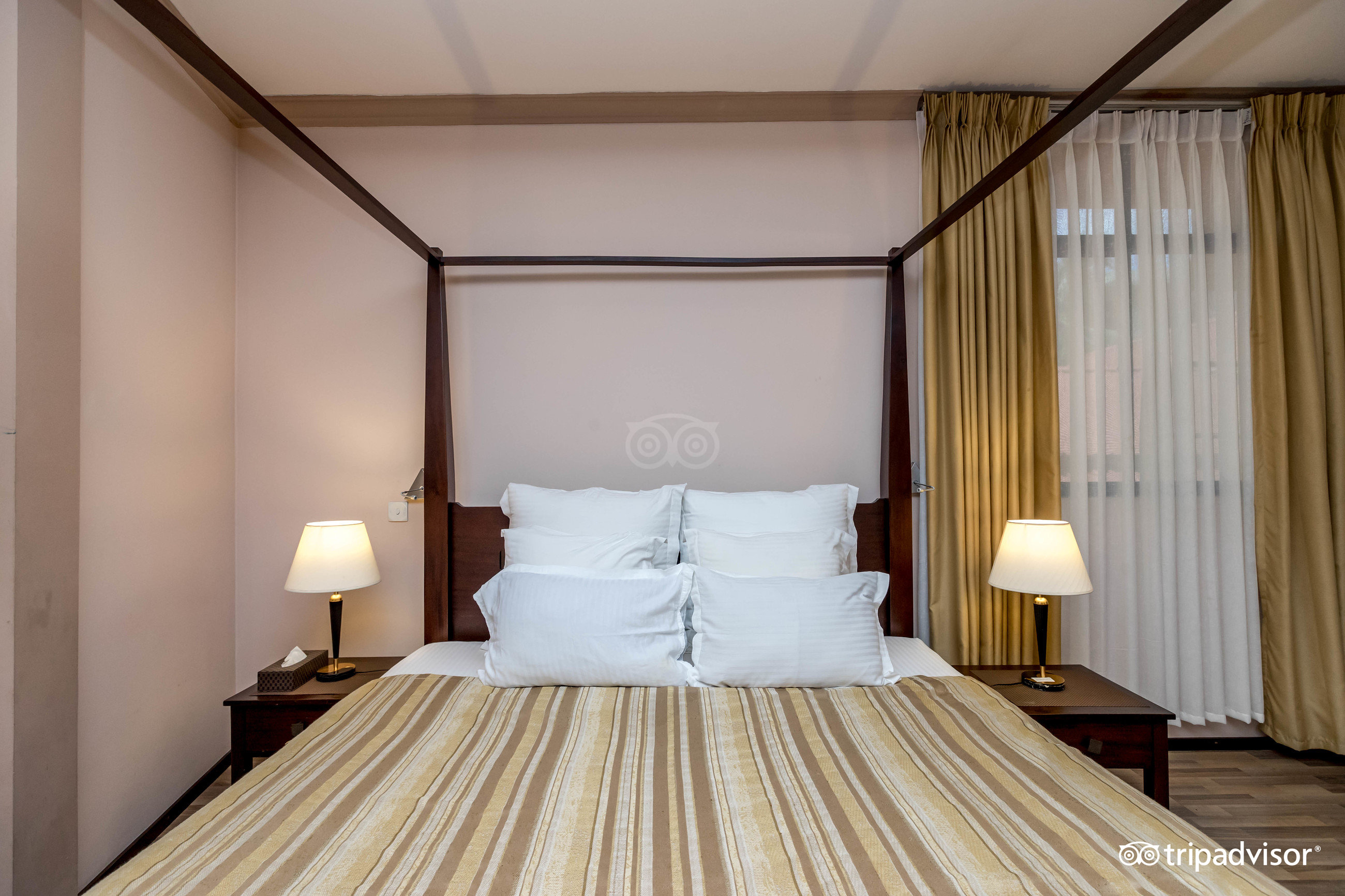
    Four poster beds and heavy curtains, which the outside of the building does not prepare you for. On a lane off Hithahfinivaa Magu, in the thick of the city.

    Hotel Octave

    Hotel Octave

    Plain rooms and no ceremony, on Kamini Magu. The kind of place you book because the flight lands at one in the morning and you are gone again by seven.

    The Beehive

    The Beehive

    Colored cushions against bare concrete and windows that look straight into the city. On Shaheed Ali Hingun, walking distance from the harbor like everything else in Malé.

    Everything worth doing.

    Almost all of it happens in the water, and the best of it happens within a hundred yards of wherever you are sleeping. The house reef is the whole argument for this country.

    In the water

    On the water

    On land, and above it

    Days off the island.

    Nothing here runs on a fixed circuit. What you buy is a half day at a time, sold off whichever island you are based on: a sandbank at low tide, a drift along the reef, a boat out at dusk, and a long day looking for something enormous. Pick one and follow it from the jetty to the last swim.

    Let the current do it

    4 stops·Morning, about 3 hr·Dhoni·All year

    Dropped in up current at one end of the reef and picked up at the other. You barely swim.

    Stop 1 of 4

    The channel mouth

    Where the water leaving the atoll speeds up and everything with fins waits for it.

    The boat drops you up current and leaves. For the first minute you are being carried and doing nothing at all, arms folded. Grey reef sharks hold below in the moving water. They do not look up. Eagle rays come through in twos, low and unhurried, gone before you think to turn.

    8 AM11 AM

    Before you leave the water

    You have seen what the water does. Now pick the atoll you want to wake up in the middle of.

    See where to stay

    What and where to eat.

    Maldivian food is tuna, coconut and chili in about nine arrangements, and it is much better than the resort buffet suggests. To meet it you have to eat on a local island or in Malé.

    What to order

    9 dishes

    Everything starts with tuna. Mas huni for breakfast with flatbread, garudhiya broth over rice at lunch, and rihaakuru in the corner of the plate doing the work of a whole condiment shelf.

    The tea-shop tradition is the one to chase. Short eats sit under glass on the counter, you point at what you want, and the bill at the end is almost embarrassing.

    For dinner, look for fihunu mas, whole reef fish scored and rubbed with chili paste before it goes on the coals. Finish with saagu bondibai.

    Come hungry.

    Dishes (1/9)

    Mas huni

    Mas huni

    Breakfast, and not negotiable.
    Smoked tuna shredded by hand with grated coconut, onion, chili and lime, eaten with warm roshi flatbread.
    Garudhiya

    Garudhiya

    Looks like nothing. Isn't.
    A clear tuna broth poured over rice with lime, chili and raw onion added at the table.
    Fihunu mas

    Fihunu mas

    Straight off the coals.
    Whole reef fish scored to the bone, rubbed with chili paste and grilled over charcoal.
    Rihaakuru

    Rihaakuru

    A whole ocean, reduced.
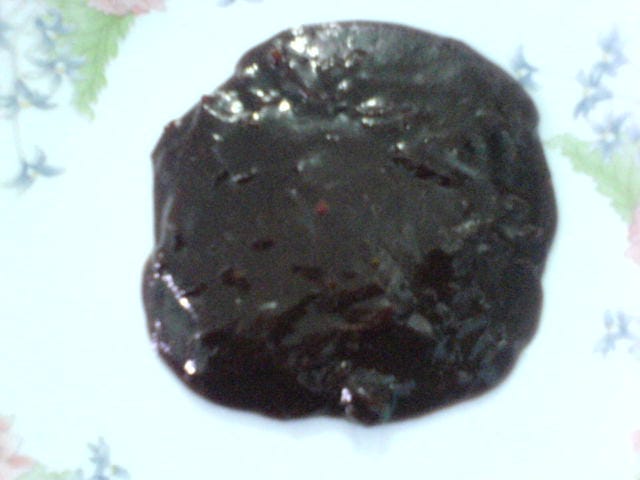
    Thick brown tuna paste, the concentrated end of hours of boiling. Eaten in small amounts with rice.
    Bis keemiya

    Bis keemiya

    The one you order twice.
    A folded pastry parcel of tuna, cabbage, onion and boiled egg, fried until it blisters.
    Gulha

    Gulha

    Deceptively small.
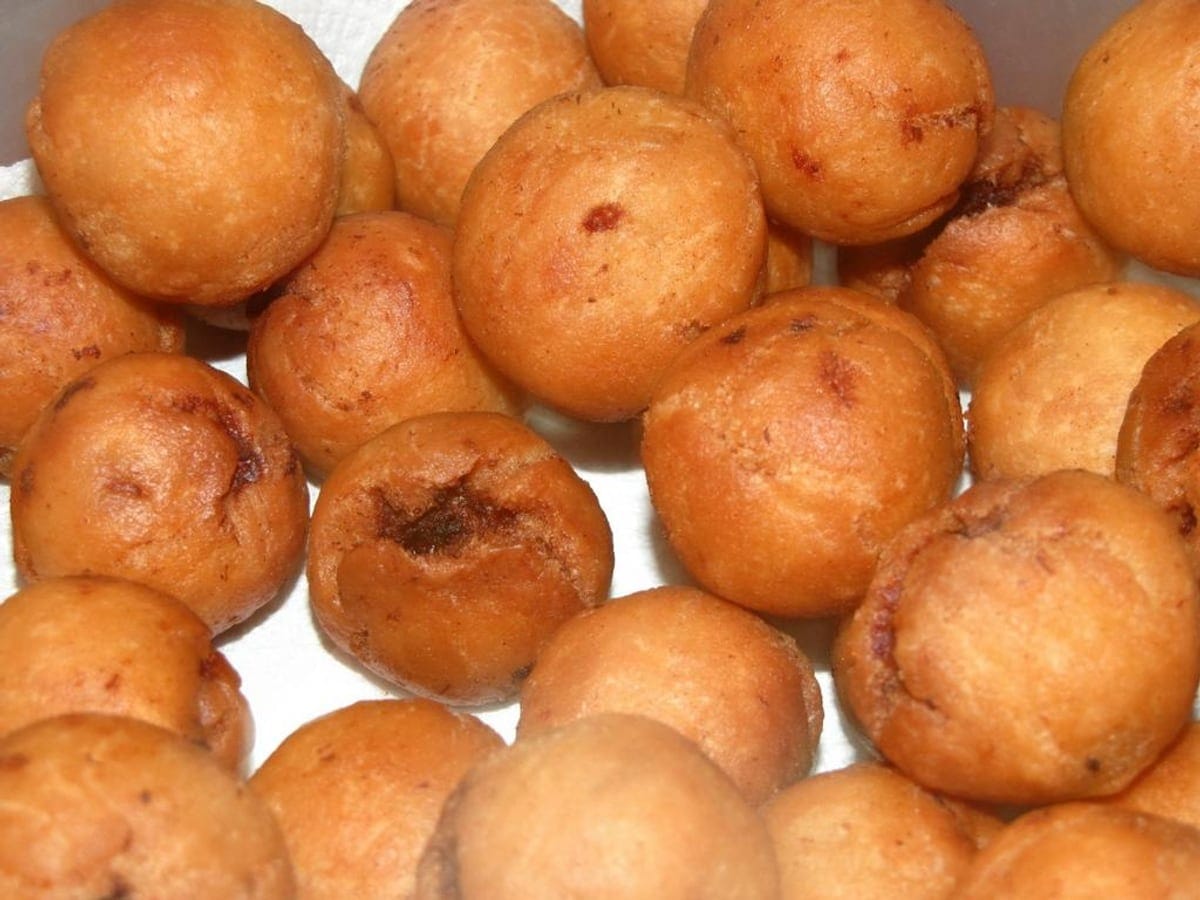
    Fried dough balls filled with tuna, coconut and onion. The anchor of any short-eats counter.
    Masroshi

    Masroshi

    Flatbread with a secret.
    Roshi stuffed with the tuna and coconut mix, then griddled flat.
    Kulhi boakibaa

    Kulhi boakibaa

    Cut like cake, eaten like lunch.
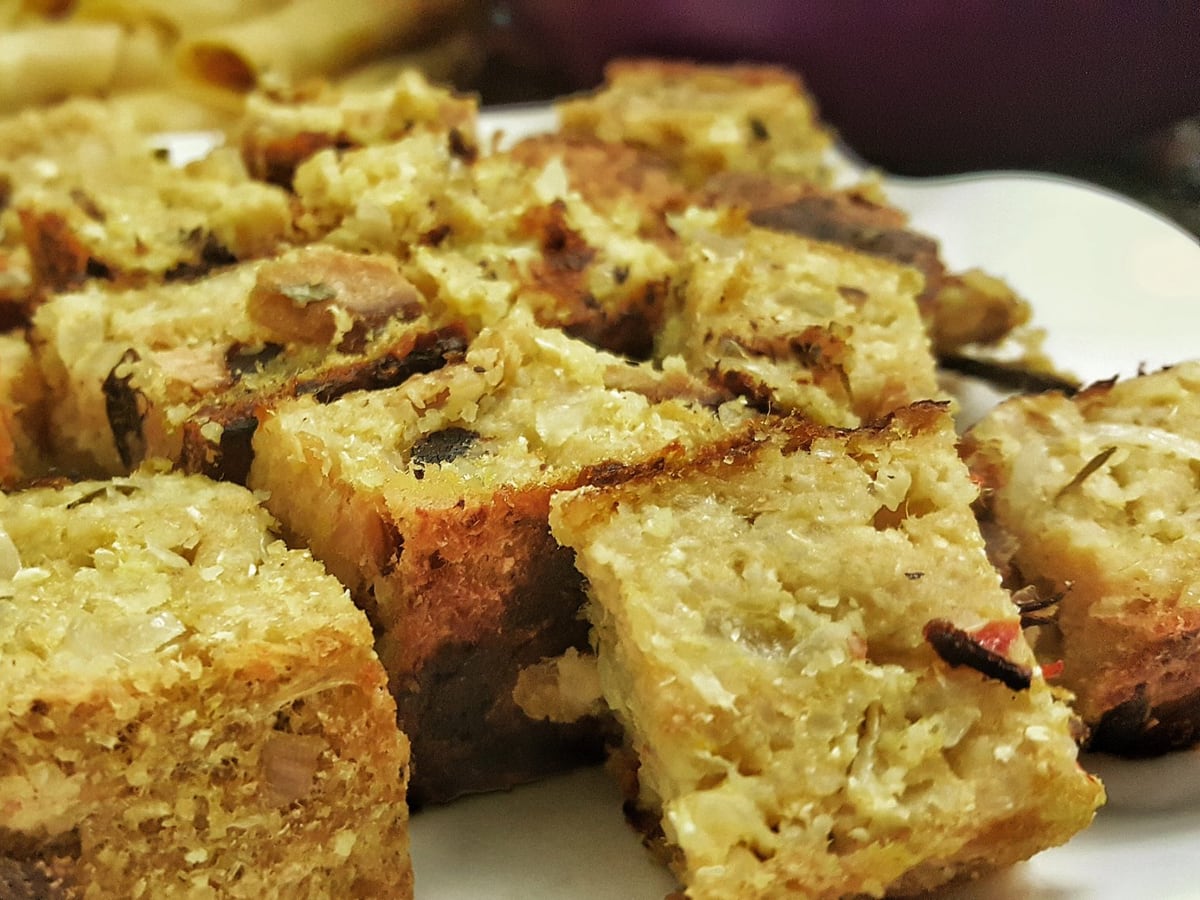
    A dense savory fish cake of tuna, rice and coconut, spiced and baked in a tray.
    Saagu bondibai

    Saagu bondibai

    Sweet, and finally not tuna.
    Sago pudding cooked in coconut milk with rosewater and cardamom, served cold.

    19

    Where to eat it

    8 areas

    Pick where you are, then swipe through what is actually open there.

    Areas (1/8)

    Malé

    Kaafu · the capital

    Where the tea shops are. Short eats under glass, sweet milky tea, and a fish market that runs on the tide rather than the clock.

    How we'd eat

    Mas huni and sweet tea for breakfast, short eats at four, and grilled reef fish somewhere with sand on the floor.

    Local Time

    Local Time

    ItalianFrenchMexican

    Italian and French plates on Ameer Ahmed Magu, open from half past seven in the morning until after midnight. The one to remember on the night your flight lands late and the city has otherwise shut.

    The Cloud Restaurant

    The Cloud Restaurant

    SeafoodEuropeanHealthy

    Seafood and European cooking on Roashanee Magu, running from breakfast through to half past eleven at night. A thousand reviews in and it still fills with people who work in the city rather than pass through it.

    Only Blu

    Only Blu

    SeafoodHealthy

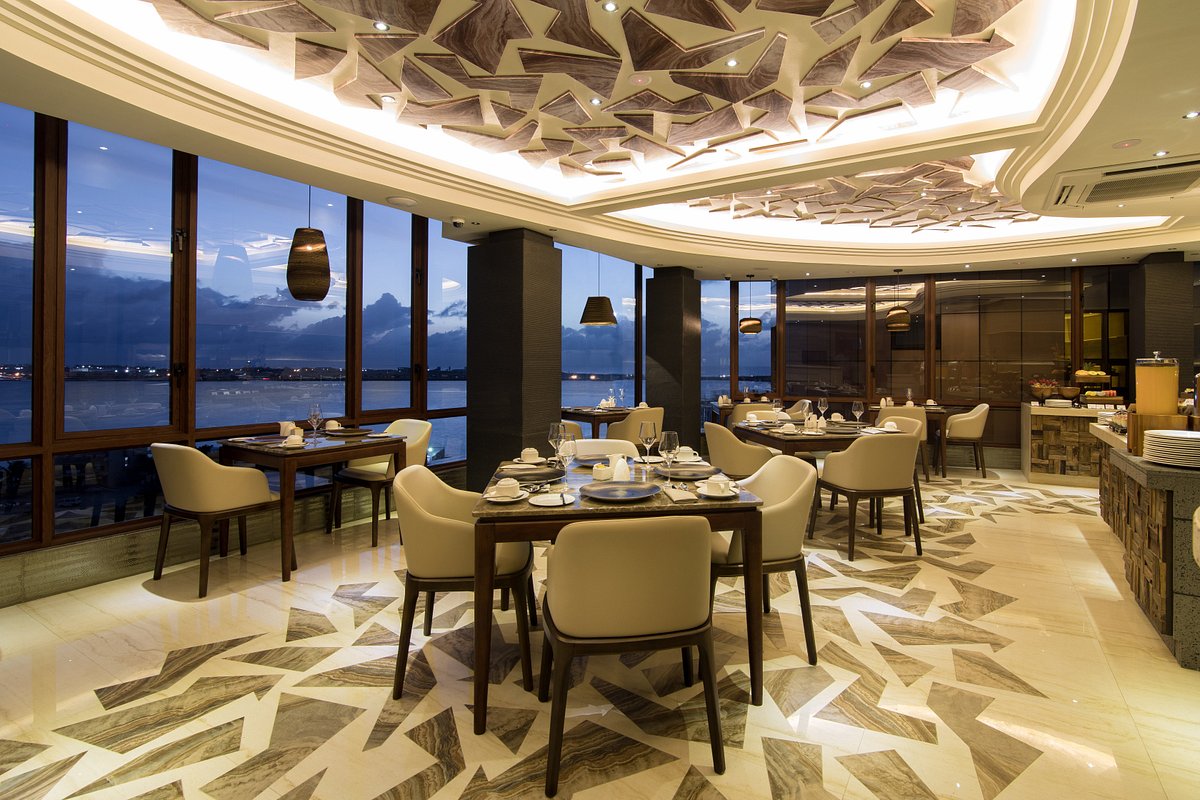
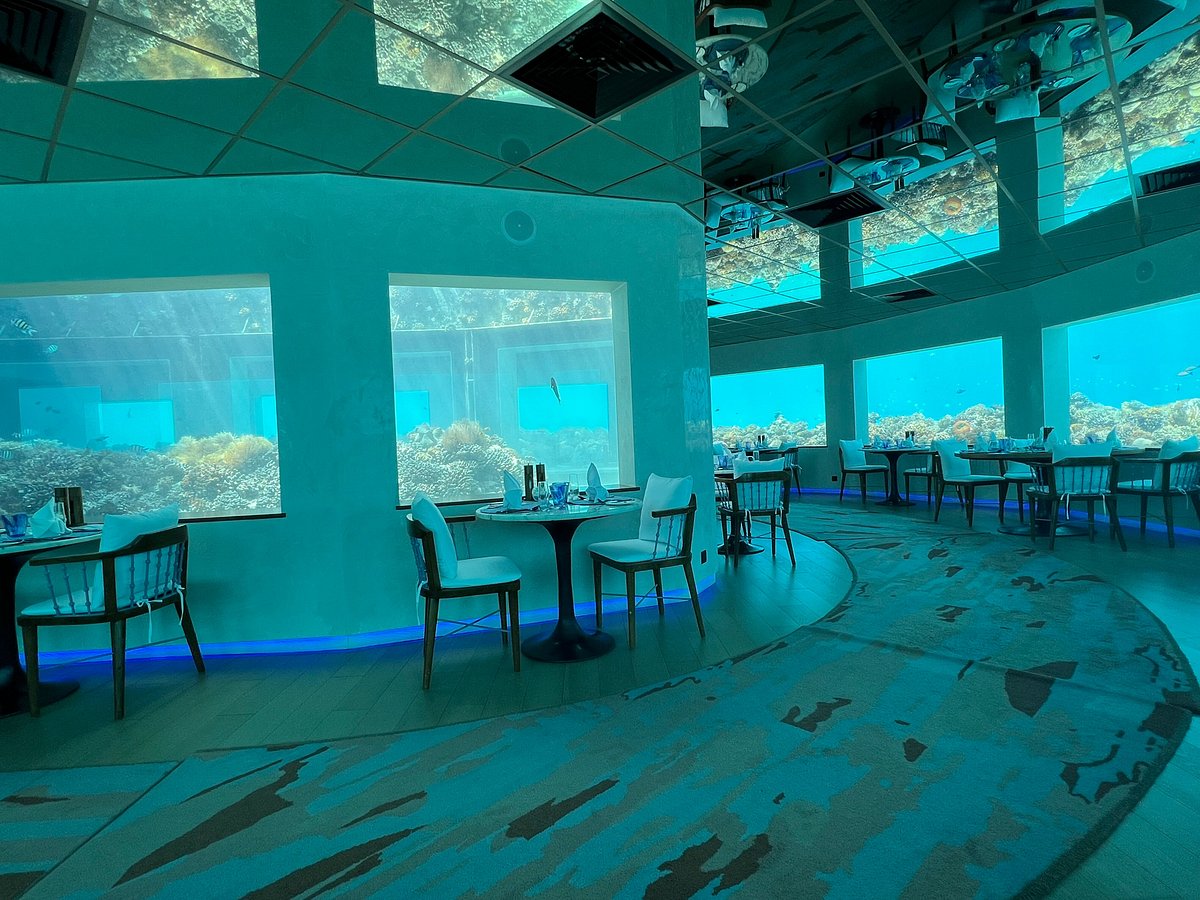
    The costliest room on this list, and the one people book for the setting before the menu. Seafood, and worth treating as one evening rather than a habit.

    Moringa

    Moringa

    InternationalGrillFusion

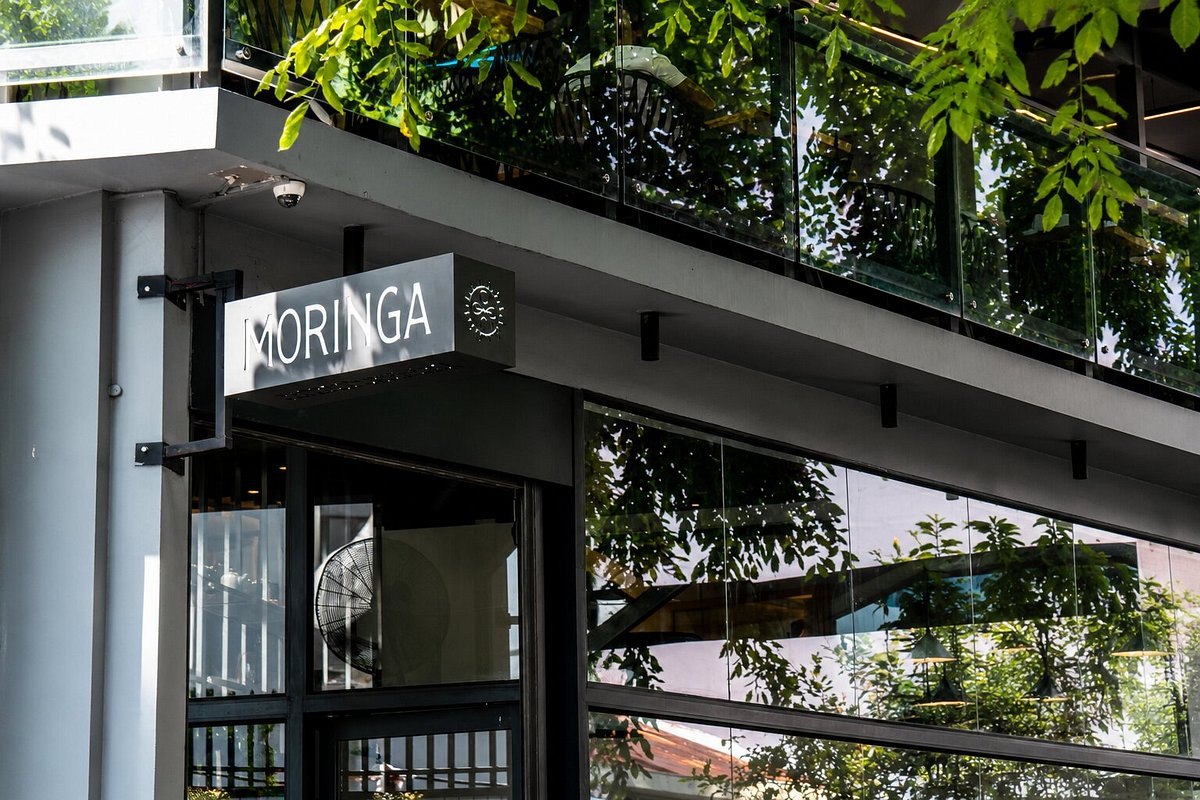
    Grilled plates and a broad international menu on Alikilegefaanu Magu, open from eight in the morning to midnight. The kind of room that suits a long lunch better than a fast one.

    Tandoori Flames Malé

    Tandoori Flames Malé

    IndianBarbecueAsian

    Indian grill work on the third floor of a lodge on Fareedhee Magu, open through to nearly midnight. The stairs put you above the street noise.

    Lazeez Gourmet

    Lazeez Gourmet

    ContemporaryMiddle Eastern

    Middle Eastern cooking on Hithigas Magu, midday until eleven at night. Small, well rated, and one of the least expensive sit-down rooms in the city.

    Belle Amie Bistro

    Belle Amie Bistro

    InternationalFusionHealthy

    A bistro by the National Museum on Keneree Magu, open from six in the morning. That makes it the first kitchen working in the city most days.

    Sala Thai

    Sala Thai

    AsianThai

    Thai cooking that has been in Malé long enough to count as an institution, now inside the Buruneege. Curries and noodles, and a room that stays busy through the evening.

    12

    How to get around.

    There are no roads between islands and almost none on them. Every trip here is a boat or a small plane, and the only place you use your legs is the island you are staying on.

    On Foot

    Your islandWalking

    Most resort islands cross in ten minutes. Sand underfoot, shoes optional.

    Dhoni

    ExcursionsUnhurried

    Wooden, slow, shaded. The boat everything here was built around.

    Public Ferry

    Local islandsSlow but cheap

    MTCC routes from Malé. Thin on Fridays. Not for resorts.

    Taxi in Malé

    The capitalCity pace

    Flat fares, no meters, and the bridge to the airport takes ten minutes.

    Speedboat

    Near atollsQuick on water

    Runs at any hour and meets your flight. Sit at the back if the sea is up.

    Seaplane

    Far atollsFastest

    Daylight only. No assigned seats. The pilots are barefoot. That part is true.

    Teach a friend Dhivehi

    Useful Dhivehi phrases.

    Dhivehi is written in Thaana, right to left, and is spoken almost nowhere else on earth. English covers everything practical in tourism, so none of this is necessary. It is just that almost no visitor tries, and the reaction when you do is worth the four minutes.

    0/12 learned
    means

    Must knows.

    Ten things worth sorting before you go. Most of them cost nothing and one of them will save you a night in an airport hotel.

    Tips by category

    5 categories

    Categories (1/5)

    Book the Transfer With the Room

    Almost nobody arranges their own boat here. The resort sells the transfer and it is not optional, so ask for the number in the same message you ask about the room. It can add several hundred dollars per person and it is the difference between two places that looked identical online. Compare the total, not the nightly rate, on hotel booking sites.

    Seaplanes Do Not Fly in the Dark

    Seaplane transfers run roughly 6 AM to 4 PM. If your flight lands in the evening and your island needs a seaplane, you are staying near the airport tonight whether you planned to or not. Book that first night deliberately in Hulhumalé instead of discovering it at the counter, and fly home a day later than feels necessary.

    Bring Dollars, Not Rufiyaa

    1 USD is about 15.4 MVR (Maldivian rufiyaa) and the rate barely moves, because it is pegged. Tourism runs on dollars and cards: resorts price in USD, guesthouses take it, and you will struggle to spend rufiyaa anywhere except a local shop or a ferry. Change a small amount at most, and do not change it back.

    There Is Nothing to Rent and Nowhere to Drive

    No car rental. Scooters are not rented to visitors. No ride-hailing worth the app. On a resort island you walk, and the island is small enough that this counts as a feature. In Malé a taxi is a flat fare and the bridge to the airport takes ten minutes. Everywhere else, the road is water.

    What Earns Its Space

    Your own mask, because you will be in it every day and rental gear leaks. A rash guard beats reapplying sunscreen at four degrees north, and reef-safe sunscreen matters here because you are swimming straight over live coral. Water shoes for reef entries on the local islands. The rest can stay home.

    Type D and Type G at 230V

    The Maldives runs British-style Type G and Indian-style Type D sockets at 230V. Resorts usually have universal outlets, guesthouses usually do not. If your gear is not dual-voltage, check compatibility before you pack it.

    Two Sets of Rules, One Country

    Resort islands are private and run on their own terms, alcohol included. Inhabited islands are Muslim communities: no alcohol, no public drinking, cover shoulders and knees in the streets, and swim at the marked bikini beach. Nobody will be rude about it. They just quietly notice, and it costs nothing to get right.

    Prayer, Friday and Ramadan

    The Maldives is a Muslim country and the islands people live on run on that. Prayer empties the shops five times a day for a few minutes, Friday is the day off, and through Ramadan the tea shops stay shut until sunset and then stay open half the night. A resort island is exempt from all of it, which is worth knowing in either direction.

    Overwater Is Not Automatically Better

    An overwater villa gets you the ladder into the lagoon and the photograph. A beach villa buys shade, a door onto the sand, and often a better piece of reef. Water villas also sit over the sheltered side, which is frequently the duller one. Check the map. Look at where the reef sits before you pay the premium.

    The Meal Plan Is Most of the Bill

    On a resort island the hotel is the only restaurant, so what you eat gets decided at booking. Bed and breakfast means paying resort prices for every lunch and dinner. Half board covers two meals. Almost never the drinks, which is where the bill actually grows. Switching plans once you are on the island costs more than picking the right one at the start.

    15

    Before you ask.

    The visa, the transfer, the alcohol, the money. Step through the topics, the marker follows you down.

    Topics

    Still curious? Just email us

    Entry & Rules

    No. Every nationality gets a free 30-day visa on arrival, provided you have a passport valid for your stay, a ticket out and a confirmed booking. You do need to file the free Traveller Declaration online within 96 hours of flying, both ways, at imuga.immigration.gov.mv .

    Still curious? Just email us

    So here is where to start.