- Top
- How the board works
- The reef you already paid for
- The sandbank morning
- The snorkel trip is three different trips
- The dolphin run
- The two days that earn their price
- Fishing at sunset, and the other lines
- What moves the price
- Paying for it, and what to sort before you fly
- When the boats go
- What surprises people
- The last evening
- Questions
The Excursions a Guesthouse Sells You.
The sandbank morning, the snorkel trip, the dolphin run and the long days after whale sharks, and which of them the reef in front of your island makes worth the money.
It goes up around sunset, on a whiteboard propped beside the reception desk, under a ceiling fan that moves the warm air from one side of the room to the other. Sandbank, 9 AM. Snorkel, turtle point and the reef, 2 PM. Dolphins, 5 PM. Under each line a column of first names in three different hands.
Outside, the harbor is going orange and somebody is hosing salt off a dhoni. You have paid for the room. This board is where the rest of the money goes.
It is also where most of the week gets decided. On a small island the land runs out after about forty minutes of walking, and every good day after that starts at the jetty.
Quick answer
Which guesthouse excursions are worth paying for?
Start with the reef you already have. If the house reef is good, a snorkel trip adds less than you think; if it is poor or far out, the snorkel trip is the one to buy. The sandbank morning is worth doing once, early. The dolphin run at dusk is the easiest yes on the board, because the dolphins keep a daily routine. The whale shark day and the nurse shark night snorkel justify what they cost only from the atoll that sells them: South Ari for the first, Vaavu for the second.
How the board works
Every excursion on a local island is sold per person and paid for per boat. The captain buys the same diesel whether four people sit on the benches or twelve, the crew is paid the same either way, and the guesthouse takes its share off the top. So read every line on the board as a proposal. Each one needs enough names under it before the boat leaves the harbor.
The marker beside it does a lot of work for a pen that has not had its cap since February. Names go up, names get crossed out, and around nine at night somebody from the kitchen wipes out the whole afternoon trip with the side of a hand, which is how you find out it is not running.
The price follows the same arithmetic. A full boat costs least per seat, a boat you want to yourself costs most, and the gap between those two moves your bill more than anything else on the board. Distance comes second, because fuel is most of the cost, so a reef twenty minutes out sells for less than one an hour and a half away whatever is living on it. Time comes third. A full day pays a crew to wait for something to happen, and the lunch on the boat is on that bill too.
Then the extras. Tourism tax and a service charge sit on excursions the way they sit on rooms, and a hand-written board does not always say whether they are inside the number or stacked on top of it. Ask once, at the desk, before you sign rather than after. The tax also reaches further than the island now.
"From October 1, the 17 per cent TGST will also apply to inbound tourism products and related agency and booking services supplied by businesses without a fixed place of business in the Maldives."
In plain terms, booking the same snorkel trip through a website based abroad no longer skips the tax. Whatever gap there was between the board and the listing online has narrowed, and the board keeps one advantage the listing never had. You can walk down to the jetty and look at the boat.
Where the excursion line sits in a whole trip's spending, next to the room, the ferries and the food, is laid out in the full budget for a local-island week. This piece is about the line that swings the most.
The reef you already paid for
Before you buy a single trip, put a mask on and walk into the water off your own island. Most local islands sit on a reef of their own, and on a good one the coral starts a short swim from the beach. That swim costs nothing. Masks and fins rent by the day for very little, and plenty of guesthouses simply lend them.
The house reef decides how much of the board you need. If the drop off is close and alive, a half-day snorkel trip mostly takes you to a different version of what you saw before breakfast. If the reef in front of your island was dredged for a harbor, or never came close to the beach in the first place, the boat is the only way to see coral at all, and the snorkel trip stops being optional.
Some islands keep their best animals on the house as well. On Fulidhoo, in Vaavu Atoll, stingrays and nurse sharks come into the shallows off the beach where the catch gets cleaned, and you can stand in it to your knees and watch them. Ask what your island has before you pay a boat to find it somewhere else, and use the atoll-by-atoll guide to the Maldives to work out which island sits on which reef before you book the room.
There is a second question, and it is less comfortable. In 2024 the sea around the Maldives ran hotter than the reefs had ever recorded, and the coral paid for it unevenly. Researchers who resurveyed reefs before and after found the losses heaviest in the central atolls, which is where most guesthouse islands are, and close to nothing in the far south.
"In the central atolls, live hard coral cover dropped by > 40% on average; the highest mortality (57%) occurred on a lagoon reef in Ari Atoll"
On the water, that means a snorkel stop that was a thicket of branching coral in a review from a few years ago can be pale rubble with fish over it today. The fish are still there and so are the turtles, which have never been fussy about the décor. But a trip sold on its coral garden deserves a question at the desk. Ask when the boat last went there, and what the guide saw.
The board sells you the boat. The reef decides whether the boat was worth it.
The sandbank morning
Scene
Seven in the morning. You wade out to the dhoni with your sandals in one hand. The engine idles under a smell of fish and diesel from the boats tied up alongside, and the sun is already warm on the back of your neck.
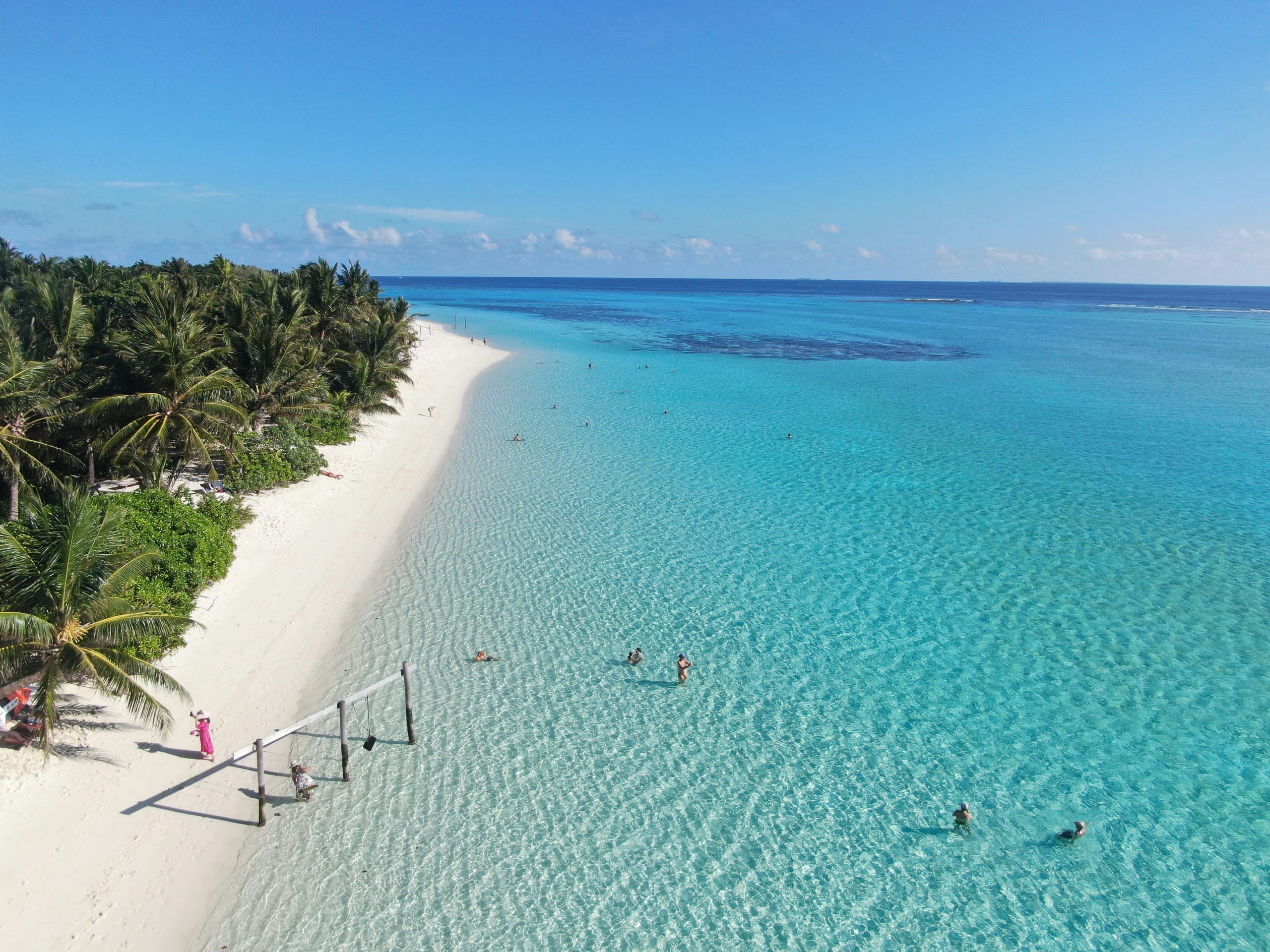
A sandbank is a strip of bare sand on the reef flat that comes up as the tide drops. The boat runs its bow into knee-deep water, somebody hands you a bottle of water, and you walk up onto the only dry ground for a long way in any direction. There is no shade and nothing to sit on except the sand. You can walk round the whole thing in a few minutes, and after that the morning becomes sitting in the shallows watching the edge move.
It is one of the most beautiful places you will ever stand. The water goes from white to pale green to a blue so dark it looks like a hole in the sea, and the only sound is water moving over sand. Then you turn round, and there are nine other people from your guesthouse on it with you, all holding their phones above their heads at the same angle.
That is the trade. The sandbank is one of the easiest boats on any board to fill, because it is short and close and everybody wants the photograph, so it goes. It is also the trip most likely to be shared with a full boat, because those are the same fact said twice.
When it is worth the morning
Go once, early, on a falling tide. The guesthouse knows the tide even when the board does not mention it. A morning run beats an afternoon one, because by eleven the sand is hot enough to make people walk faster than they planned and the light has gone flat and white. Take more water than seems reasonable, a long-sleeved shirt and a hat, because a sandbank is the most exposed place in the country and you are standing in the middle of it.
What the brochures leave out
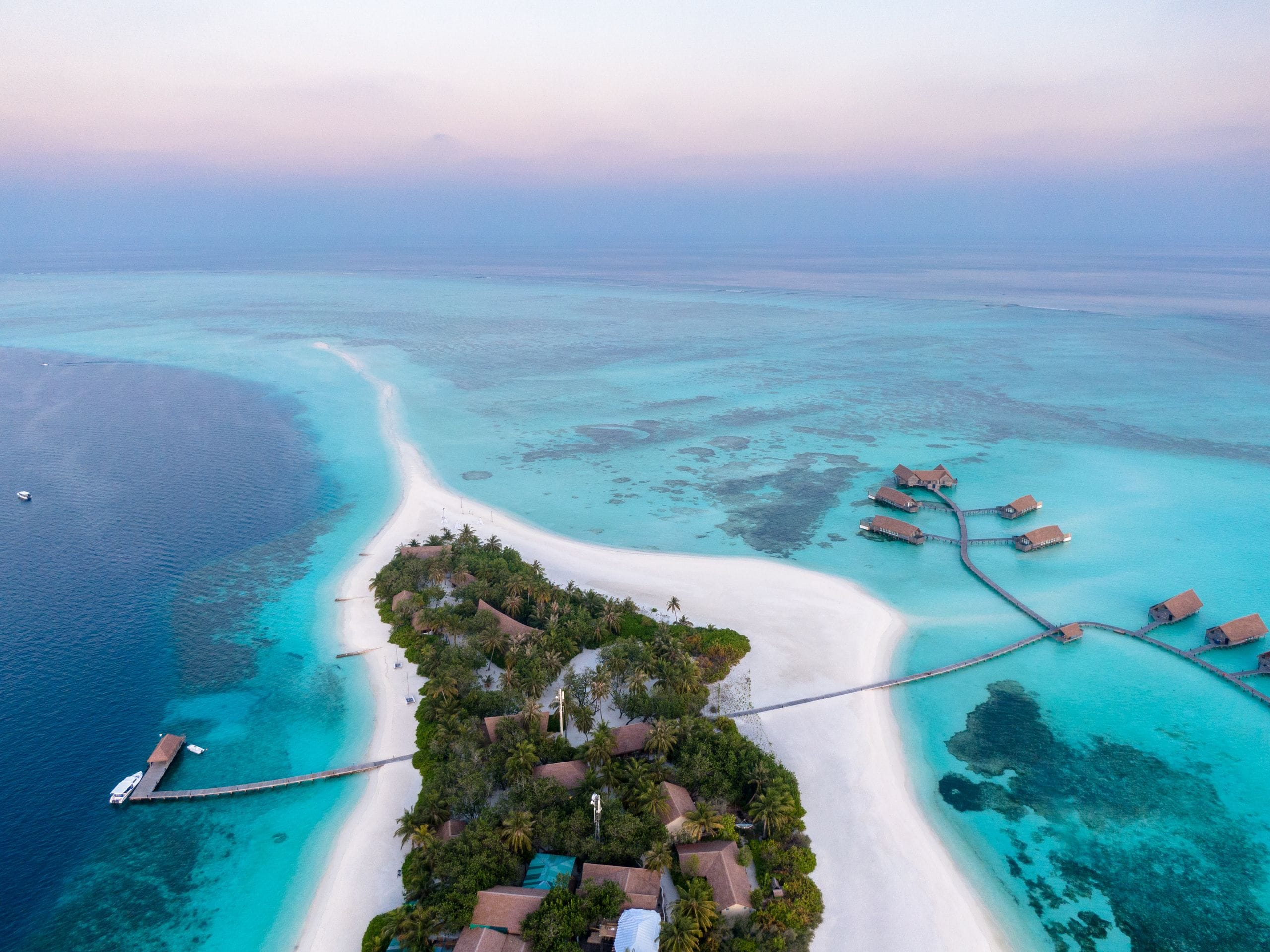
The brochure sandbank is empty, and it was shot from a drone at a height where people stop being visible. The one you are sold has a boat parked on it, and from the boat you will be one of the people. It is still worth the morning. It is just not the photograph.
If you want it to yourself, that is a private boat, priced for the whole hull rather than a seat, and the gap is wide. Two of you can sometimes talk the desk into a shorter run to a closer bank. One of you is paying for a boat.
The snorkel trip is three different trips
The line on the board says snorkeling. What it sells depends on the island, and in practice it is one of three trips wearing the same name.
- Turtle point: a reef where turtles feed and rest. Usually close, usually shallow, and the stop most likely to deliver what it promised.
- Shark or ray point: a spot where reef sharks, nurse sharks or rays gather, sometimes because they have been fed there for years. Ask whether they are fed, and decide how you feel about that before you go rather than in the water.
- Channel drift: the boat drops you up current at a reef edge and collects you further along. The most fish on the board, and the one stop of the three that is no place for a weak swimmer.
Most half-day trips string two or three of these together, and the order matters more than the list. Turtles at nine, before the other boats arrive, are a different morning from turtles at noon with three dhonis idling over the same patch of reef. Ask which stop comes first.
The full-day version tempts you on the theory that more stops means more animals. Mostly it means more boat. The second reef turns out to be the first reef with a different name, the third is the second reef from the other side, and by then you have stopped putting your fins back on and are eating cut pineapple on the bench. A fine way to spend a day. Not the one you paid for.
What to ask before you sign
- Which spots, in which order, and roughly how long in the water at each.
- Whether a guide gets in the water with you or stays on the boat.
- Whether there are life vests for anyone who wants one, and whether the boat waits for the slowest swimmer.
- What happens if the weather turns: a new date, your money back, or a shrug.
A good desk answers all four without looking anything up. A desk that has to phone somebody is telling you who actually runs the boat.
The dolphin run
This is the easiest yes on the board, and the reason is routine rather than luck. Spinner dolphins spend the day resting inside the atoll lagoons and leave in the late afternoon to feed in deep water overnight. The dusk boat is timed to that. It goes out through the channel as the light starts to go and waits near where they usually cross.
"Our visual and acoustic observations both provide evidence of a regular diurnal behaviour, where dolphins enter the lagoons during the morning, for day-time resting, and exit during the afternoon, for night-time foraging offshore."
Quick fact
Letessier et al., Journal of Zoology, 2022
Usually is doing some work in that sentence. Most evenings they come past the bow, sometimes a handful, sometimes a long line of them turning on their sides to look up at the hull. Some evenings the captain cuts the engine, everybody stands and watches an orange horizon for twenty minutes, and the boat turns for home with nothing. Nobody offers a refund. The sunset was going to happen anyway.
The dolphins have no interest in you, which is the right arrangement. They are on their way to work. You are traffic.
Do not get in the water with them, and think twice about a boat that chases or circles a pod. The better captains hold back and let the dolphins come to the boat. The trip is short and close, with no snorkeling and no lunch, so it sits near the bottom of most boards on price, and on a flat evening it is the hour of the week people talk about at breakfast.
The two days that earn their price
Two trips on most boards cost several times the rest. Both are worth it from the right island and close to pointless from the wrong one.
The whale shark day
Whale sharks feed along the outer reef of South Ari Atoll all year rather than passing through in a season, which is why the islands at that end of the atoll, Dhigurah above all, sell this trip and most of the country does not. From an island in another atoll it becomes a long run and a long day, and you pay for every mile of the fuel.
The day is mostly waiting. Somebody climbs onto the roof in sunglasses and stays there, the boat runs slowly along the drop off with half a dozen others in sight, and then everything happens in about ninety seconds. You are over the side with your fins half on. A quarter of an hour later you are climbing back up the ladder, because that is the rule.
"Each person can be with the whale shark in the water for no longer than 15 mins."
This is also the trip to be most careful on. The UK's travel advice names propeller accidents at the whale shark sites specifically. Get in where and when the guide tells you, surface looking up for hulls, and if the boat working inside the protected area has no guard on its propeller, notice it rather than shrug it off.
"There have been fatal accidents involving boat propellers in the South Ari Marine Protected Area (SAMPA) and nearby whale shark tourism sites. Regulations requiring propeller guards are not yet fully enforced."
Nurse sharks after dark
In Vaavu Atoll the evening boat is not about dolphins. It goes to the jetty at Alimatha, where nurse sharks and stingrays gather after dark in numbers that make no sense until you are hanging in the water above them with a torch. Divers have done it for years. Snorkel boats now go too, from Fulidhoo and the islands around it.
"Vaavu Atoll's most famous dive site is Alimatha House Reef, where divers can get extremely close to the resident nurse sharks and stingrays."
This one is built on feeding, and the animals know the sound of the boats. Whether that sits right with you is a decision for the desk, not the water. If it does, it is the strangest hour on any board in the country, and from Vaavu it is a short run in the dark.
Mantas are the third of the big-animal trips, and one place sells them well: Hanifaru Bay in Baa Atoll, between May and November, on a phone alert rather than a schedule. How that alert works, and why it favors whoever is already standing on the jetty, is in the piece on traveling this country alone.
Fishing at sunset, and the other lines
Night fishing is the trip the board undersells. A dhoni goes out past the reef at dusk, the crew hands everyone a spool of line with a hook and a weight on the end, and you drop it straight down over the side and wait for a tug. There is no rod. The crew catches several times what you do and is kind about it.
Back on the island the kitchen grills the catch, which on a good night is three reef fish and on an ordinary night is one reef fish, a story, and a small amount of pride.
Two other lines turn up on the busier islands. A resort day pass buys a few hours on a resort island, with its beach, its pool and the only legal drink for miles that is not served on a boat moored offshore. It is priced like a resort, because it is one. A picnic island is an uninhabited island the boat leaves you on for the day, emptier than a sandbank and with trees, which on a hot day is the entire difference.
Neither is a reef trip. Both are worth knowing about on day five, when the island has gone from charming to small.
What moves the price
No two boards list the same numbers, and they change with the season, so the useful thing to carry is what drives the cost rather than the cost itself.
| Trip | What the money pays for | What pushes it up | Worth it when |
|---|---|---|---|
| Sandbank morning | A short run and a boat parked for a few hours | A private boat, a far bank | Once, early, on a falling tide |
| Snorkel trip | Fuel to two or three reefs, a guide | Distance, a full day, lunch on board | Your house reef is poor or far out |
| Dolphin run | An hour or two at dusk, no stops | Very little, it sits near the bottom of most boards | Almost always, on a calm evening |
| Night fishing | Lines, bait and a crew who know where to stop | Very little | You want the evening and the dinner |
| Whale shark day | A full day of fuel, a spotter, lunch | Starting from outside South Ari | You are staying in South Ari |
| Nurse shark night snorkel | A short evening run in Vaavu | Starting from outside Vaavu | You are staying in Vaavu |
| Resort day pass | A resort's beach, pool and bar for the day | The resort, which sets its own price | Day five, when the island feels small |
Read down the last column and a pattern shows up. The two trips that cost the most are the two that depend most on where you sleep. Pick the island for the trip, not the trip for the island, and the expensive line on the board becomes the reason you came instead of a long day you regret.
Pros of buying your excursions through the guesthouse
- You can walk to the jetty and look at the boat before you pay
- The desk knows the tide, the wind and which reef is busy this week
- If a trip is cancelled, the person who has your money is downstairs
- Your name can be the one that gets a trip over its minimum and out of the harbor
Cons of buying your excursions through the guesthouse
- The board rarely says whether tax and service are inside the number
- A trip with too few names is called off the night before, sometimes without anyone telling you
- You get the boat your guesthouse works with, which is not always the best one on the island
- Cash in dollars is the usual way to pay, and change for a large note is scarce
Paying for it, and what to sort before you fly
Excursions are priced in US dollars and mostly paid in cash. Cards work at the bigger guesthouses and the dive centers, usually with a surcharge, and on the small islands not at all. Bring small notes, and clean ones, because a torn or marked bill gets handed back and a boat crew rarely has change.
Draw and carry with the fees in mind rather than discovering them on the statement. What your money costs abroad covers the charges stacked on a withdrawal and the screen that offers to convert for you.
Then insurance, because every trip on this board happens a long way from a hospital. A policy that excludes snorkeling from a boat is worth very little here. A rolling monthly travel policy is what a lot of independent travelers carry, partly because it runs by the month, which suits a trip whose last day can move with the weather.
Read the water activities clause on whatever you buy before you pay for it. What a travel policy covers walks through which parts of a policy pay out and which quietly do not.
And choose the island for its reef before you choose the room. Once you know the atoll and which side the coral is on, A hotel booking site lists most of the guesthouses on the inhabited islands, and its map shows how far each one sits from that stretch of beach.
When the boats go
The dry season, roughly December to April, is when the sea lies down and the boats leave on the day they said they would. Visibility opens out, and the sandbank is a pleasant place to stand rather than a windy one. It is also when the boards fill fastest, which helps everyone, because a full boat goes.
From May the southwest monsoon brings wind and rain in bursts, and more of the board gets crossed out. Trips cancel on the morning, sandbanks stay under, the dolphin run turns back early. It is also the season for the mantas at Hanifaru, and the whale sharks stay in South Ari all year. Build two or three spare days into a wet-season trip, so a cancelled boat moves a day instead of deleting one.
Keep the long trips off your last full day for the same reason, and keep an eye on the boats that bring you in and take you out, which run to their own timetable. The run from the airport to a guesthouse island lays those boat times against the flight times.
What surprises people
How much of the week the board decides. People arrive with a list of things they want to do and discover the list belongs to the boat.
How often a trip that was definitely going is not. The phrase at the desk is maybe tomorrow, which manages to be a weather forecast, a booking system and an apology in two words.
How good the free hours are. The house reef at seven in the morning, the stingrays off the fishing beach, a kayak handed over for nothing and the lagoon flat as a plate before the wind gets up. Several of the best hours on a local island are not on the board at all.
And how little the price tells you. The line at the top of the board is the one most likely to come home empty, and one of the lines near the bottom is the one most likely to deliver.
The most expensive trip is the one most likely to come back with nothing. The dolphins cost less and show up more.
The last evening
On the last evening the board goes up again, the same fan pushing the same warm air across the room, and you read it the way you read a menu in a place you have eaten at all week. You know which lines go and which get wiped out at nine. You know the captain who cuts the engine early and the one who does not.
You do not put your name on anything. You walk down to the end of the island instead, where the reef starts a few strokes out, and float over it until the light goes and the color drains out of the coral one shade at a time. Somewhere beyond the channel a boatload of people is waiting for dolphins.
Nobody sold you this one.
Share me
Questions about guesthouse excursions in the Maldives.
The ones that come up most once people are standing in front of the board. If yours is not here, write to us. We answer.
hello@ezparadise.com